When asking do dogs need winter coats, it's never about human fashion trends—it's about thermal regulation: healthy dogs with dense undercoats stay warm naturally through active movement, whereas short-coated breeds lacking an undercoat, seniors, puppies, and dogs with joint disease can quickly become hypothermic in freezing rain or frost. Key considerations include coat type, overall health, activity levels, and finding an ergonomic cut that allows unrestricted shoulder movement.
| Factor | Guidance for Dog Owners |
|---|---|
| No coat needed | Healthy, active dogs with a dense undercoat and water-repellent guard hairs (e.g., Nordic breeds, German Shepherd Dogs, Retrievers). |
| Coat recommended | Breeds lacking an undercoat, very small or low-to-the-ground dogs, seniors, puppies, and dogs with osteoarthritis, spondylosis, or recovering from surgery. |
| Weather rule of thumb | Rain protection starting around 5–7 °C in wet and windy conditions; an insulated dog winter coat starting around 0 °C for dogs without an undercoat or with low activity. |
| Most critical fit factor | Unrestricted shoulder blade mobility, a fully covered chest and belly area, and a back length reaching from the withers to the base of the tail. |
| Typical costs | Around 20 to 120 Euro depending on size (e.g., 30 cm to 70 cm back length), fabric quality, and waterproof rating (hydrostatic head). |
Winter Coats for Dogs vs. Natural Cold Protection: Comparing the Options
On frosty winter walks, you often see two contrasting philosophies: while some people dismiss every canine coat as unnecessary anthropomorphism, others bundle up their four-legged friends at the first crisp autumn breeze. From a veterinary and canine physiotherapy perspective, both extremes fall short. A functional dog winter coat is a practical tool for thermoregulation—wherever a dog's body cannot retain sufficient heat on its own, a coat is medically sensible; wherever their own fur provides natural insulation, a coat can actually hinder them.
| Criterion | Insulated Winter Coat / Raincoat | No Canine Clothing |
|---|---|---|
| Thermal regulation | Reliably keeps the back, kidneys, and belly warm when an undercoat is missing, preventing painful muscle tension caused by shivering. | Optimal natural thermoregulation in dogs with an intact double coat, as the hairs piloerect (stand up) to trap an insulating layer of warm air. |
| Wet & wind protection | Shields against evaporative cooling in sleet and significantly shortens post-walk drying times at home. | Fur lacking an undercoat gets soaked straight down to the skin; in breeds with very dense coats, wet fur can take hours to dry indoors. |
| Mobility & comfort | Can chafe around the shoulders, restrict natural stride length, or shift during play if poorly fitted. | Full, unrestricted freedom of movement, no chafing straps, and unimpeded canine body language during social interactions. |
| Risks of an improper choice | Risk of heat buildup and overheating if the dog runs intensely or the material isn't breathable. | Risk of hypothermia, painful back muscle spasms, urinary tract infections, or respiratory illnesses in cold-sensitive dogs. |
In practice, the choice rarely comes down to an all-or-nothing decision between a heavy winter parka and going bare. For many dogs, a layered approach based on the weather works best: an unlined, lightweight raincoat keeps biting wind and drenching rain off their core at around 5 °C, while their own movement generates sufficient body heat. An insulated winter coat can then be reserved for dry sub-zero temperatures, snowstorms, or slow-paced leashed outings.
What Really Matters: Coat Type, Age, Health, and Daily Routine
Whether your dog needs extra protection in winter cannot be answered by looking at the calendar. Several physical and physiological factors determine how rapidly a dog loses core heat to their environment.
Coat Structure: Why Fur Length Can Be Deceiving
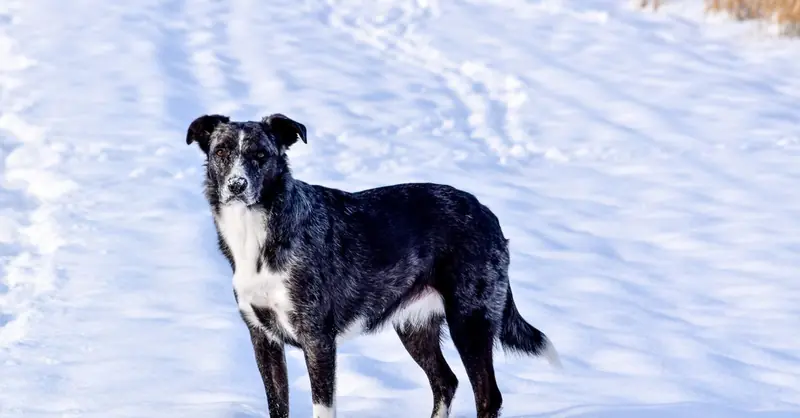
A common misconception is equating long fur with built-in cold protection. However, what matters for thermal insulation isn't the length of the topcoat, but the presence of a dense undercoat. A classic double coat functions like a high-performance outdoor shell: slightly oily top hairs repel moisture, while the fine, woolly undercoat underneath traps radiant body warmth.
When a breed lacks this insulating undercoat, wind and moisture penetrate directly to the skin. Breeds that naturally lack a significant undercoat—and often have very little subcutaneous fat—include the Rhodesian Ridgeback, Dobermann, German Boxer, Dalmatian, Weimaraner, and all sighthound breeds such as the Galgo Español, Whippet, or Greyhound. Dogs with long, silky single coats like the Yorkshire Terrier, or freshly groomed dogs (such as a clipped Poodle), also lack sufficient natural thermal protection. If you're still searching for the right companion and want a robust partner for rugged winter hikes, explore the HonestDog Breed Finder to see which breeds are naturally built for harsh weather.
Body Size and Ground Clearance
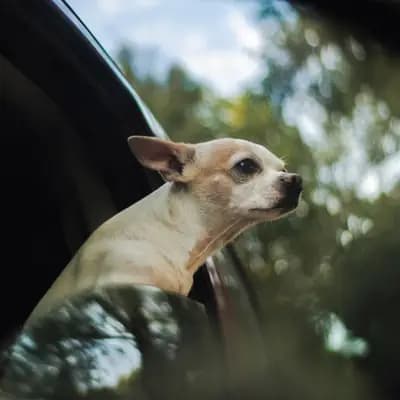
By the laws of physics, smaller bodies lose heat far more rapidly than larger ones because they have a much higher surface-area-to-volume ratio. Breeds like the Chihuahua, Prague Ratter, or Miniature Pinscher must burn significantly more metabolic energy just to maintain their normal core body temperature in cold weather.
Leg length plays an equally important role: in a Dachshund or other short-legged breeds, the sparsely furred chest and belly hover just a few centimetres above frozen asphalt or slushy snow. Without a coat featuring a full chest and belly protector, their underside loses heat rapidly through radiant ground chill and wet road spray.
Age: Puppies and Senior Dogs
During their first months of life, puppies haven't yet developed a fully robust immune system, and their downy puppy coat lacks the water-repellent properties of adult fur. Young pups also chill quickly because puppy walks are short and involve plenty of standing, watching, and sniffing. At the other end of the spectrum, senior dogs undergo changes in metabolism and muscle tone. Older dogs move more slowly, their circulation is less robust, and they lose protective muscle mass. Even an elderly German Shepherd Dog or Retriever that spent years thriving in sub-zero weather can benefit immensely from a lightweight thermal coat in their golden years.
Health Status and Pre-existing Conditions
From both a veterinary and canine physiotherapy perspective, underlying health conditions are the single most compelling reason to use a dog winter coat. Dogs suffering from chronic joint and spinal conditions—such as osteoarthritis, hip dysplasia (HD), elbow dysplasia (ED), or spondylosis—are extremely sensitive to damp, cold weather. When a dog tenses up from the cold and hunches their back, tension radiates through their musculoskeletal system, intensifying chronic pain. An insulated coat also protects vulnerable dogs recovering from surgery (where fur has been shaved), as well as those managing kidney disease, chronic cystitis, hypothyroidism, or cardiovascular conditions.
Lifestyle, Background, and Activity Level
A healthy dog sprinting off-leash across an open meadow produces significantly more muscular heat than one walking at a slow pace on a short leash through city streets. This is why coats are also essential for high-drive working and sport dogs with great coats during downtime: during dog sports (such as agility or mantrailing), hunting, or while waiting in a unheated car after a strenuous hike, warm muscles cool down rapidly. This rapid temperature drop dramatically increases the risk of muscle and tendon tears.
Rescue dogs imported from warmer climates form another vulnerable group. Dogs that grew up in Mediterranean or tropical environments often experience their first Central or Northern European winter as a physiological shock; it can take months for their metabolism and seasonal coat growth to adapt.
What Veterinarians and Animal Welfare Organizations Say
Within the veterinary community, consensus is clear: dog clothing should be evaluated strictly on functional and medical merits. In their winter guidance for dogs, the Federal Chamber of Veterinarians (Bundestierärztekammer) highlights that healthy dogs with normal double coats typically do not need a coat during active walks, but coats are medically beneficial for senior, sick, or short-haired breeds lacking undercoats. At the same time, veterinarians warn against inappropriate materials: knitted wool or cotton sweaters are counterproductive in wet winter weather because they soak up moisture like a sponge, chilling the dog even faster. Functional gear should be lightweight, breathable, water-resistant, and cut to avoid chafing or pinching.
Animal welfare groups also urge owners to tune in to their dog's body language. As the animal welfare organization TASSO explains in their guide to dog coats, dogs communicate quite clearly when their natural thermoregulation is overwhelmed:
- Muscle shivering: The most obvious indicator that the body is attempting to generate heat through involuntary muscular contractions. (Note: shivering can also stem from excitement, stress, or pain—context is key).
- Altered posture: The dog arches their back (roaching), tucks their tail tightly under the abdomen to minimize heat loss across the bare underbelly, and pins their ears back.
- Stiff gait: Strides become short, hesitant, and rigid; the dog walks noticeably slower than during milder weather.
- Lifting paws and reluctance: The dog alternates lifting cold paws off frozen ground, hugs building walls for shelter, or refuses to leave the doorstep altogether.
Clinical studies on hypothermia in companion animals show that wet fur loses nearly all of its insulating power, as water conducts heat away from the body dozens of times faster than still air. Consequently, a wet dog exposed to wind at 4 °C faces a higher risk of hypothermia than a completely dry dog in calm air at -4 °C.
Finding the Perfect Fit: Measuring, Sizing, and Common Mistakes
Even the most advanced thermal coat fails if it doesn't fit properly. Canine physiotherapists point out that dogs immediately alter their natural gait when fabric pulls tightly across their joints. A coat that fits too tightly across the chest or restricts the shoulder blade during forward reach leads to shortened strides and can cause lasting tension along the shoulder girdle and cervical spine.
How to Measure: From Small Breeds to 60 cm and 70 cm Sizes
Generic clothing sizes like "S", "M", or "XL" are unreliable for dogs, as every manufacturer uses different sizing templates. The golden standard is always the back length measured in centimetres, cross-referenced with chest girth and neck circumference.
- Measure back length: Have your dog stand upright, straight, and relaxed on all four paws. Run a flexible tape measure from the withers (the highest point of the shoulder blades where the neck joins the back) along the spine to the base of the tail. A common mistake is measuring from the collar; doing so makes the coat several centimetres too long, which will press down on the tail.
- Measure chest girth: Wrap the tape around the widest, deepest point of the ribcage, directly behind the front legs.
- Check neck circumference: Measure where a low-sitting collar naturally rests, right at the base of the neck where it transitions into the chest.
Owners of larger, short-coated breeds frequently search for specific sizes like a dog winter coat in 60 cm or a dog winter coat in 70 cm. Here is why back length alone doesn't tell the whole story:
- A 60 cm winter coat typically fits medium-to-large dogs weighing roughly 23 to 30 kg, such as the Vizsla, Dalmatian, smaller Boxers, or female Weimaraners.
- A 70 cm winter coat is usually cut for large breeds weighing 35 to 45 kg—a standard size for large male Rhodesian Ridgebacks, Dobermanns, or German Shorthaired Pointers.
Even when two dogs share an identical 60 cm or 70 cm back length, their underlying conformation differs drastically: a broad-chested Boxer or Ridgeback needs substantial width through the chest and neck, whereas a tall Galgo or Podenco has an exceptionally deep yet narrow brisket and a tucked-up waist. Sighthounds also require an arched topline cut that drapes over their heavy hindquarter muscling without restricting other breeds' high tail carriage.
Checklist: Essential Materials and Features
A well-designed winter coat should feature these practical attributes:
- Waterproof and breathable shell: A high waterproof rating and taped seams repel sustained rain and wet snow, while a breathable membrane keeps condensation from building up under the coat.
- Smooth, protective inner lining: For short-coated dogs, a smooth, technical fabric prevents fur breakage along the shoulders; high-pile fleece provides extra thermal insulation.
- Harness opening: If your dog wears a chest harness, it should sit underneath the coat (or properly adjusted over a very thin coat). A taped, weather-sealed two-way zipper along the spine lets you clip the lead through without bunching up the coat.
- Adjustable leg loops: Soft, elastic bands around the hind legs keep the coat from flipping up in gusty crosswinds. They must fit loosely and never cut into the groin.
- Reflective details: High-visibility piping or reflective panels ensure safety during low-light winter walks.
What Costs Should You Expect?
Prices for dog winter coats vary widely based on size, technical specifications (such as hydrostatic head ratings, taped seams, and adjustment points), and fabric durability. Basic water-resistant coats with simple fleece linings typically run from 20 to 40 Euro. High-performance technical coats featuring waterproof membranes, ergonomic cuts that leave the shoulders free, and heavy-duty hardware—particularly in larger sizes like 60 cm or 70 cm—generally cost between 60 and 120 Euro. Custom-tailored coats or therapeutic designs with ceramic-infused fabrics for joint relief can cost more.
Gentle Conditioning: Take It Slow
Many dogs freeze in place or rub against furniture and walls the first time a coat is put on. This reaction usually happens because the snug pressure around their torso and the rustling sound of technical fabric feel strange. Never try out a brand-new coat for the first time by forcing it on in the hallway right before stepping into sub-zero weather. Instead, let your dog sniff the coat on the living room floor for a few days. Reward them with high-value treats while gently laying the coat over their back without fastening the buckles, gradually increasing wear time in a calm, positive setting.
Frequently Asked Questions
At what temperature does a dog need a winter coat?
There is no universal temperature threshold for all dogs, as wind chill, humidity, and movement heavily influence how cold it actually feels. As a practical baseline: very small breeds, seniors, and short-haired dogs without undercoats benefit from a light weatherproof layer in wet, windy conditions starting around 5 to 7 °C. Once temperatures drop to 0 °C or below, an insulated winter coat is advisable for these dogs. In contrast, healthy, active dogs with dense double coats can comfortably navigate well-below-freezing temperatures without any clothing.
Will wearing a coat ruin my dog's natural cold resistance?
No, a dog will not lose their winter undercoat simply from wearing a jacket during 1 to 2 hours of daily exercise. The seasonal coat change is driven primarily by day length (photoperiod) and endocrine signaling, not by brief outdoor exposure during walks. Because modern companion dogs already spend 20 to 22 hours a day indoors in heated rooms at around 20 °C, their winter undercoats are naturally less thick than those of working dogs housed outdoors.
Should a dog harness be worn under or over a winter coat?
With insulated winter coats or sturdier outdoor gear, the harness should always be worn against the dog's body underneath the coat. Buckling a harness over a bulky winter coat causes the material to shift and bunch under leash tension, altering the harness fit and restricting shoulder movement. When shopping, look for coats equipped with an adjustable, waterproof zippered harness port on the back. A harness should only be layered over very thin, form-fitting fleece sweaters.
How often should you wash a dog's winter coat?
Wash it only when necessary, but clean it promptly when heavily soiled. Road salt, grit, and mud can degrade waterproof membranes over time. Often, letting mud dry and brushing it off the belly flap—or wiping it down with a damp cloth—is all that's needed after a walk. When machine washing, fasten all hook-and-loop straps, use a liquid technical outerwear detergent on a gentle cycle at max 30 °C, and never use fabric softeners, as they clog the breathable pores of performance membranes.
Which breeds need a winter coat in 60 cm or 70 cm?
Long back lengths between 60 cm and 70 cm are primarily needed by tall, short-coated breeds without an undercoat. A 60 cm back length often suits breeds like the Dalmatian, Hungarian Vizsla, Pointer, or medium-sized mixed breeds from Mediterranean rescues. A 70 cm coat is typically required by large male Rhodesian Ridgebacks, Dobermanns, Great Danes (which often need even larger sizes), as well as senior German Shepherd Dogs or Retrievers suffering from osteoarthritis.
Pay Attention to Your Dog's Signals
Whether your dog needs extra winter protection shouldn't be judged by human perceptions, but solely by your companion's physical comfort. By closely observing your dog in frosty or wet conditions, their body language and enthusiasm will tell you everything you need to know about whether their natural coat is enough or if an extra layer would help them thrive. If you're currently searching for a dog or want to learn more about breed-specific coat types, health predispositions, and care requirements, HonestDog provides comprehensive breed profiles and independent guides to support a healthy canine life.