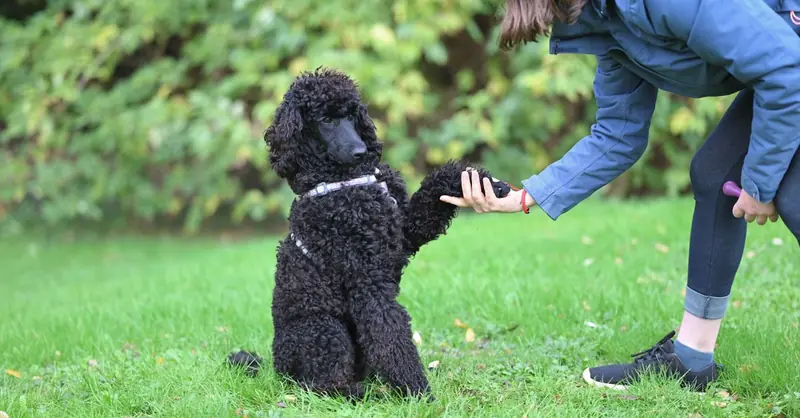
When learning how to trim dog nails, you take off tiny, millimeter-thin slices of the outer horn without injuring the sensitive, blood-filled quick inside. A complete paw care session takes about 5 to 15 minutes with a cooperative pet, but getting there requires gradual conditioning over several days or weeks. If your dog's nails click loudly on hard floors when standing or cause the toes to bend upward, a trim is overdue.
| Criterion | Details & Guidelines |
|---|---|
| Recommended Interval | Every 3 to 8 weeks (depending on activity level and walking surfaces) |
| Time per Session | 5 to 15 minutes (with trained dogs) |
| Difficulty Level | Medium (light nails: easy; dark nails: requires care) |
| Essential Tools | Nail clippers or scissors, nail file, styptic powder, flashlight |
| Safety Distance to Quick | At least 1 to 2 millimeters away from the vascular tissue |
Trimming Dog Nails the Right Way: Step-by-Step Guide
Clipping nails is not a test of strength; it is a blend of practical technique and behavioral science. By using cooperative care and medical training, your dog learns to participate voluntarily instead of being held down. Follow these systematic steps:
-
Preparation and Tool Check
Why: Dull blades crush the nail painfully instead of slicing cleanly through, which often sparks defensive reactions.
How: Have sharp nail clippers or scissors, a nail file, high-value treats, and styptic powder or a styptic pencil ready in case of accidents. Make sure you have bright lighting. -
Positioning Your Dog Comfortably
Why: Forcible restraint triggers panic and struggling.
How: Have your dog lie down on a non-slip mat or sit comfortably. Establish a relaxation cue or use a lick mat to keep their focus engaged positively. Hold the paw gently but securely without twisting the joints awkwardly. -
Locating the Quick
Why: The center of the nail contains nerves and blood vessels (the quick). Cutting into it causes sharp pain and heavy bleeding.
How: On light, translucent nails, you can easily spot the pink tissue inside. On dark nails, shine a flashlight through the side of the claw. Inspect the cut surface after every slice: as soon as you see a grayish-white dot or a small dark circle appear in the center, you are right in front of the live tissue and must stop. -
Cutting at the Correct Angle (Thin Slices)
Why: Taking off a large chunk at once drastically increases the risk of cutting the quick.
How: Position the blade at a 45-degree angle along the natural growth direction of the nail (parallel to the ground line when standing). Never chop off entire segments; shave off millimeter-thin shavings instead. Always maintain a safety margin of at least 1 to 2 mm from the quick. -
Don't Forget Dewclaws
Why: Front dewclaws and any rear dewclaws never touch the ground. Because they do not wear down naturally, they curl in a circle and can easily become ingrown.
How: Trim these claws regularly and with extra care, keeping the same 2 mm margin from the quick. -
Smoothing Edges and Rewarding
Why: Frayed horn edges can catch on carpets or blankets and split.
How: Smooth rough cut edges with a few strokes of a nail file. Wrap up the session with high-value treats and calm praise, ideally before your companion grows restless.
Nail Care Across Life Stages: A Timeline by Age and Needs
Nail care needs vary depending on your dog's stage of life, walking surfaces, and activity profile. While energetic dogs who spend lots of time on tarmac or concrete often wear their nails down naturally, senior dogs or puppies require closer monitoring. If you're unsure about typical paw structure for your dog's breed, checking the relevant breed finder profile can help, as paw shape and horn density vary between breeds like the athletic Dalmatian and smaller companion dogs.
| Phase / Age | Check Interval | Key Factors & Approach |
|---|---|---|
| Puppy (up to 6 months) | Check weekly | Focus on desensitizing paws. Gently filing the needle-sharp tips or taking off tiny slivers is often enough to build a positive association with paw handling. |
| Adult Dog (1–8 years) | Check every 4 to 6 weeks | Daily exercise determines wear. Often only dewclaws need routine clipping. Trim 1–2 mm as needed. |
| Senior Dog (from 8–9 years) | Check every 2 to 3 weeks | Lower activity levels and altered gait mean claws rarely wear down on their own. The quick often extends further out, requiring a particularly cautious approach. |
| Dogs with Orthopedic Issues / Compensatory Posture | Check every 2 weeks | Uneven weight distribution causes asymmetric wear. Correct uneven nails to avoid placing extra strain on joints. |
Common Nail Trimming Mistakes – and What to Do Instead
Most nail-trimming mishaps stem from avoidable everyday mistakes. These are the most common pitfalls to watch out for:
- Cutting off too much at once: Rushing to cut large pieces makes it easy to hit sensitive tissue. Instead: Shave off paper-thin layers. As soon as the center of the cross-section looks moist or darker, stop clipping that nail.
- Using unsuitable or dull tools: Standard household or craft scissors crush the dog's cylindrical nail, causing micro-fractures and pain. Instead: Use dedicated pet nail clippers with curved blades or an electric nail grinder.
- Restraining the dog by force: Pinning down a panicking dog floods their system with stress hormones, making future grooming sessions even harder. Instead: Use cooperative care in micro-steps. Trimming just one nail a day in a calm setting beats fighting over four paws at once.
- Ignoring an overgrown quick: When nails stay too long for extended periods, the blood vessels grow outward with them. Trying to cut the nail back to normal length right away will cause bleeding. Instead: Trim or file 1 mm off the nails weekly. Continuous gentle trims encourage the quick to recede over several weeks.
When to Seek Professional Help
There are times when you should put the clippers away and turn to a veterinarian or experienced trainer:
- Ingrown or infected nails: If a claw (especially a dewclaw) has already curled into the flesh or paw pad, a painful infection is present. This requires antiseptic treatment, possible local anesthesia, and veterinary care.
- Severe panic or defensive aggression: If your dog growls, snaps, or trembles with panic, there is an immediate risk of injury for both of you. A structured training plan guided by a professional trainer specializing in cooperative veterinary care is best here.
- Split, cracked, or hollowed claws reaching the base: When nail horn splits lengthwise down to the nail bed, bacteria can migrate into the pedal bone. These injuries must be treated by a vet.
In Germany, veterinary treatments are billed transparently under the Veterinary Fee Schedule (GOT). According to the fee catalog, trimming nails on all four paws typically incurs a basic charge between roughly €10 and €31 net, depending on the time required and the dog's level of cooperation, plus VAT and any initial exams needed.
Frequently Asked Questions
How do I know if my dog's nails are too long?
Stand your dog on a flat, hard surface. In a relaxed stance, the nails should not touch the floor. If you hear continuous clicking or tapping on tile or laminate floors, the nails are too long and need a trim. Another handy test: you should easily be able to slip a sheet of paper or a plastic card beneath the nails while your dog is standing.
What should I do if a nail starts bleeding?
Stay calm so your dog doesn't pick up on your stress. Immediately press a clean cloth or styptic pad gently but firmly against the tip of the injured claw for two to three minutes. Applying styptic powder or dipping the nail tip into clean cornstarch also quickly helps clotting. Keep the paw clean and dry afterward to prevent infection.
How do I find the quick on completely black dog nails?
Shining a flashlight through dark, pigmented nails rarely reveals the quick. Instead, inspect the claw from underneath: look at the underside of the nail where a hollow groove usually runs. Shave the nail down in millimeter-thin slices. As soon as the cut surface changes and you spot a small, oval center that looks grayish-white or slightly soft and dark, you have reached the bed of the quick—stop cutting immediately.
How do I get a fearful dog used to nail trims?
Use systematic desensitization. Train in brief sessions: touch the paw with your hand, reward immediately, and let go. Once your dog is comfortable with that, rest the clippers against the paw without squeezing, followed by a treat. Once the tool has a positive association, clip just a single nail on day one and wrap up the session on a positive note.
Transparent Dog Care with HonestDog
A calm approach to paw care builds lasting mutual trust between you and your companion. On HonestDog, you will find sound, honest advice and verified guidance on dog ownership, training, and wellness. Take your time with the training—every small step toward a stress-free grooming routine pays off for your dog's long-term health and comfort.