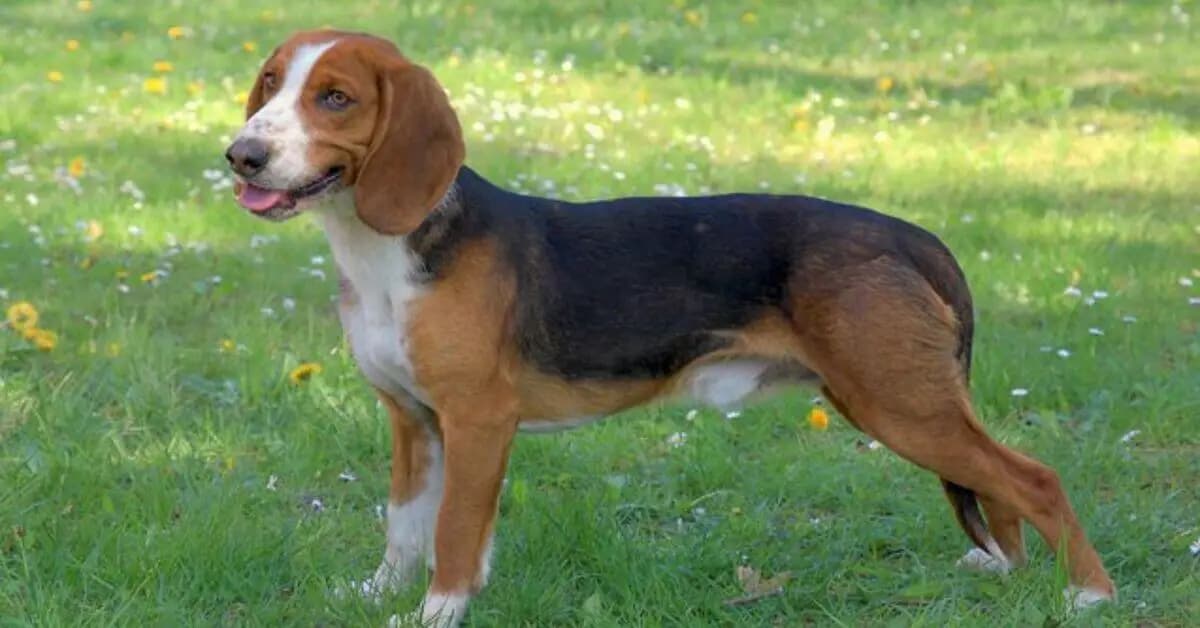
Hanoverian ScenthoundClose relative
The Bayerischer Gebirgsschweißhund (Bavarian Mountain Scent Hound) is a calm, extremely enduring, and highly specialized tracker—bred to follow the cold scent of injured game with intense focus in rugged terrain.
Self-check
Answer 6 quick questions about your everyday life and see how well the Bavarian Mountain Hound fits you — including an honest cost estimate per month, per year, and across the dog's lifetime.

At a glance
The essentials — key facts, traits, and health priorities — before you dive deeper.
Lifespan
12–14 yrs
Shoulder height
44–52 cm
Weight
17–25 kg
Practical
Temperament
Daily life
What matters most
Especially with a Bavarian Mountain Hound, choosing the right breeder is the single most important decision you'll make. Serious breeders consistently test the parents for inherited conditions, prioritize healthy early socialization, and stay accountable long after handover. A cheap puppy without health screening tends to become the most expensive dog later on.
See HonestDog breeder standards →Colors & coat
The coat colors that occur in the Bavarian Mountain Hound — including which ones fall outside the breed standard and which carry genetic risk.
Eye colors
 Brown
 Amber
Coat type
 Short
 Illustrative image
Medium
 Smooth
 Double coat
The real vibes check
A Bayerischer Gebirgsschweißhund is not a classic pet, but a highly qualified working colleague with a built-in nose for the invisible. If you don't give him a real job at the end of the tracking leash, he will make his own, often undesirable decisions. However, if you earn his respect, you will gain an unshakeably loyal shadow who will go through any thicket with you.
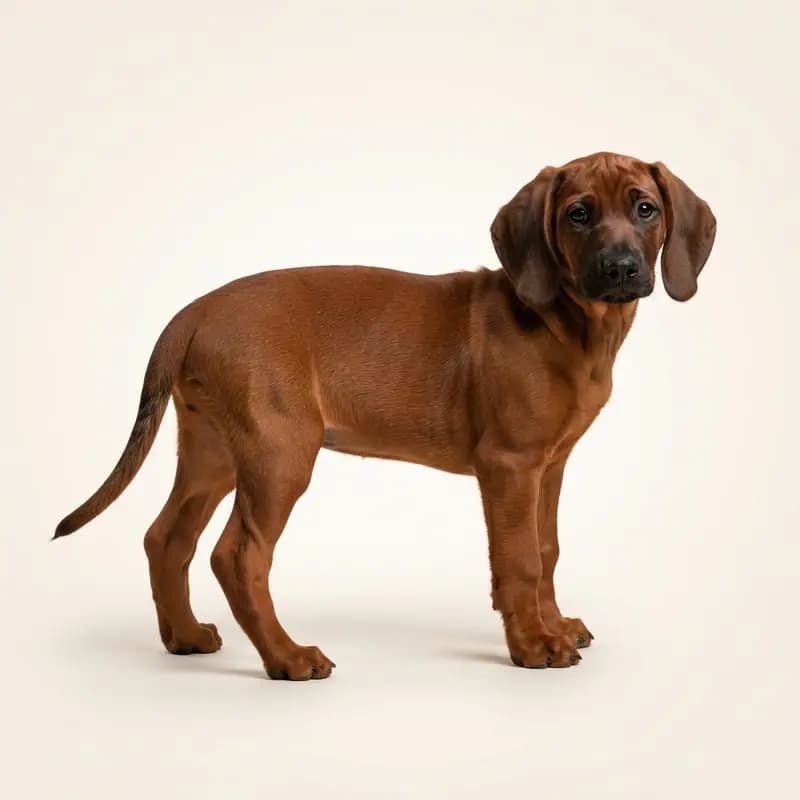
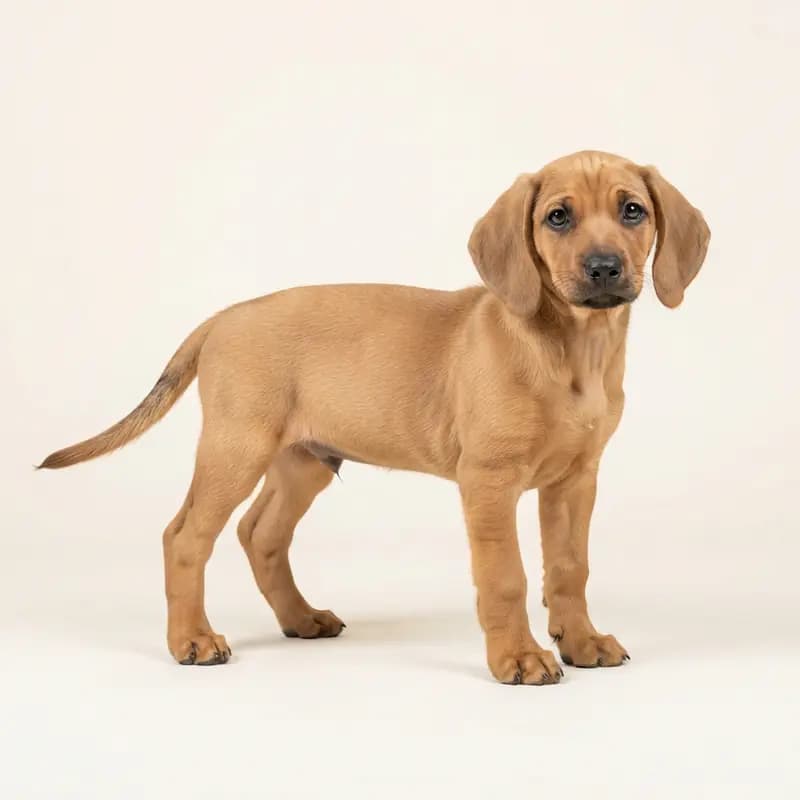
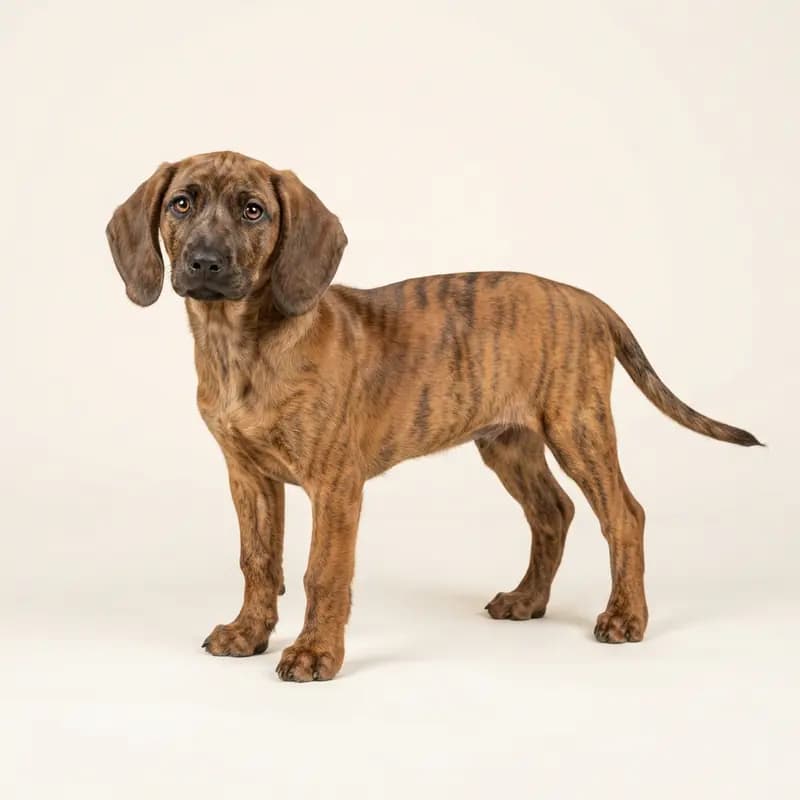
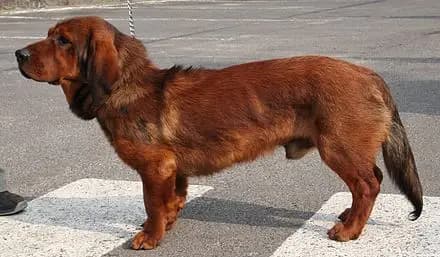
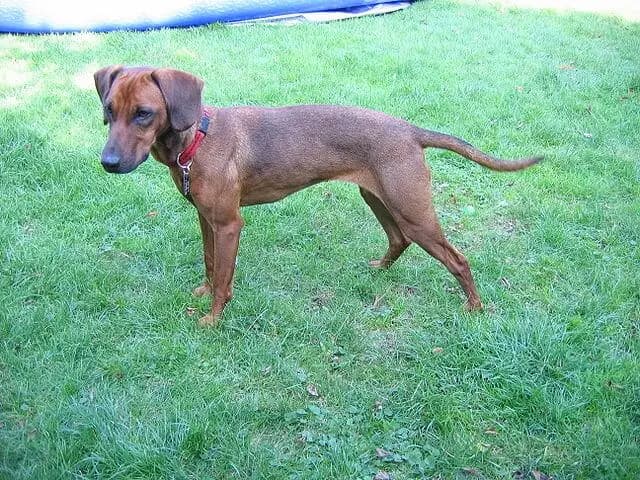
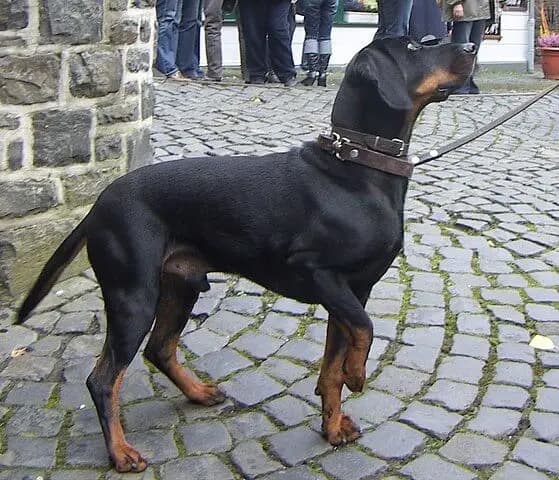
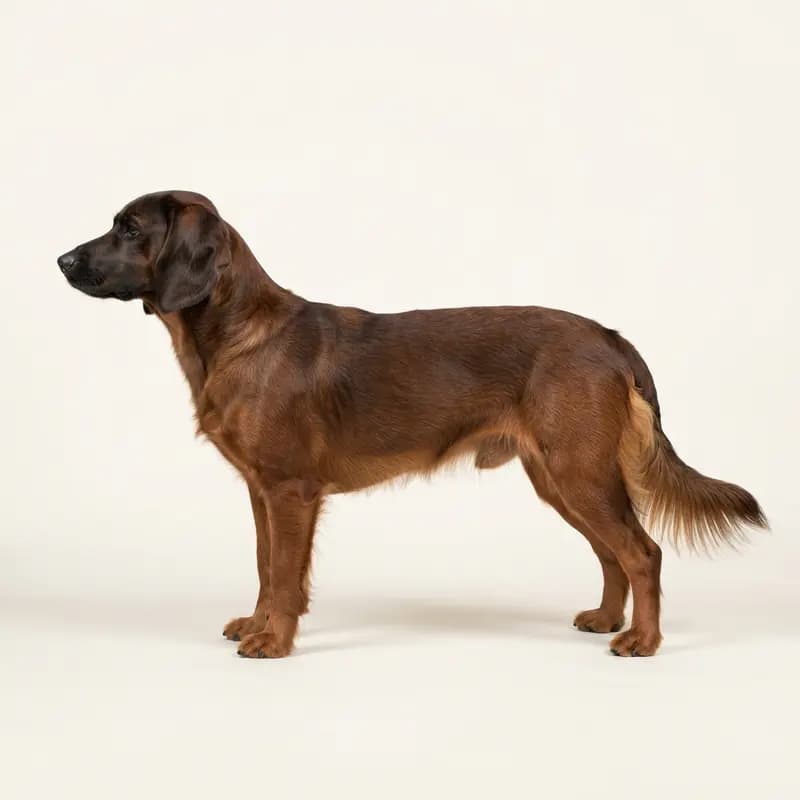
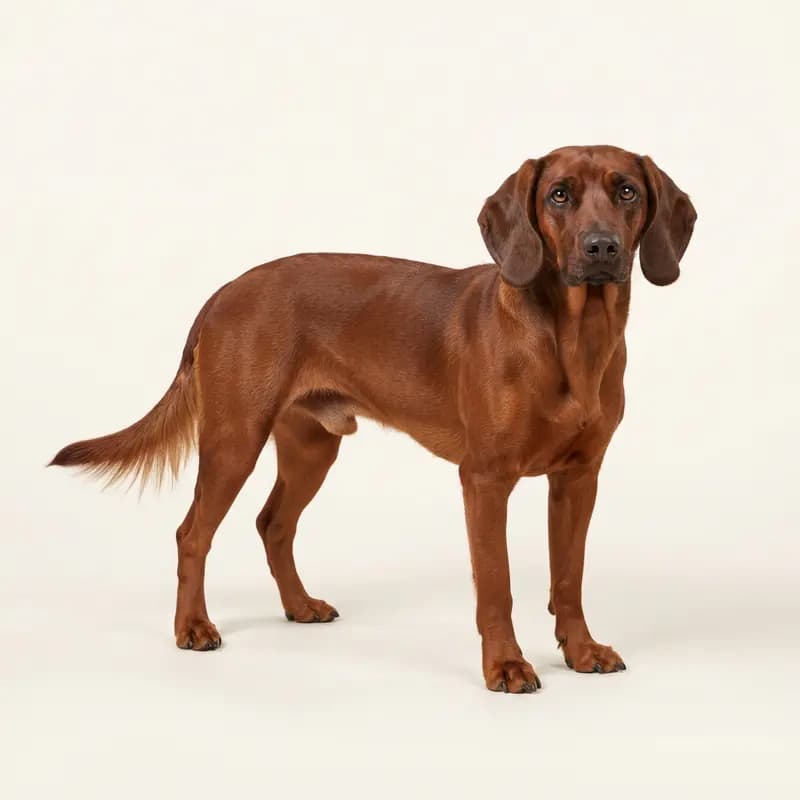
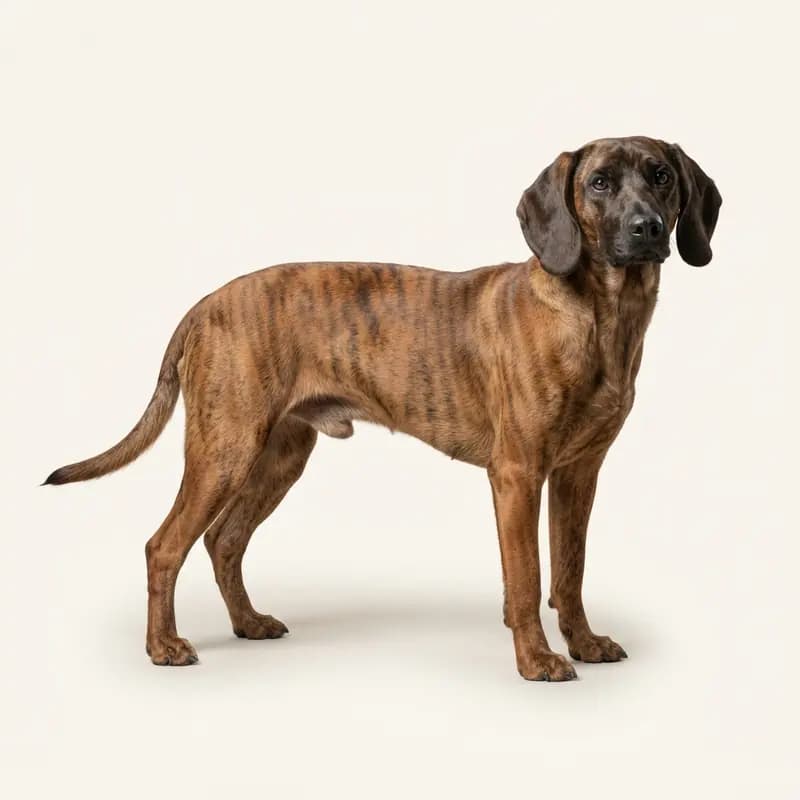
The Bavarian Mountain Hound is a medium-sized dog with a strong and well-proportioned build. His musculature is remarkably developed, giving him agility and endurance in demanding terrain. The lop-eared ears are moderately long and have a rounded tip. The tail is usually straight and reaches down to the hocks. It belongs to FCI Group 6, Section 2, which includes scent hounds, bloodhounds and related breeds. This dog was specifically bred to work in the mountains and is therefore particularly resistant to harsh weather conditions. His fur is not only visually appealing, but also offers him protection from cold and wet conditions. There is no distinction between performance and show lines in the Bavarian Mountain Hound, as the breed was and is bred primarily as a working dog.
If you are looking for a loyal companion with high intelligence and a real passion for work, the Bavarian Mountain Hound could be just the thing for you. This breed is known for its tireless endurance, ingenuity, and ability to track intricate scent trails. Their amazing skill makes them one of the most sought-after breeds for working as tracking hounds, especially in mountainous regions. In addition to their work ethic, they are also extremely affectionate and people-oriented. They form a strong bond with their owners and are often very sensitive. This dog needs a loving environment where he can feel part of the family. When it comes to their energy levels, they are not hyperactive but are still quite energetic, especially when it comes to their work. They enjoy being outside and engaging in physical activity, but also find satisfaction in finding relaxation after a long day. An interesting characteristic of the Bavarian Mountain Hound is its strong hunting instinct. He specializes in tracking injured game, which means he can also tend to follow scents and explore on his own in everyday life. That's why it's important that you live in a safe area or keep him on a leash if you don't want him to run away. In terms of alertness, they are quite alert and are likely to bark if they notice anything unusual. However, they are not guard dogs in the classic sense. As for the ability to stay alone, it should be noted that the Bavarian Mountain Hound is a very social breed. He can learn to stay alone for short periods of time, but he should not be left alone for long periods on a regular basis as this can cause separation anxiety. In conclusion, the Bavarian Mountain Hound is an amazing companion for someone who wants to build a deep relationship with their dog, especially if you lead an active life or are interested in hunting activities. This breed is definitely one that needs both physical and mental stimulation, and in return you will have a loyal and intelligent friend by your side.
| Watchfulness A natural watchdog with real protective instinct. | High |
| Openness to Strangers Neither pushily friendly nor suspicious. | Neutral |
| Hunting or Herding Drive This drive runs deep — no amount of training eliminates it. | Very strong |
Fun Fact!
A little fun fact at the end: The Bavarian Mountain Hound has an amazing ability to track smells over extremely long distances - sometimes several kilometers!
The Bavarian Mountain Sniffer Dog is calm and balanced, loyal to its owner and reserved towards strangers. He is a healthy, confident, fearless, sociable dog, neither shy nor aggressive.
This dog is less suitable for city life. He needs a lot of space and exercise and feels most comfortable in rural areas. Young children are usually not a problem, but careful introduction and supervision are important. The breed generally gets along well with other dogs, but their strong hunting instincts can be problematic when living with smaller pets.
Loves family life and thrives in a group.
Takes boisterous and affectionate children in its stride.
Usually gets on fine with other dogs.
Can manage in the city, but only with very active owners.
Owning a dog is a privilege, but it's also a real responsibility. Before you bring one into your life, be honest with yourself about the commitment it takes.
The Bavarian Mountain Hound is naturally highly motivated to work. You can promote this through nose work, mantrailing or tracking work. It is important to note that it is not "overworked" because that can lead to stress. Ball games should be used with caution as they can become ball junkies. It is important that this dog learns frustration tolerance and impulse control. Their tendency to hunt should not be suppressed, but it should be guided in an orderly manner. It is important to offer alternatives so that the dog can participate happily in social life and is compatible with it.
When it comes to nutrition, it is important to choose high-quality food that meets the dog's energy and nutrient needs. The protein and fat content should take into account the active lifestyle of this dog. Bavarian Mountain Hounds have a dense, smooth coat with an undercoat. The fur protects them from cold and wet, which means they can adapt well to the German climate. However, they shed quite heavily, especially during shedding. Regular grooming is therefore advisable.
| Care Level Minimal effort — occasional brushing and bathing. | Low-maintenance |
| Exercise Needs Working-dog energy that needs burning off every single day. | High-drive |
| Shedding Hair everywhere, always — no white clothing survives. | Very heavy |
| Trainability Willing to learn with clear rules and regular training. | Balanced |
Our experts are still reviewing this information. Spotted something wrong? Email us at info@honestdog.de.
Robust
Health grade
The Bavarian Mountain Scent Hound is considered a very robust breed, yet orthopaedic problems such as hip dysplasia (HD) and elbow dysplasia (ED), as well as eye diseases like progressive retinal atrophy, can occur. A responsible breeder has their parent animals specifically X-rayed and examined by a veterinary ophthalmologist for these risks prior to breeding in order to prevent severe malformations and blindness. When buying a puppy, make sure to ask to see the official test results of the parents: for HD, the score should be HD A–B, and for ED, ideally ED 0. Also ask for proof of freedom from ectropion / entropion and evidence that they are free of signs regarding epilepsy.
Grade is relative to other breeds — AI-assisted and editorially reviewed.
Methodology and data: HonestDog Dog Breed Health Report 2026
What matters most for this breed
Tap any item to see details.
You should ensure joint-friendly rearing and a healthy weight, as well as schedule regular eye check-ups so that your dog stays fit for a long time.
Reputable breeders have the hips, elbows, and eyes of the parent animals tested to specifically reduce the risk of joint wear and eye diseases in the lineage.
Note: This health overview is AI-assisted and editorially reviewed. It is for orientation only and does not replace veterinary advice.
What matters most for this breed — what's common, how much it affects the dog's life, and how to protect yourself as a buyer.
Tap a body region to see the inherited conditions linked to it.
The three most important risks
Pick a region on the map to explore other areas.
Tier 1 is the recommended health standard for this breed. Tiers 2 and 3 show how responsible breeders go beyond.
Recommended standard. These tests make up the recommended health standard for this breed — the baseline of any careful breeding program. Ask any reputable breeder for the results.
No entries in this tier.
Note: This health overview is AI-assisted and editorially reviewed. It is for orientation only and does not replace veterinary advice.
A Bavarian Mountain Hound costs around ~€180 per month (€90 – €330, depending on your setup). The first year adds up to roughly ~€4,690 including purchase, equipment and puppy school; across the dog's life (13 years) it comes to about ~€29,950.
With surgery cover, running costs come to about ~€170 per month — in return, your share of a major operation drops from several thousand euros to around 20 percent.
Per month
~€180
In the first year
~€4,690
Across the dog's life
~€29,950
Estimated purchase price from a breeder: €1,000 – €2,500
Estimate at a mid-range setup (suburban, dry food, 1–2 hours of daily exercise), average German prices, as of July 2026.
HonestDog Concierge
We currently have no breeders for this breed who have passed our verification. Create your short buyer profile: we'll set up your search alert, review a possible source and email you within 28 days.
 Illustrative image
 Illustrative image
 Illustrative imageIllustrative image
The Bavarian Mountain Hound has its origins in Germany and is one of the oldest hunting dog breeds that was bred specifically for tracking (pursuing injured game). The roots of the breed go back to the late 19th century. The Bavarian Mountain Hound is believed to have originated from a cross between the Red Hound and the Hanoverian Hound to create a more agile and lighter dog for the difficult mountain terrain. In the 1870s, Baron Karg-Bebenburg began breeding this breed in Bavaria. His goal was to develop a dog capable of working over long distances in difficult terrain while tracking down injured game. The breed was recognized by the German Kennel Club (VDH) in 1912 and has been known as an independent breed ever since.
The Bavarian Mountain Hound was bred to search for injured game in mountainous terrain and is known for its excellent nose and endurance.
Germany
1870
Day to day and as part of a family, many owners describe the Bavarian Mountain Scent Hound as a surprisingly calm, gentle and cuddly housemate. Given enough to do, it is very easy to live with indoors, seeks physical closeness with its people and is deeply attached to its familiar circle. Like many of the breed, it tends to be reserved or aloof with strangers, but it usually warms up without trouble if introductions are calm.
At the same time, reports keep coming back to the breed's strong one-person bond. These hounds often pick one main person and take their cues from them, while other family members are loved but their commands are sometimes taken less seriously. Because the bond runs so deep, many of these dogs find it hard to be left alone. Owners say early, step-by-step practice is essential; otherwise the dogs tend toward controlling behavior, persistent howling and separation stress. In owner accounts, life purely in an apartment or office without the right outlet is seen as a problem.
Sources:forum.hundund.detierforum.dedogorama.apprasseportraits.fichtlmeier.dewildtierschuetzer-bw.de
In accounts of training and handling, owners regularly stress that the Bavarian Mountain Scent Hound is sensitive and does not cope with harsh treatment. Heavy-handed pressure or yelling quickly leaves the dog insecure, withdrawn or stubbornly refusing to cooperate. Owners agree that successful training rests on patience, complete consistency and a deep foundation of trust.
The biggest off-leash challenge is, and remains, its fascination with game scent. Once that fine nose picks up an interesting trail, many of these dogs go into tunnel vision and basic obedience quickly fades into the background. For many of the breed, a relaxed off-leash walk in the woods is barely possible, or only after very intensive anti-hunting training. Owners point out that ordinary walks don't tire these dogs out mentally. Only structured tracking, mantrailing or challenging blood tracking clears their heads and lays the groundwork for a biddable, balanced companion.
Sources:rasseportraits.fichtlmeier.dehundeforum.comforum.hundund.de
On health and daily care, owners describe the Bavarian Mountain Scent Hound as a hardy, weatherproof working breed that is not very prone to illness overall. The dense, close-lying coat is self-cleaning and easy to care for, but it comes with a quirk typical of the breed: during shedding, the short, stiff hairs work their way stubbornly into upholstery and clothing and are hard to vacuum up.
According to owners, the drop ears need the most attention. They should be checked and cleaned regularly, especially after work in dense undergrowth or in wet conditions, to prevent infections and to catch foreign bodies or ticks that might otherwise lodge there unnoticed. As for physical development, owners advise not to overload the dog in its first year so the joints can develop properly. When weight and fitness are watched and tracking and blood-trailing work is built up gradually, owners mostly report long-lived, agile dogs that stay fit well into old age.
Sources:hundeforum.compudelforum.de
Paraphrased from real owner reports · translated from German
The Bavarian Mountain Hound is an active dog that needs plenty of exercise and mental stimulation. Research the temperament, grooming needs, and space requirements before deciding.
The average life expectancy of a Bavarian Mountain Hound is 12-14 years. With proper care and regular vet visits, your dog can live a long, healthy life.
Bavarian Mountain Hound grooming requirements include regular brushing, nail trimming, and dental care. HonestDog provides detailed grooming tips for every breed.
The Bavarian Mountain Hound can be a great family dog. Proper training and socialization are key. HonestDog provides family suitability information for every breed.
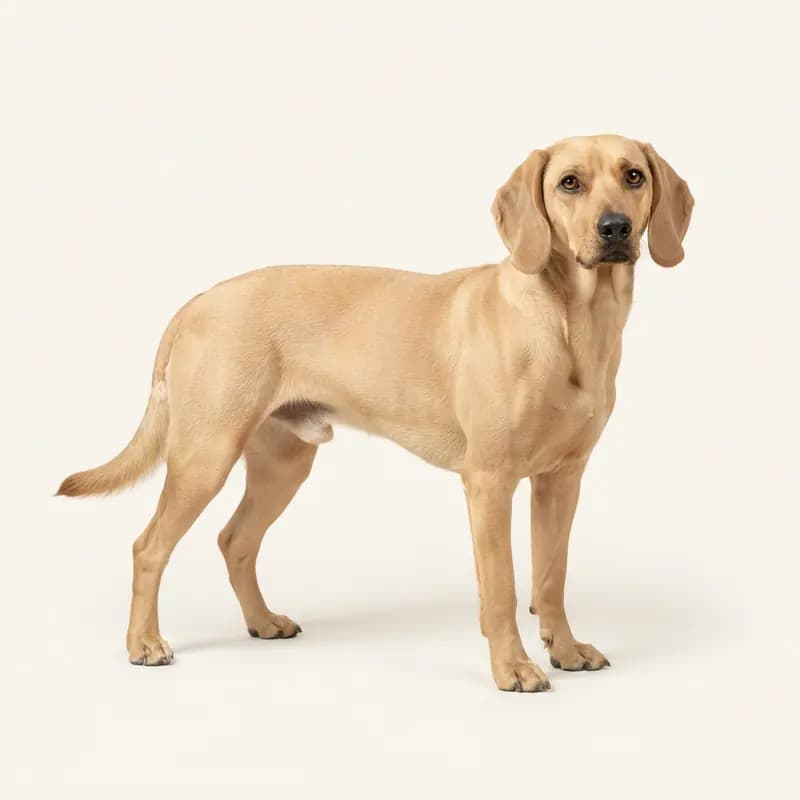
The Bavarian Mountain Hound comes in these colors: Red, Fawn, Brindle.
Showcase your kennel on HonestDog and reach families searching for a responsibly bred Bavarian Mountain Hound.