
Jack Russell TerrierClose relative

The Brazilian Terrier is a lightning-fast, tireless Erdhund (earth dog)—bred as a versatile farm dog in South America that hunts rats, alerts you to strangers, and works more closely with its human than many other terriers.
How the health grade is calculated
Sources for required breeding screenings. Klub für Terrier e.V.
Self-check
Answer 6 quick questions about your everyday life and see how well the Brazilian Terrier fits you — including an honest cost estimate per month, per year, and across the dog's lifetime.



At a glance
The essentials — key facts, traits, and health priorities — before you dive deeper.
Lifespan
12–14 yrs
Shoulder height
33–40 cm
Weight
7–10 kg
Practical
Temperament
Daily life
What matters most
Especially with a Brazilian Terrier, choosing the right breeder is the single most important decision you'll make. Serious breeders consistently test the parents for inherited conditions, prioritize healthy early socialization, and stay accountable long after handover. A cheap puppy without health screening tends to become the most expensive dog later on.
See HonestDog breeder standards →Colors & coat
The coat colors that occur in the Brazilian Terrier — including which ones fall outside the breed standard and which carry genetic risk.
Eye colors
 Brown
 Blue
 Green
 Amber
Coat type
 Short
 Smooth
The real vibes check
A Brazilian Terrier is like a bouncy ball with a built-in radar—always on the move, always alert, and up for any fun. If you channel his bubbling energy into genuine teamwork, you will get an inseparable shadow. However, if you leave the decisions to him, he will quickly mutate into a barking controller of your entire daily routine.
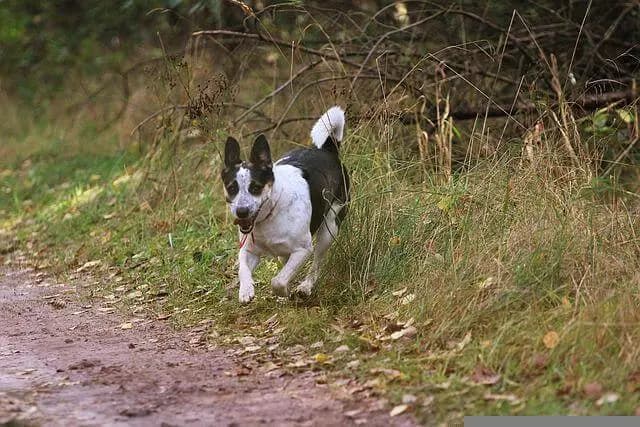
The Brazilian Terrier, often also called the Fox Paulistinha, is a small to medium-sized dog with a lively and energetic presence. Its build is slender and well-proportioned, making it a very nimble and agile dog. A distinctive feature of this breed is the triangular folded ears, which give it an attentive and alert expression. Its eyes are almond-shaped, usually dark, and reflect its intelligence and attentiveness. In the FCI (Fédération Cynologique Internationale) classification, the Brazilian Terrier is listed in Group 3: Terriers, Section 1: Large and medium-sized Terriers. There is no distinction between show and working lines, which makes the breed as a whole very homogeneous.
The Brazilian Terrier is a true terrier through and through. He is known for his energetic and exuberant nature. This breed loves to be active and has a great urge to move. Whether playing, exploring or training, a Brazilian Terrier is always full of energy and drive. This makes it particularly suitable for active people who like to spend a lot of time outdoors and want to involve their dog in various activities. But this breed has much more to offer than just energy. The Brazilian Terrier is a very trainable dog that quickly picks up new commands and can also master complex tasks. This makes him a great companion dog for various dog sports such as agility or flyball. But he can also shine as a trick dog and impress with his skills. Despite his independence, the Brazilian Terrier is very people-oriented and highly values the company of his family. He is playful and outgoing, both towards people and other dogs. With his cheerful and open-minded nature, he can quickly win the hearts of dog lovers. A Brazilian Terrier can also learn to stay alone, but keep in mind that they are a breed with high activity levels. Therefore, he should not have to spend excessively long periods of time alone, otherwise he might become bored. However, a well-used Brazilian Terrier is a contented dog who can also enjoy quiet periods. The instinct to hunt is present in this terrier, but is usually less pronounced than in other terrier breeds. With consistent training and good management, this behavior can usually be well controlled. When it comes to alertness, the Brazilian Terrier is an alert dog that is always aware of its surroundings. He is not overly barking, but will alert his family to visitors or unusual noises. Overall, the Brazilian Terrier is an active, intelligent and charming breed that makes a good companion for active people. Its size makes it a practical companion for many life situations, and its adaptability and zest for life make it a wonderful family dog.
| Watchfulness Reports unusual activity but stays controlled. | Moderate |
| Openness to Strangers Warms up quickly and is generally welcoming. | Friendly |
| Hunting or Herding Drive Noticeable drive — needs attention around small animals. | Moderate |
Fun Fact!
Did you know that the Brazilian Terrier is one of the few dog breeds that originated in Brazil and is internationally recognized?
The Brazilian Terrier is a lively and intelligent dog that requires a lot of exercise and activity. It is alert and shows a strong bond with its family. These dogs are agile and well-suited for active people looking for a loyal companion. Despite their energy, they are friendly and adaptable.
The Brazilian Terrier is an active and energetic dog and therefore needs enough exercise and mental stimulation. He is well suited to city life as long as he gets enough exercise and is not left alone for too long. A garden for playing and running around is an advantage, but regular walks and activities can also be sufficient in an apartment. The Brazilian Terrier is generally good with children and can be a great family dog. However, all interactions between dogs and small children should always take place under supervision to protect both the child and the dog. He can also usually learn how to get along with other pets well, especially if he is socialized with them as a puppy.
Lives for its family — the born family companion.
Takes boisterous and affectionate children in its stride.
Usually gets on fine with other dogs.
Small space, noise, lots of people — no problem at all.
Owning a dog is a privilege, but it's also a real responsibility. Before you bring one into your life, be honest with yourself about the commitment it takes.
The Brazilian Terrier is an intelligent and eager-to-learn animal, which makes training him a pleasure. With positive training methods and lots of praise, you can get the best out of this clever dog. This breed of dog has a lot of energy and loves to be challenged physically and mentally. Therefore, dog sports such as agility or flyball are ideal for the Brazilian Terrier. But mental work, such as search games or trick training, can also be a lot of fun and keep him busy. Even though the Brazilian Terrier needs a lot of activity, it is important to make sure that you do not "over-occupy" him. Like all dogs, he needs rest periods to recover and relax. Frustration tolerance and impulse control are also important skills that the Brazilian Terrier should learn. This way he can learn to wait patiently until he gets what he wants and to remain calm even in exciting situations.
The Brazilian Terrier's diet should be balanced and high quality. As with all dog breeds, it is important to provide the right amount of nutrients to ensure good health. Fresh meat, vegetables and high-quality dry food can form the basis of a healthy diet. Regular weight monitoring is also important as being overweight can cause various health problems. Caring for the Brazilian Terrier is generally straightforward. His short coat has no undercoat and sheds little. He only needs occasional brushing to remove dead hair and promote skin health. Bathe him only when absolutely necessary so as not to strip the natural oils in his fur. The Brazilian Terrier is well adapted to the climate in Brazil and can handle heat well. However, in colder climates, such as Germany, it may require additional protection, especially in the winter months.
| Care Level Minimal effort — occasional brushing and bathing. | Low-maintenance |
| Exercise Needs Needs several hours of serious exercise every day. | Very active |
| Shedding Regular shedding — dog hair on clothes is now normal. | Moderate |
| Trainability Willing to learn with clear rules and regular training. | Balanced |
Our experts are still reviewing this information. Spotted something wrong? Email us at info@honestdog.de.
Solid, watch carefully
Health grade
In the Brazilian Terrier, there are breed-typical risks for patellar luxation (PL) as well as severe eye diseases such as primary lens luxation (PLL), primary open-angle glaucoma, and progressive retinal atrophy. While the Klub für Terrier e.V. mandates screening for patellar luxation (PL) with a cut-off value of 0–1, dedicated breeders also additionally test for hereditary eye diseases as well as genetic risks such as mucopolysaccharidosis type VII (MPS VII) and malignant hyperthermia. Before purchasing, ask to see the patellar luxation (PL) results of the parent animals and ensure that in the case of mucopolysaccharidosis type VII (MPS VII), a carrier is mated exclusively with a clear partner.
Grade is relative to other breeds — AI-assisted and editorially reviewed.
Methodology and data: HonestDog Dog Breed Health Report 2026
What matters most for this breed
Tap any item to see details.
You should ensure that your dog is raised in a way that is gentle on his joints and put a coat on him in cold, wet weather, as he lacks a warming undercoat.
Responsible breeders provide proof of the mandatory screening for patellar luxation (PL) and voluntarily test for primary lens luxation (PLL), primary open-angle glaucoma, and mucopolysaccharidosis type VII (MPS VII).
Note: This health overview is AI-assisted and editorially reviewed. It is for orientation only and does not replace veterinary advice.
What matters most for this breed — what's common, how much it affects the dog's life, and how to protect yourself as a buyer.
Tap a body region to see the inherited conditions linked to it.
The three most important risks
Pick a region on the map to explore other areas.
Tier 1 is the core standard: the tests Klub für Terrier e.V. requires, plus further tests from the recommended health standard for this breed. Tiers 2 and 3 show how responsible breeders go beyond.
Core standard. Tests marked “Club standard” are required by Klub für Terrier e.V. for breeding approval; the others are part of the recommended health standard for this breed. Ask any reputable breeder for the results.
No entries in this tier.
Note: This health overview is AI-assisted and editorially reviewed. It is for orientation only and does not replace veterinary advice.
A Brazilian Terrier costs around ~€160 per month (€80 – €290, depending on your setup). The first year adds up to roughly ~€4,470 including purchase, equipment and puppy school; across the dog's life (13 years) it comes to about ~€27,110.
With surgery cover, running costs come to about ~€150 per month — in return, your share of a major operation drops from several thousand euros to around 20 percent.
Per month
~€160
In the first year
~€4,470
Across the dog's life
~€27,110
Estimated purchase price from a breeder: €1,000 – €2,500
Estimate at a mid-range setup (suburban, dry food, 1–2 hours of daily exercise), average German prices, as of July 2026.
HonestDog Concierge
We currently have no breeders for this breed who have passed our verification. Create your short buyer profile: we'll set up your search alert, review a possible source and email you within 28 days.

 Illustrative image
 Illustrative image
The history of the Brazilian Terrier (Terrier Brasileiro) began primarily in the late 19th and early 20th centuries. During this period, it was common for wealthy Brazilian families to send their children to Europe, particularly France and Great Britain, for their studies. Upon their return, these students often brought small European terriers back to their family estates, most notably Fox Terriers and Jack Russell Terriers. On the Brazilian fazendas, these imported dogs interbred with local dogs already adapted to the climate, such as small Pinschers and Chihuahuas. From these pairings, a robust, agile, and versatile farm dog emerged. Its original purpose was pest control as a tireless ratter, as well as serving as a vigilant farm guardian and a courageous companion for small game hunting. Although the breed shaped the rural landscape of Brazil for decades, its official cynological recognition came late. In 1973, the Brazilian Terrier was officially recognized as a distinct breed by the national kennel club. The Fédération Cynologique Internationale (FCI) granted provisional recognition in 1995 and finally gave full recognition in 2007. Today, the Terrier Brasileiro is valued both as an agile working dog and a lively companion.
The Brazilian Terrier was bred as a versatile farm dog and is known for its alertness and lively temperament.
Brazil
1800
In family life, the Brazilian Terrier is described as a devoted, cheerful and cuddly companion. Owners regularly mention how playful it is, which makes it an enthusiastic playmate, especially for children. Outdoors it can seem like a little whirlwind, tirelessly fetching things, yet owners appreciate that it can settle down at home and relax snuggled up close to its people.
At the same time, owner reports point to breed traits that need attention day to day. Many of these dogs are wary or aloof with strangers at first. They are also very alert. Many owners report that the terrier quickly reacts to sounds or movement outside the front door with excited barking, so this alert barking needs to be channeled from the start.
Sources:edogs.de
In training and activities, owners especially value the breed's quick understanding and eagerness to work. Compared with some more willful European terrier breeds, the Terrier Brasileiro is often seen as more cooperative and easier to handle. It picks up tricks and basic commands fast and responds very well to positive reinforcement and rewards.
Owners describe its need for mental exercise as a challenge, though: walks alone are rarely enough. Without puzzles, dog sports such as agility, or scent work, this clever dog will quickly find its own entertainment. Consistency is essential, because it notices any lapse in its people's attention in a flash and, without clear leadership, tends to make its own decisions. Owners consider its prey drive more moderate than in other terriers, but it is clearly there when small animals or moving things are around.
Sources:edogs.deof-lasvegas.dedogorama.appwelpen.vdh.dedogdna.de
Owners paint a mostly uncomplicated picture of health and care. The short, close-lying coat with no dense undercoat needs hardly any grooming and doesn't get very dirty. The breed is generally considered tough and agile.
Owners note, however, that the thin coat, lacking a warming undercoat, means these dogs get cold quickly in wet, chilly weather or when winter temperatures drop below freezing. Many owners therefore reach for a dog coat in the colder months. A few owners also report sensitive skin or food intolerances, so it is worth feeding a high-quality diet and keeping the dog from becoming overweight.
Sources:of-lasvegas.dewelpen.vdh.demarkt.deterrier.dezoomalia.de
Paraphrased from real owner reports · translated from German
The Brazilian Terrier is an active dog that needs plenty of exercise and mental stimulation. Research the temperament, grooming needs, and space requirements before deciding.
The average life expectancy of a Brazilian Terrier is 12-14 years. With proper care and regular vet visits, your dog can live a long, healthy life.
Brazilian Terrier grooming requirements include regular brushing, nail trimming, and dental care. HonestDog provides detailed grooming tips for every breed.
The Brazilian Terrier can be a great family dog. Proper training and socialization are key. HonestDog provides family suitability information for every breed.
The Brazilian Terrier comes in these colors: Tricolor.
Showcase your kennel on HonestDog and reach families searching for a responsibly bred Brazilian Terrier.