Wire Fox TerrierSame FCI section
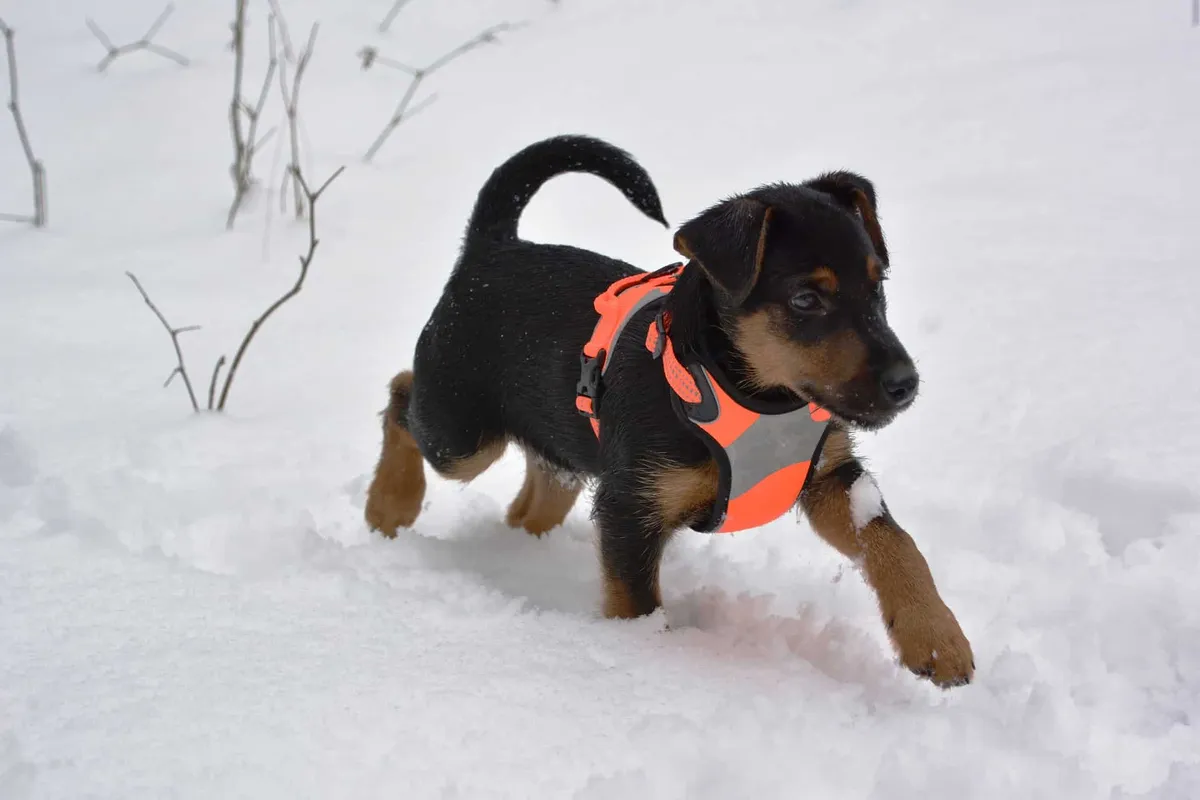
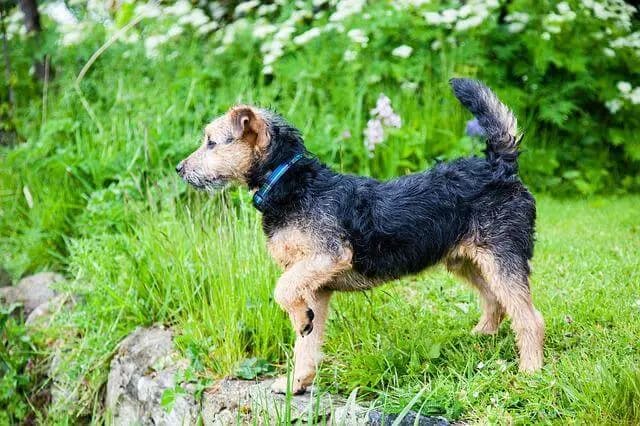
The Deutscher Jagdterrier is an incredibly driven, fearless worker—an uncompromising Erdhund (earth dog) bred for the rigors of hunting both above and below ground, for whom giving up is simply not in his biology.
How the health grade is calculated
Sources for required breeding screenings. Deutscher Jagdterrier-Club e.V. (DJT)
Self-check
Answer 6 quick questions about your everyday life and see how well the Jagdterrier fits you — including an honest cost estimate per month, per year, and across the dog's lifetime.

At a glance
The essentials — key facts, traits, and health priorities — before you dive deeper.
Lifespan
13–15 yrs
Shoulder height
33–40 cm
Weight
8–10 kg
Practical
Temperament
Daily life
What matters most
Especially with a Jagdterrier, choosing the right breeder is the single most important decision you'll make. Serious breeders consistently test the parents for inherited conditions, prioritize healthy early socialization, and stay accountable long after handover. A cheap puppy without health screening tends to become the most expensive dog later on.
See HonestDog breeder standards →Colors & coat
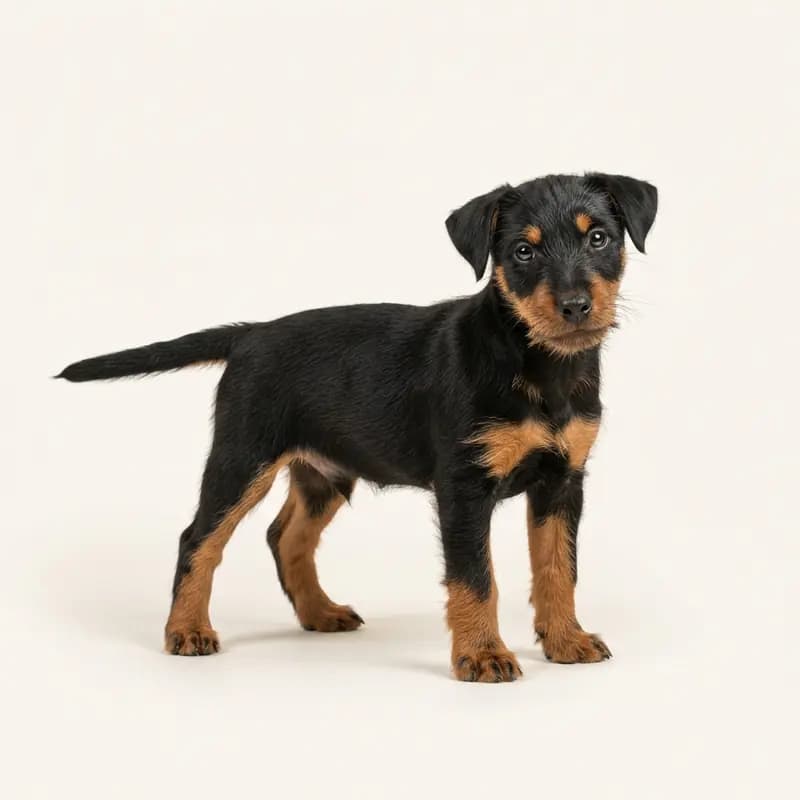
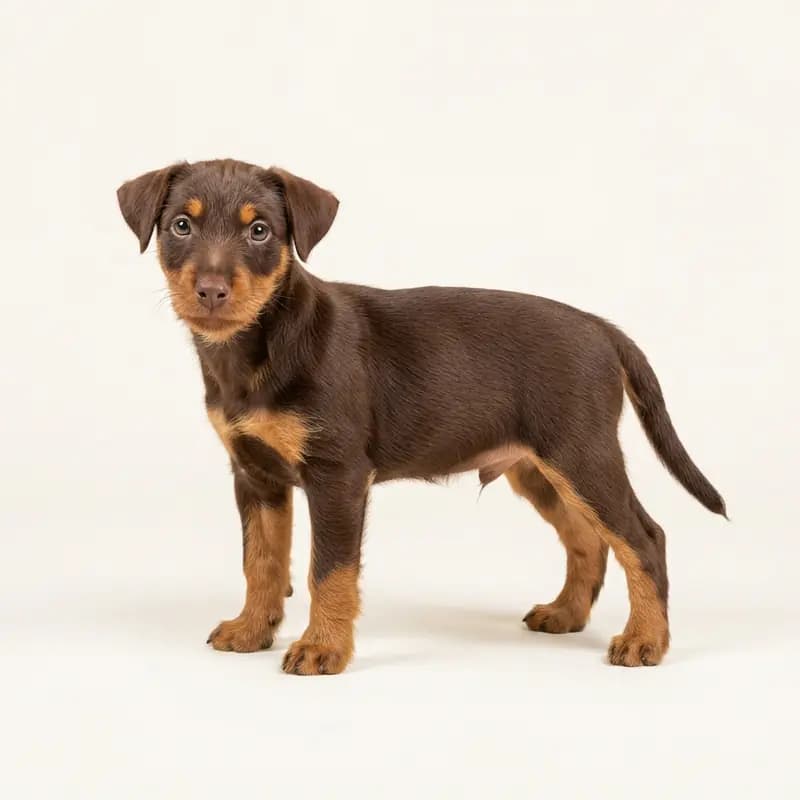
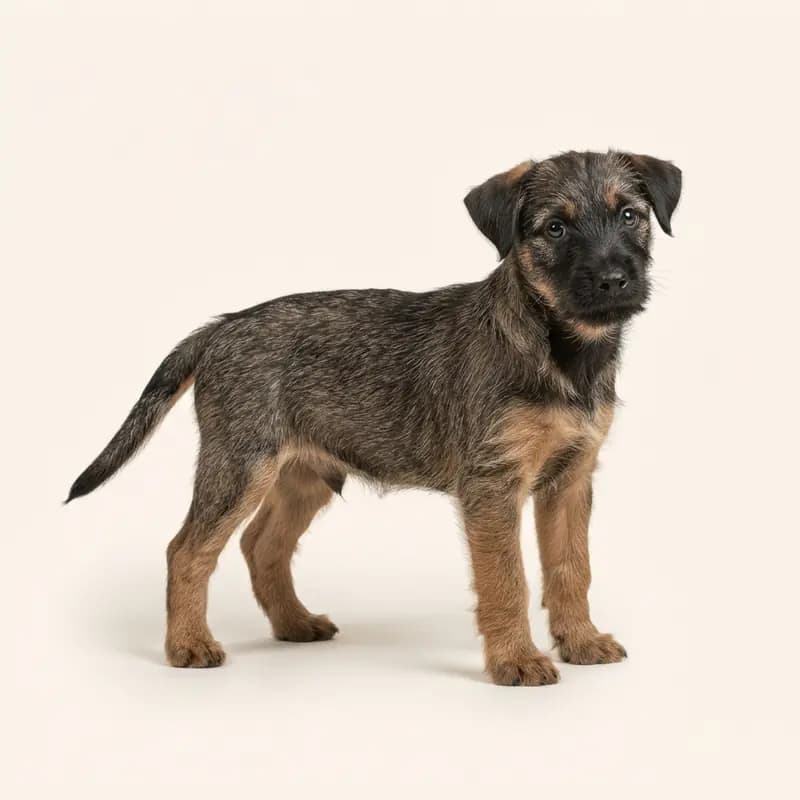
The coat colors that occur in the Jagdterrier — including which ones fall outside the breed standard and which carry genetic risk.
Eye colors
 Brown
Coat type
 Illustrative image
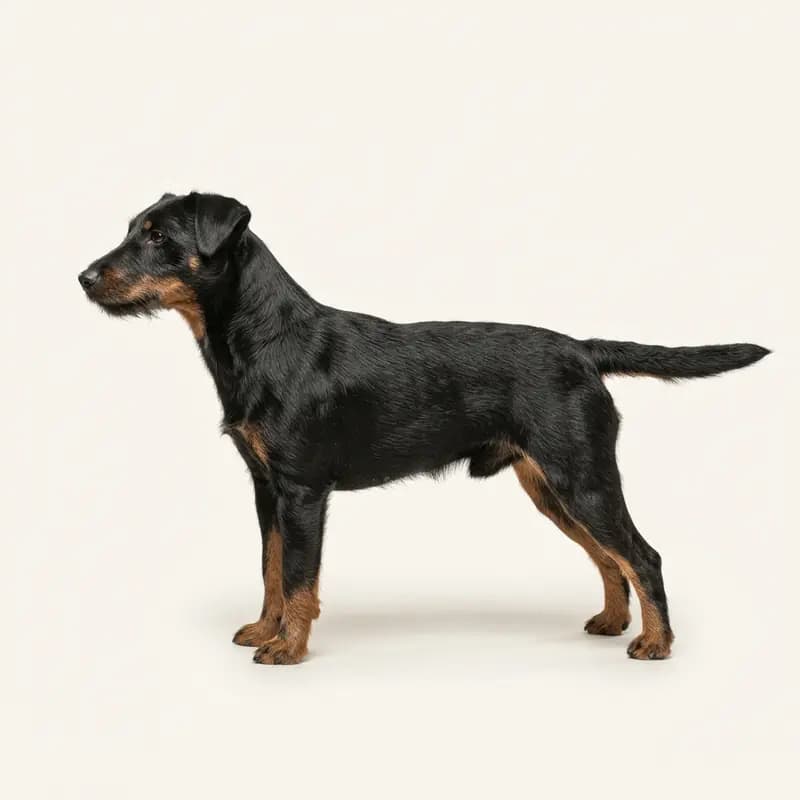
Short
 Smooth
 Illustrative image
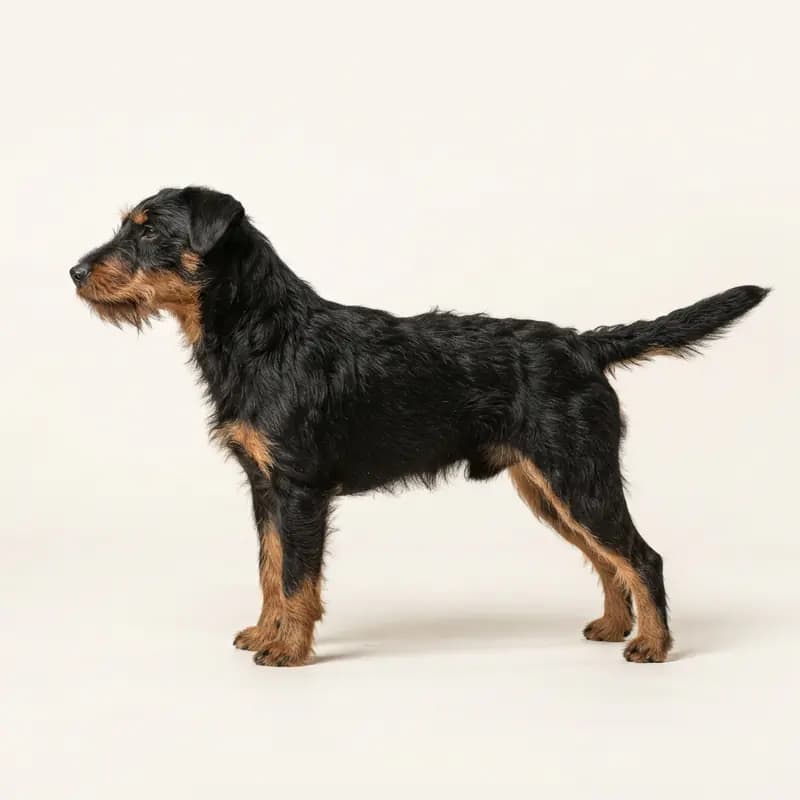
Wire
 Double coat
The real vibes check
A Deutscher Jagdterrier is like a high-revving engine with no off switch—built to take on a defensive fox in a dark den if necessary. If you try to force this prey-driven hardware into a suburban life as a simple family pet, the system will inevitably crash. But if you give him the real, demanding work he craves, you will have the most loyal and courageous partner by your side.
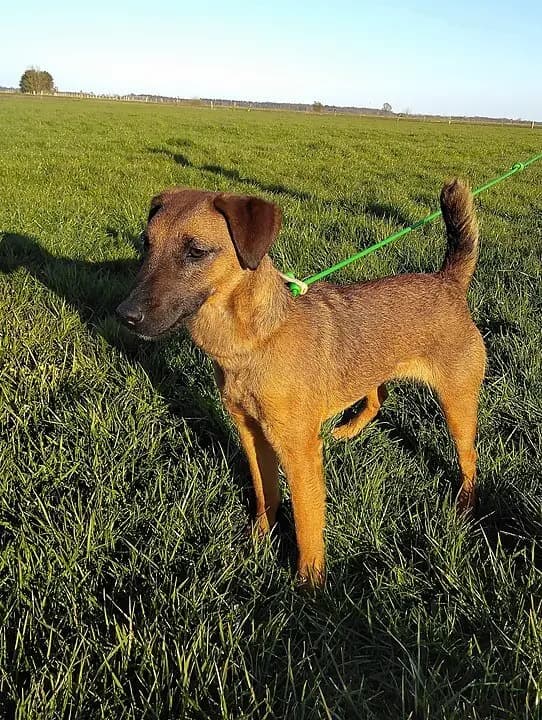
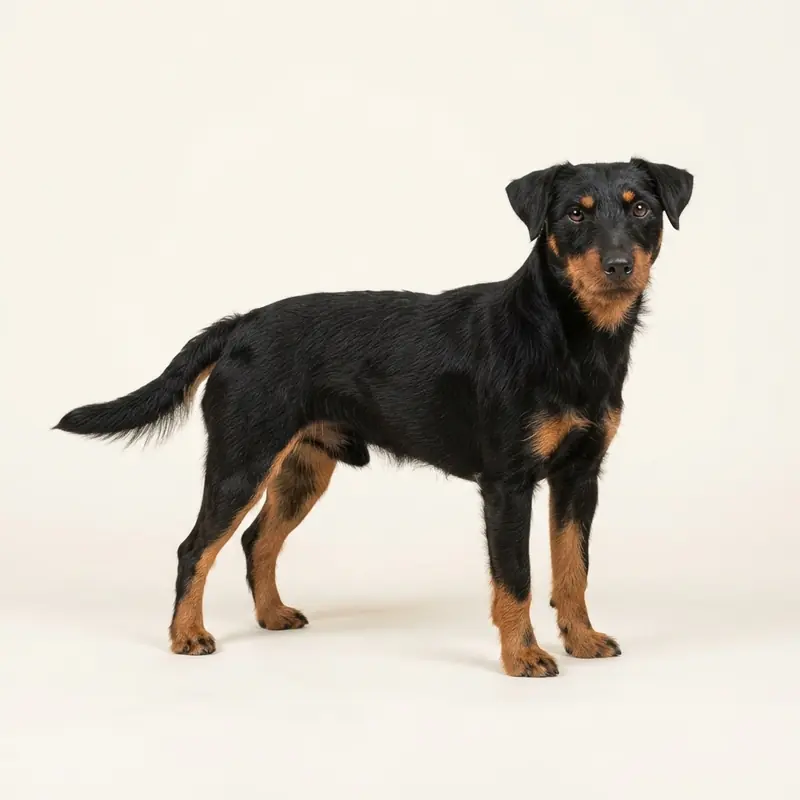
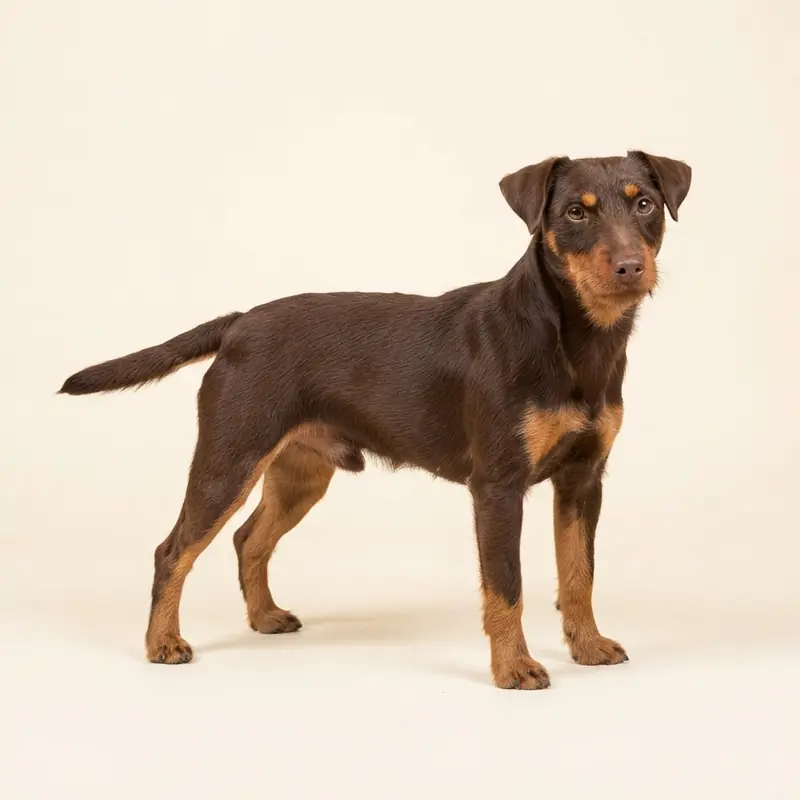
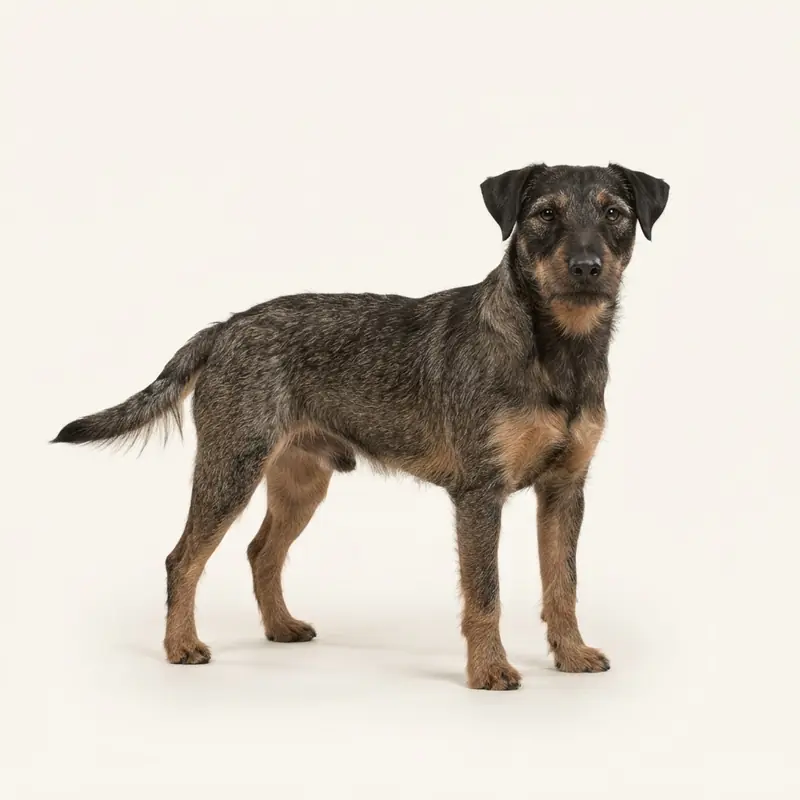
The German Hunting Terrier, often called the Deutscher Jagdterrier, is a small, strong dog with a courageous and energetic character. He belongs to FCI Group 3, which includes terriers, and is known for his high energy and tireless willingness to work. This dog has a compact and well-proportioned build. The head is elongated with a pronounced stop and the ears are V-shaped and drooping. The eyes are dark and oval, giving the Jagdterrier a lively and intelligent expression. The back is straight and firm, the chest deep and broad. The tail is often docked, but this is now banned in many countries, including Germany.
The German Hunting Terrier is an energetic and committed dog that is characterized by its enthusiasm for work and its strong will. His nature is characterized by his hunting instincts, which make him an active, tireless and goal-oriented dog. As a hunting dog, the German Hunting Terrier is known for its toughness and courage. Not only is he able to track and capture game, but he can also work in construction and water. His endurance and intrepid nature make him an indispensable companion when hunting. Although the German Hunting Terrier is a working dog, he also has a loving side. He is very loyal and affectionate towards his family. He is people-oriented and can form a strong bond with its owner, especially if well socialized from an early age. The German Hunting Terrier is a very playful dog that is always ready to romp and play. His intelligence and willingness to learn make him a good companion for active people who enjoy working and playing with their dog. But despite his playful nature, the German Hunting Terrier is no couch potato. He needs a lot of physical and mental stimulation to be happy and balanced. An underemployed Hunting Terrier may develop problematic behavior, such as excessive barking, digging, or chewing. It is important to note that the German Hunting Terrier has a strong hunting instinct. It tends to prey on small animals and could be a problem for households with other small animals such as cats or rabbits. It is therefore important that he is well socialized from an early age and prepared for these situations. In terms of alertness, the German Hunting Terrier is a good watchman. He is alert and attentive and will not hesitate to protect his family if he thinks they are threatened. All in all, the German Hunting Terrier is an energetic, courageous and loyal dog that needs strong leadership and plenty of activity. With proper socialization and training, he can be a great companion for active people who are willing to give him the time and attention he needs.
| Watchfulness A natural watchdog with real protective instinct. | High |
| Openness to Strangers Neither pushily friendly nor suspicious. | Neutral |
| Hunting or Herding Drive This drive runs deep — no amount of training eliminates it. | Very strong |
Fun Fact!
Although the German Hunting Terrier is a relatively young breed, it has quickly managed to establish itself as one of the most versatile hunting dogs in Germany and beyond.
The German Hunting Terrier is a passionate hunter and should be handled and worked as a hunting dog. He is not a beginner dog.
Despite its small size, the German Hunting Terrier is not necessarily suited to city life. His high energy and strong hunting instinct make him more suitable for a life on the Countryside or in a house with a large, securely fenced garden. Small children and other pets could pose a challenge for the Jagdterrier. His energy and playfulness can be overwhelming for small children. Additionally, his hunting instinct could lead him to chase after other small pets such as cats or rabbits. However, with proper socialization and supervision, these problems can be minimized.
Gets on well with different people and varying routines.
Gets on well with children — with adult supervision.
Can get on with dogs it knows — strangers are a different story.
Can manage in the city, but only with very active owners.
Owning a dog is a privilege, but it's also a real responsibility. Before you bring one into your life, be honest with yourself about the commitment it takes.
The German Hunting Terrier is an intelligent and eager-to-learn dog, but also requires strong leadership and consistent training. Because of his strong hunting instincts and high energy, it is important that he learns to develop frustration tolerance and impulse control. Training based on positive reinforcement is particularly effective with this breed. The Jagdterrier needs a lot of mental and physical activity. You should make sure that the dog is not “over-busy,” as this can lead to stress and undesirable behavior. Suitable activities for the hunting terrier include agility, nose work or hunting training. In addition, it is important to offer the dog alternatives if he cannot live out his hunting instincts. This can be done through search games or other forms of nose work.
The German Hunting Terrier's diet should be high quality and balanced to support its high energy and health. A diet rich in proteins and healthy fats is often recommended. Fresh water should always be available. When it comes to grooming, the German Hunting Terrier is relatively easy to care for. Its dense fur with an undercoat is weatherproof and should be brushed regularly, but not too often. In spring and autumn, during the shedding periods, the Jagdterrier sheds more and then requires more intensive fur care. Its coat is well suited to cope with the German climate, both in the cold winter months and in the summer.
| Care Level Minimal effort — occasional brushing and bathing. | Low-maintenance |
| Exercise Needs Working-dog energy that needs burning off every single day. | High-drive |
| Shedding Hair everywhere, always — no white clothing survives. | Very heavy |
| Trainability Bred to work closely alongside humans. | Highly trainable |
Our experts are still reviewing this information. Spotted something wrong? Email us at info@honestdog.de.
Solid, watch carefully
Health grade
In the German Hunting Terrier (Deutscher Jagdterrier), there are serious breed-specific risks of primary lens luxation (PLL), progressive retinal atrophy, and epilepsy. The Deutsche Jagdterrier-Club e.V. (DJT) strictly mandates for breeding approval that breeding animals must be free of primary lens luxation (PLL). Responsible breeders additionally test parent animals for progressive retinal atrophy, rule out congenital sensorineural deafness (CHSD) via audiometric testing, and screen for ectropion / entropion as well as cleft palate. Before buying a puppy, have the written PLL test results showing 'clear' presented to you, and specifically ask for normal eye examination records and parent animals with bilateral hearing.
Grade is relative to other breeds — AI-assisted and editorially reviewed.
Methodology and data: HonestDog Dog Breed Health Report 2026
What matters most for this breed
Tap any item to see details.
You should focus on joint-friendly rearing and keep a regular eye on his eyes and musculoskeletal system to ensure your dog remains capable and active well into old age.
Responsible breeders only mate animals tested clear for primary lens luxation (PLL) and additionally screen parent animals for progressive retinal atrophy and congenital deafness (CHSD).
Note: This health overview is AI-assisted and editorially reviewed. It is for orientation only and does not replace veterinary advice.
What matters most for this breed — what's common, how much it affects the dog's life, and how to protect yourself as a buyer.
Tap a body region to see the inherited conditions linked to it.
The three most important risks
Pick a region on the map to explore other areas.
Tier 1 is the core standard: the tests Deutscher Jagdterrier-Club e.V. (DJT) requires, plus further tests from the recommended health standard for this breed. Tiers 2 and 3 show how responsible breeders go beyond.
Core standard. Tests marked “Club standard” are required by Deutscher Jagdterrier-Club e.V. (DJT) for breeding approval; the others are part of the recommended health standard for this breed. Ask any reputable breeder for the results.
Note: This health overview is AI-assisted and editorially reviewed. It is for orientation only and does not replace veterinary advice.
A Jagdterrier costs around ~€160 per month (€80 – €290, depending on your setup). The first year adds up to roughly ~€4,480 including purchase, equipment and puppy school; across the dog's life (14 years) it comes to about ~€29,170.
With surgery cover, running costs come to about ~€150 per month — in return, your share of a major operation drops from several thousand euros to around 20 percent.
Per month
~€160
In the first year
~€4,480
Across the dog's life
~€29,170
Estimated purchase price from a breeder: €1,000 – €2,500
Estimate at a mid-range setup (suburban, dry food, 1–2 hours of daily exercise), average German prices, as of July 2026.
 Illustrative image
 Illustrative image
 Illustrative imageIllustrative image
The German Hunting Terrier was bred specifically for hunting in Germany at the beginning of the 20th century. Four men, including Walter Zangenberg, Carl Erick Grünert and Rudolph Frieß, wanted to create a robust, courageous and reliable hunting dog. They crossed Fox Terriers with other unknown breeds and the result was the German Jagdterrier. The breed was first introduced to the public in 1926 and quickly became popular, particularly among hunters. The German Hunting Terrier has been recognized by the FCI since 1954. Today it is very popular in Germany and is mainly used for hunting small game and as a tracking dog. However, it is less well known in other countries.
The German Hunting Terrier was developed specifically for hunting underground and tracking predatory game.
Germany
1920
At home and in family life, the German Hunting Terrier shows two very different sides. Many owners describe their dogs indoors as very affectionate, loyal and cuddly with their own people. These dogs seek close contact and bond intensely with their family, which is why people who work them almost unanimously reject keeping one only in a kennel as unsuitable for the sensitive terrier temperament.
At the same time, experienced owners stress that the breed brings a lot of presence to family life. In play, many of these terriers tend toward physical roughness and high impulsivity, which is why clear rules and supervision are always needed, especially around younger children. Because of their deep-rooted prey drive, cats, rabbits and other small pets in the same household are in most cases described as being in real danger.
A recurring consensus among owners is that this terrier needs structured management and has to learn to settle. If it isn't specifically taught to wind down at home, or if it lacks a meaningful job, these dogs quickly become nervous, constantly tense and very guardy around the house and property.
Sources:dogforum.deforum.wildundhund.demit-tier.dekiezdogs.com
Owners and trainers describe training the German Hunting Terrier as a tricky balancing act. The breed is very tough and independent; according to owner reports, it doesn't answer pressure, let alone unfair harshness, in training with submission but often with active resistance or mistrust. Experienced handlers therefore rely on calm, predictable consistency combined with plenty of self-assurance.
According to owners, encounters with other dogs and distractions off-leash are especially challenging. Because the breed was selected for a no-compromise temperament, many of these terriers show strong posturing and little reluctance to fight when meeting other dogs. On-leash encounters often take years of focused training, since these dogs can escalate in a flash and go all in when there's conflict.
Many owners also report that, because of its very strong sharpness toward game and its passion for tracking, reliable off-leash time outside fenced areas remains the exception. Obedience often works flawlessly on the training field but can vanish instantly out in nature once the dog catches the scent of game, which is why the long line becomes a constant companion for many owners who aren't professional hunters.
Sources:kiezdogs.comhundeforum.comforum.wildundhund.dedogforum.de
On exercise and keeping these dogs busy, owners in forums largely agree: the German Hunting Terrier is an uncompromising performance dog. Owners consistently report that walks, jogging or cycling alone are nowhere near enough to keep it balanced in the long run. Reports say that training the dog purely physically just builds its stamina while leaving its mind unchallenged.
When the terrier lacks a satisfying job, owners regularly report serious behavior problems such as destructiveness indoors, incessant yapping or exaggerated resource guarding. In a hunter's hands, the dog proves a passionate, tireless helper in the field, for example in den hunting or driven hunts. Owners who don't hunt with their terrier, or only to a limited extent (such as with rescue dogs), have to invest a great deal of time in challenging substitute work like intensive tracking, mantrailing or retrieve training to challenge it mentally.
Health-wise, owners agree in describing the breed as very hardy, weatherproof and easy to care for. Physical weaknesses are rare; according to active handlers, the biggest health risk comes from these dogs' extreme boldness and high pain tolerance, which often lead them to overestimate themselves during hunts or accidents and come away injured.
Sources:mit-tier.dekiezdogs.comdogforum.dehundeforum.comhundeseite.de
Paraphrased from real owner reports · translated from German
The Jagdterrier is an active dog that needs plenty of exercise and mental stimulation. Research the temperament, grooming needs, and space requirements before deciding.
The average life expectancy of a Jagdterrier is 13-15 years. With proper care and regular vet visits, your dog can live a long, healthy life.
Jagdterrier grooming requirements include regular brushing, nail trimming, and dental care. HonestDog provides detailed grooming tips for every breed.
The Jagdterrier can be a great family dog. Proper training and socialization are key. HonestDog provides family suitability information for every breed.
The Jagdterrier comes in these colors: Black and tan, Brown and tan, Wild boar.
Showcase your kennel on HonestDog and reach families searching for a responsibly bred Jagdterrier.