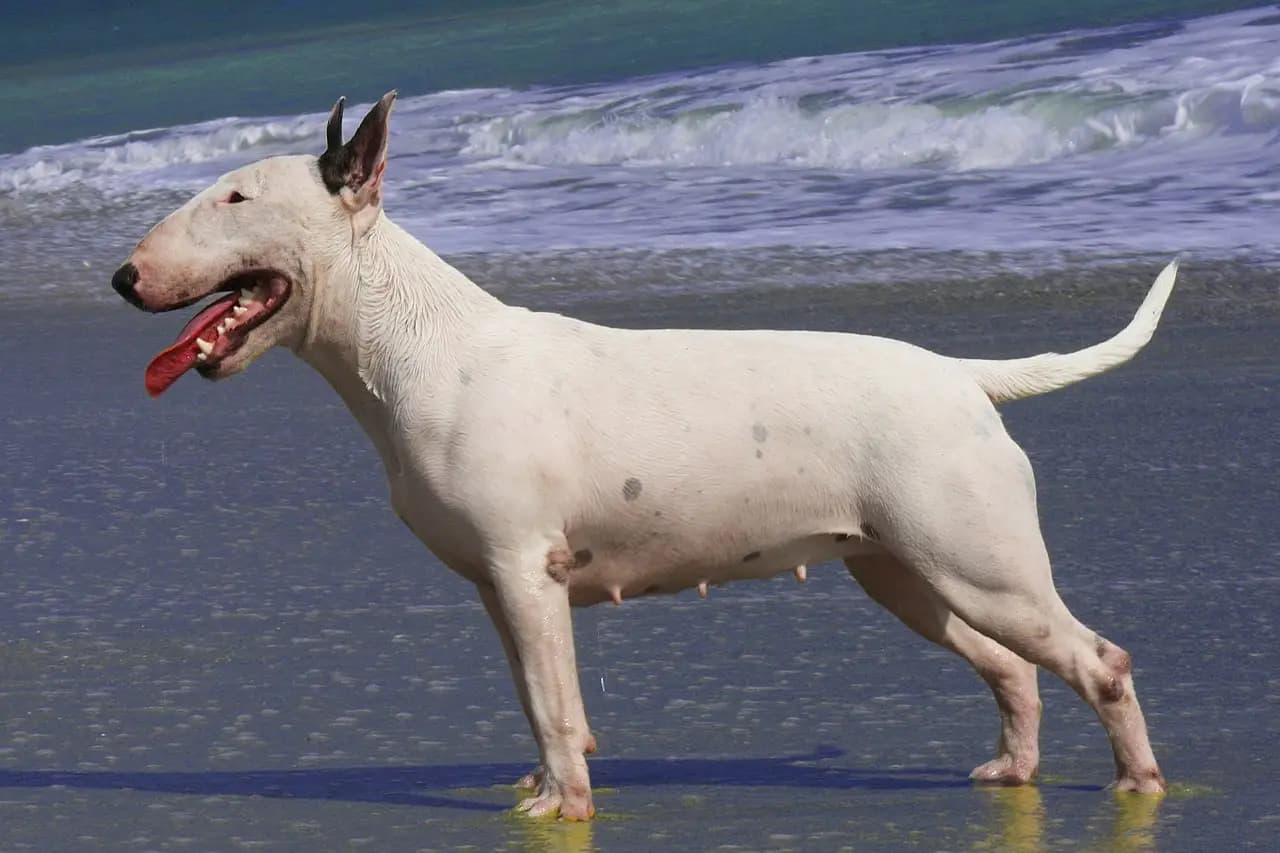
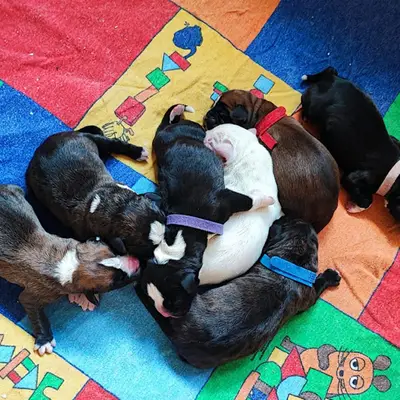
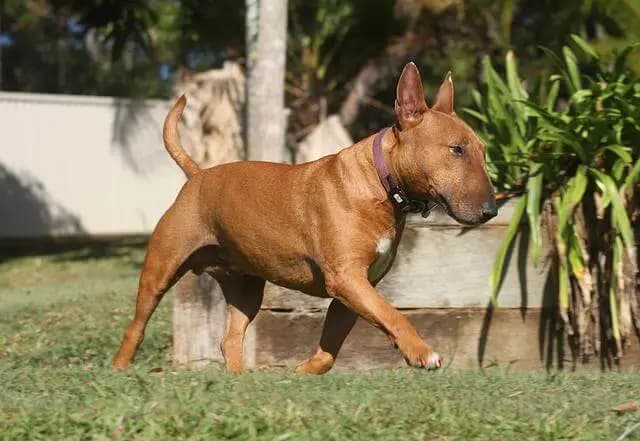
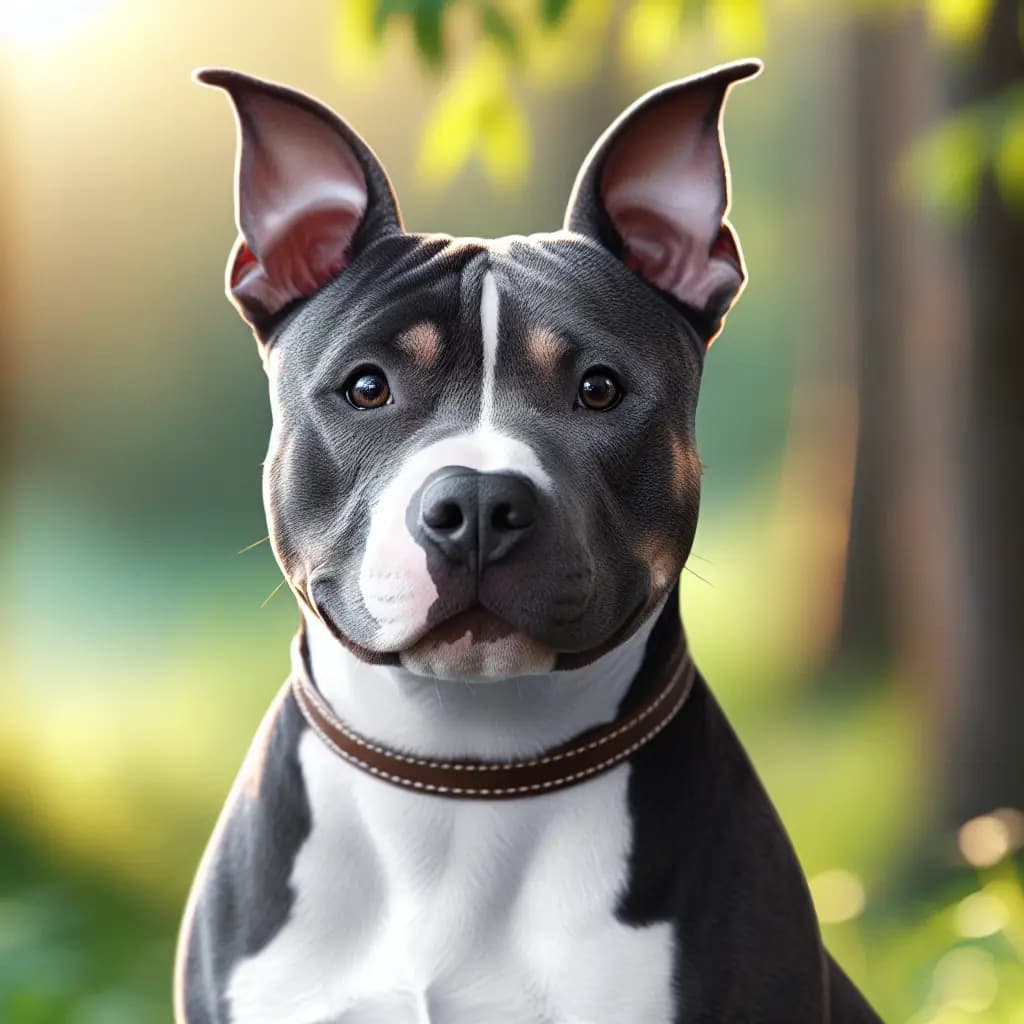
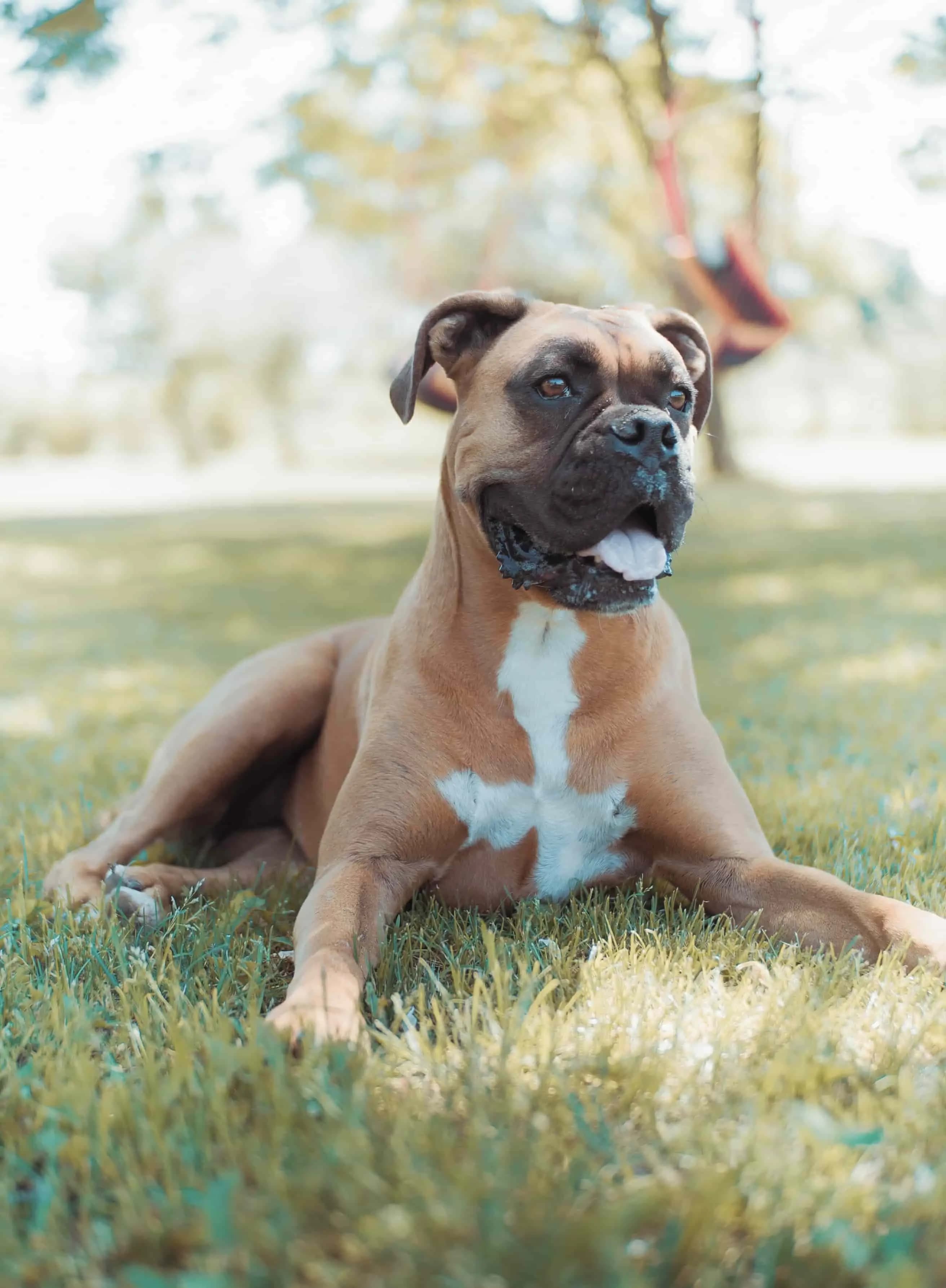
With a height at the withers of 45 to 55 cm (males and females) and a weight of 18 to 28 kg for females and 22 to 38 kg for males, the Bull Terrier packs a great deal of muscle into a compact frame. The short, smooth, dense coat needs a medium amount of grooming (3/5) and sheds moderately (3/5). Never underestimate its character, though: true to terrier type, it is stubborn and independent, which shows in its low trainability (2/5). Blind obedience is not in its nature – you win it over with patience, consistency and positive motivation, never with harshness.
Its energy level is high (4/5). It needs plenty of physical exercise and mental stimulation every day, but with enough of both it also adapts to city life (suitability for city living 3/5). In the right hands, it is very family-friendly (4/5). Because of its boisterous, physical manner, it scores 3/5 for child-friendliness – this muscular dog can easily knock smaller children over in play. Its compatibility with other dogs is low at 2/5. From puppyhood onwards, plan for deliberate, confidently managed contact with other dogs and for training classes at a dog training school with experience of terriers.
Your checklist for the first conversation with the breeder
When you visit, ask to see all the original documents and put these specific questions to the breeder:
- Genetic and clinical results of the parents: “Can you show me the parent dogs’ results for lethal acrodermatitis (LAD) and polycystic kidney disease (PKD), and the cardiology results for mitral valve endocardiosis?”
- Kidney and joint status: “Are there current ultrasound and laboratory results for the parent dogs’ kidneys, as well as results of their knee examinations?”
- Puppies’ hearing test: “Have the puppies already had the audiometric hearing test (BAER) for congenital deafness, and may I see the report?”
- Clarifying problems in the line: “Have there been any cases of familial nephropathy, laryngeal paralysis, demodicosis or eye conditions such as entropion, ectropion and KCS in your breeding lines?”
- Everyday socialisation: “How do you get the puppies used to other dogs, children and everyday stimuli, in order to encourage their sociability early on?”
Legal position: The legal classification of Bull Terriers differs from state to state and is not regulated uniformly. Depending on where you live, special owner obligations, temperament tests or proof of competence, lead and muzzle requirements or a higher dog tax may apply. Please always check with the responsible local authority.
On HonestDog, a breeder profile only goes online once the breeder has completed registration: identity verification by ID and selfie, where applicable proof of club membership or a §11 permit, a knowledge test on breeding and animal welfare, and agreement to the HonestDog breeding standards, which among other things exclude breeding with traits that cause suffering. Health tests of the parent dogs that breeders upload are visible directly in the profile; ask to see the original results when you visit. Your next step: compare the profiles of the Bull Terrier breeders on HonestDog, look at the health evidence that has been uploaded and ask directly about the next litter.