Loading breed
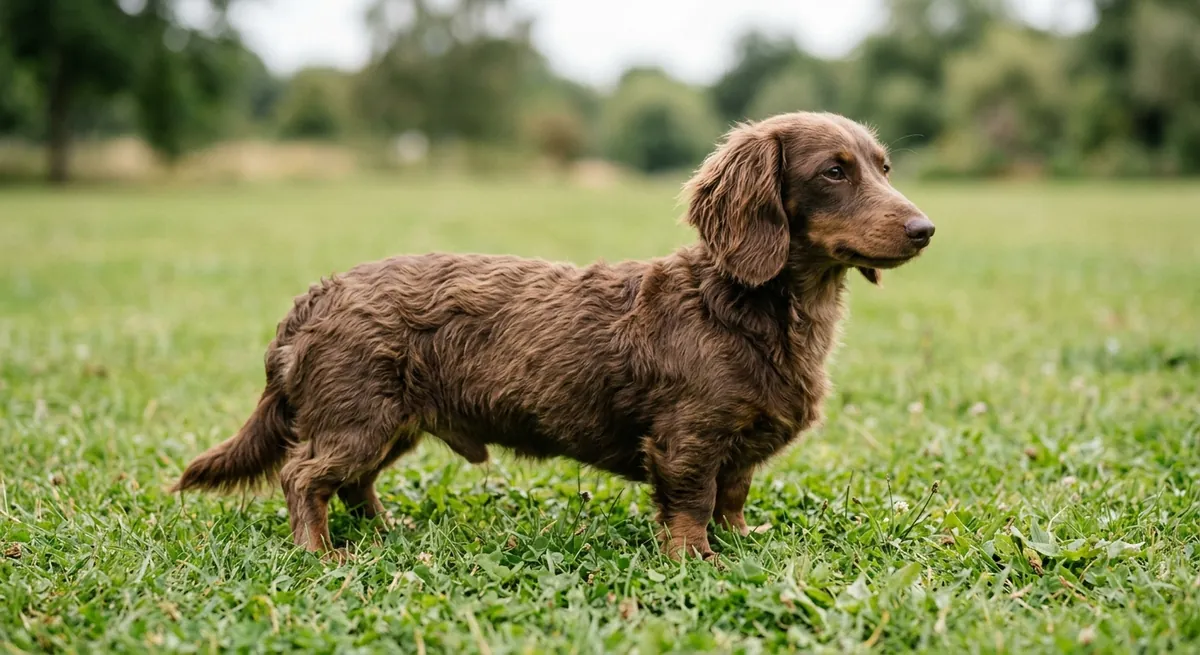
Doxiepoo
Health grade D- Height18–30 cm
- Weight4–9 kg
- Life expectancy12–15 yrs
- Puppy price1,200–2,800 €
- Energy3/5
The Essentials at a Glance
The Doxiepoo is a charming yet unpredictable crossbreed—a mix of an independent Baujäger and a cooperative Apportierhund. It's precisely this genetic balancing act that makes him a clever companion whose hunting instinct is often underestimated.
- Health grade D: The Doxiepoo combines the genetic traits of the Dackel and the Poodle.
- You're ready for a genetic lucky dip and can handle both Dachshund-typical stubbornness and Poodle-like sensitivity.
- You enjoy mentally challenging and exercising a clever dog daily with brain games and scent work rather than just taking routine walks.
- You expect a guaranteed easy beginner's dog—when the Poodle's hunting drive meets the persistence of the Baujäger, things get challenging.
Is the Doxiepoo right for you?
At a glance
Doxiepoo overview
The essentials — key facts, traits, and health priorities — before you dive deeper.
Health grade
Relative to other breeds
S
A
B
C
D
E
Very healthyHigher risk
Elevated risk — responsible breeding really matters.
See full health info & tests →
Note: This health overview is AI-assisted and editorially reviewed. It is for orientation only and does not replace veterinary advice.
Lifespan
12–15 yrs
Height
18–30 cm
Weight
4–9 kg
Practical
- Puppy price: 1,200 – 2,800 €
- Coat: short to medium length, smooth to slightly wavy
- Origin: USA
Temperament
Energy
Trainability
Family fit
With kids
Daily life
Care effort
Shedding
Barking
City-friendly
Guard instinct
What matters most
Especially with a Doxiepoo, choosing the right breeder is the single most important decision you'll make. Serious breeders consistently test the parents for inherited conditions, prioritize healthy early socialization, and stay accountable long after handover. A cheap puppy without health screening tends to become the most expensive dog later on.
See HonestDog breeder standards →Colors & coat
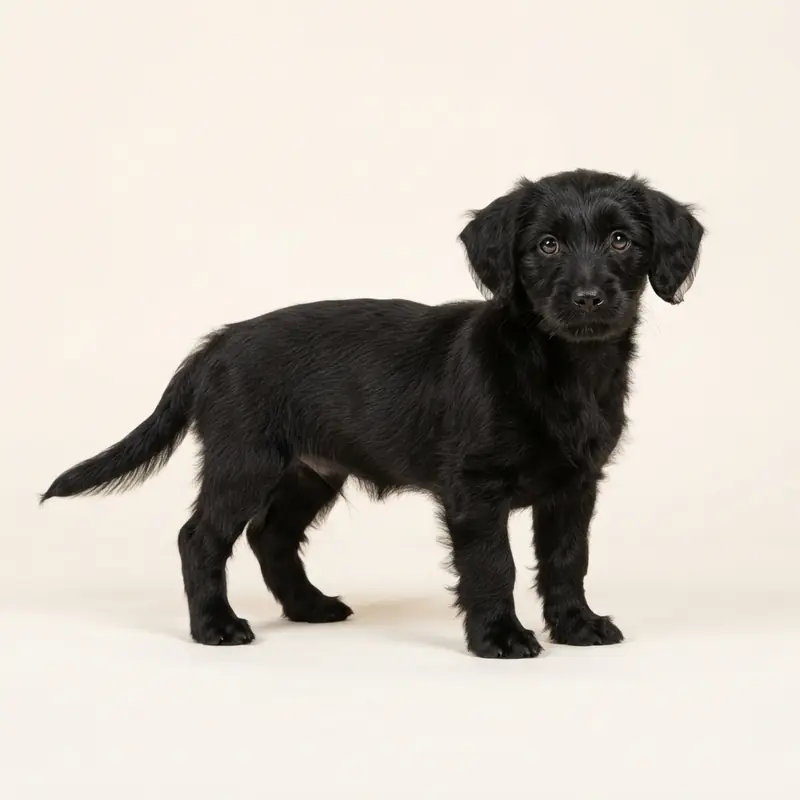
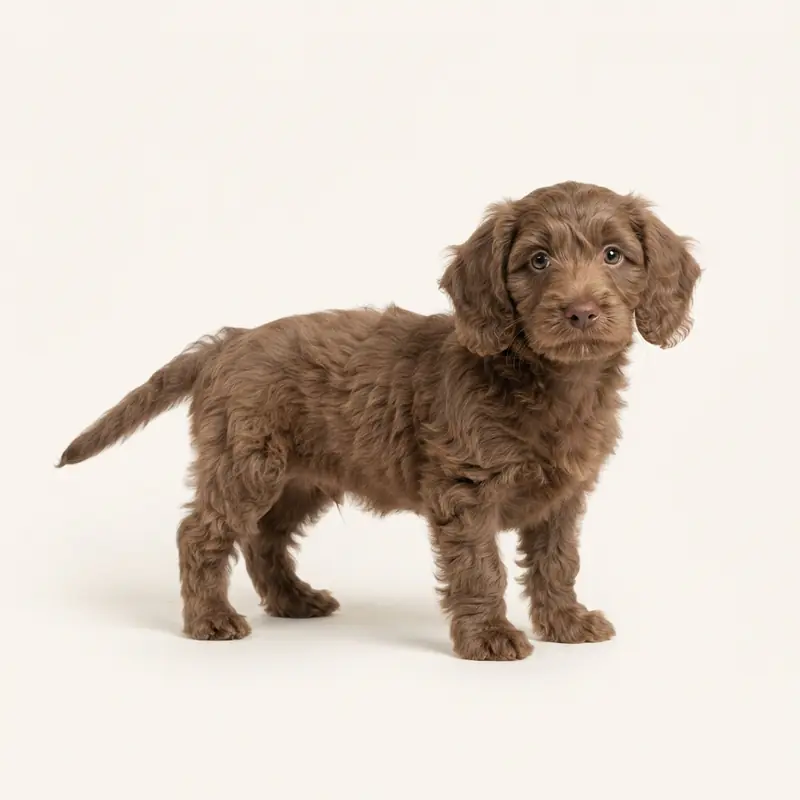
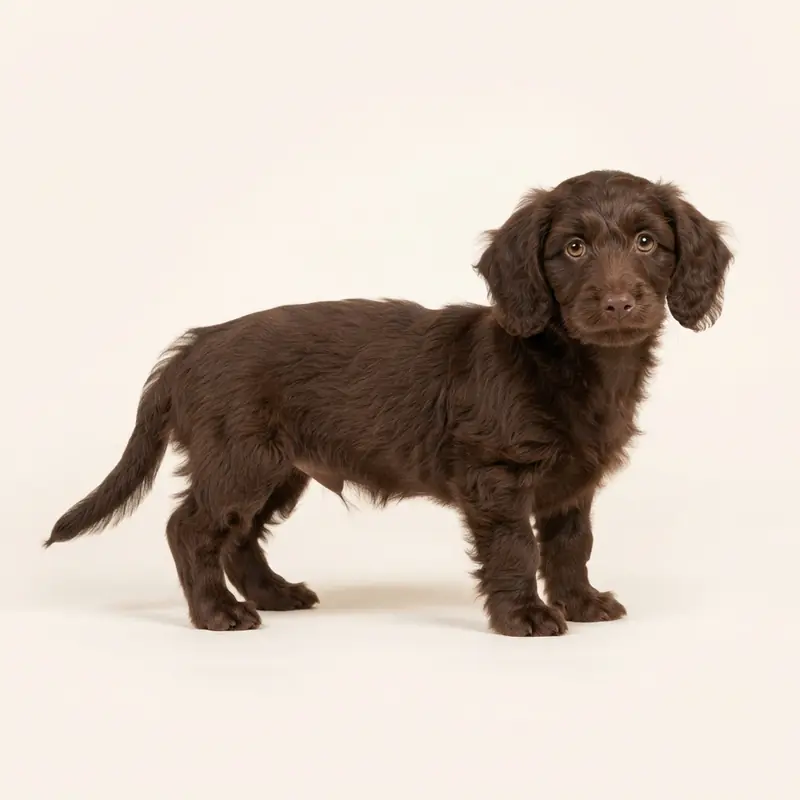
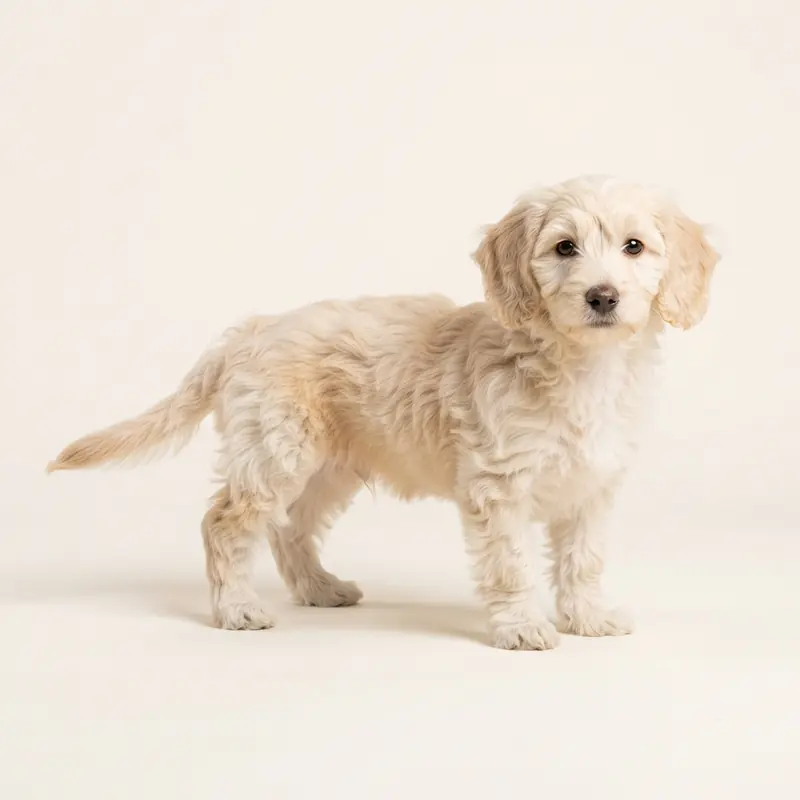
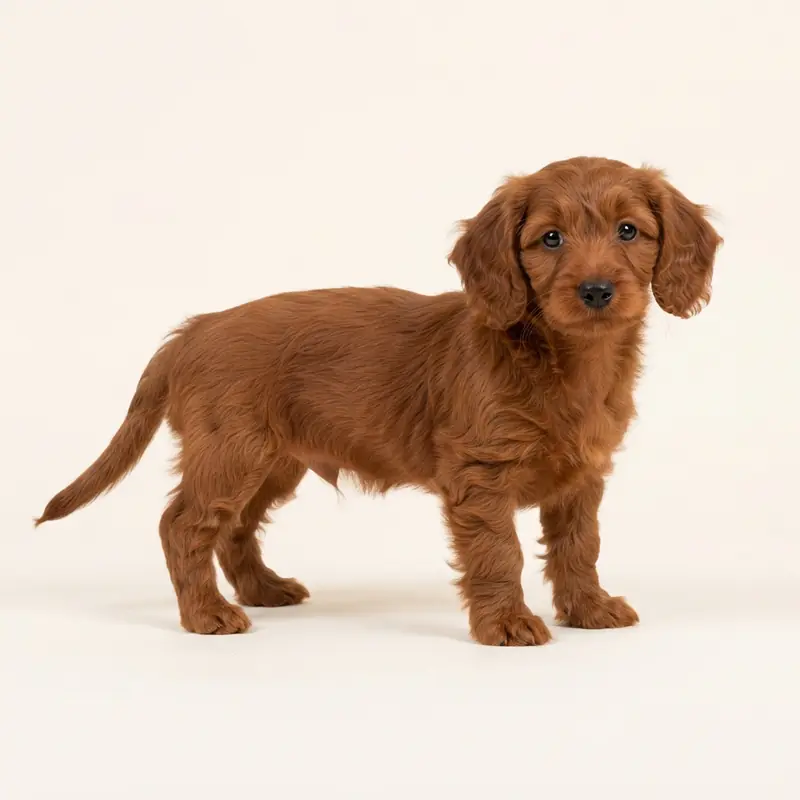
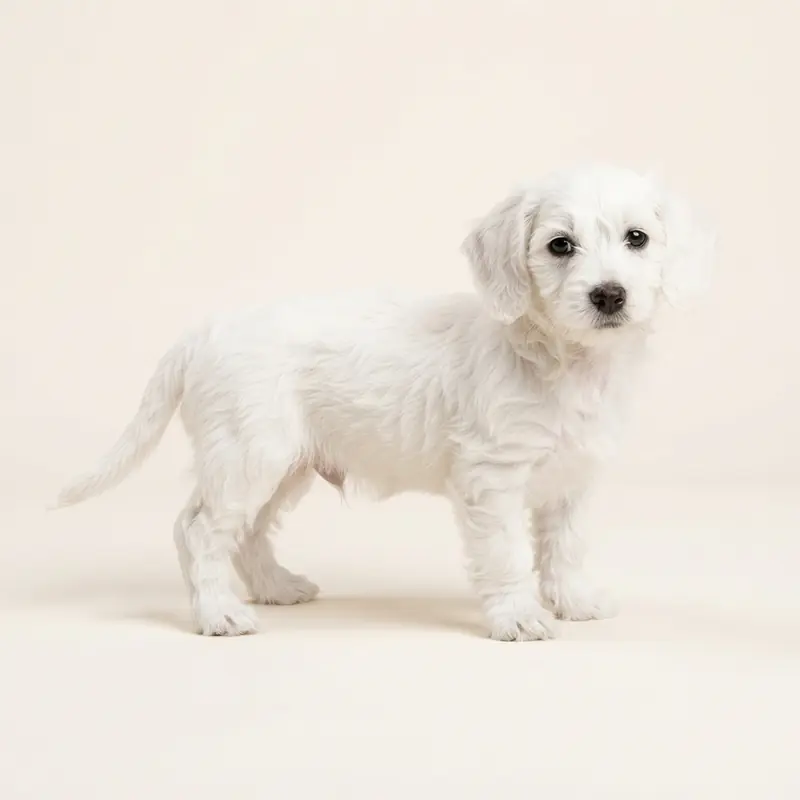
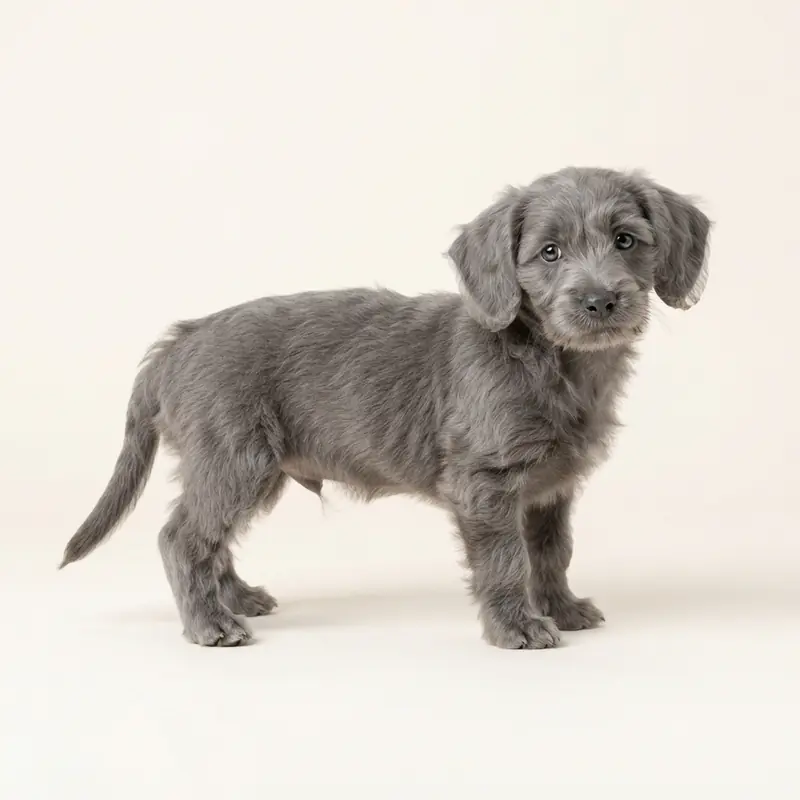
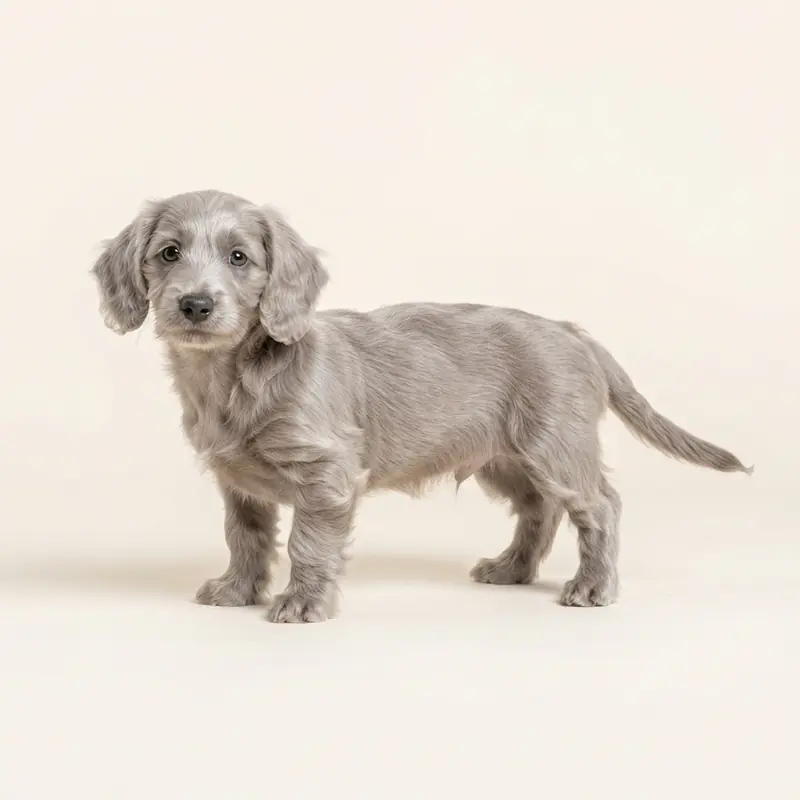
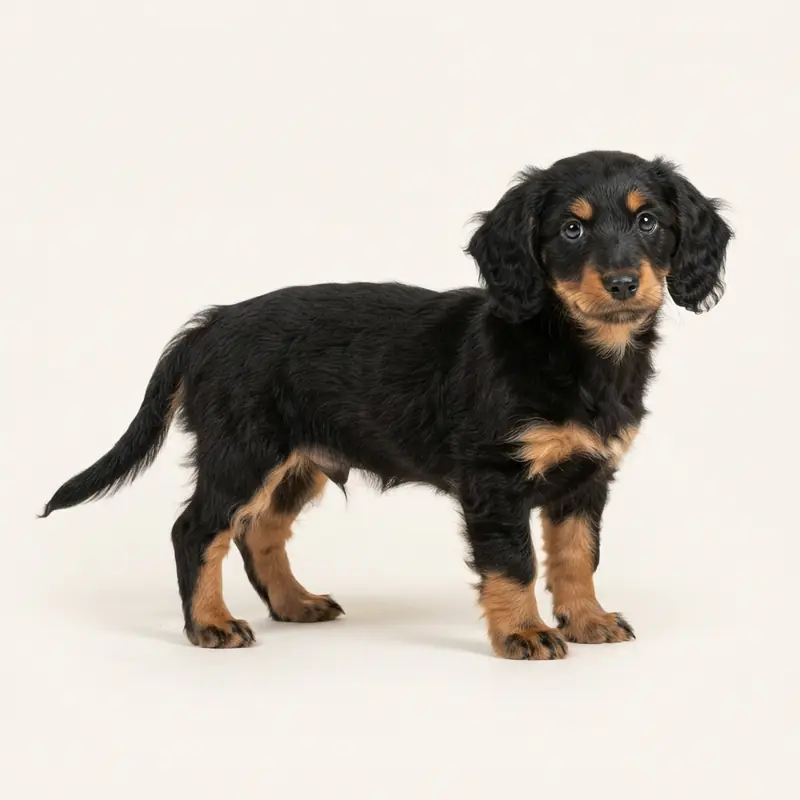
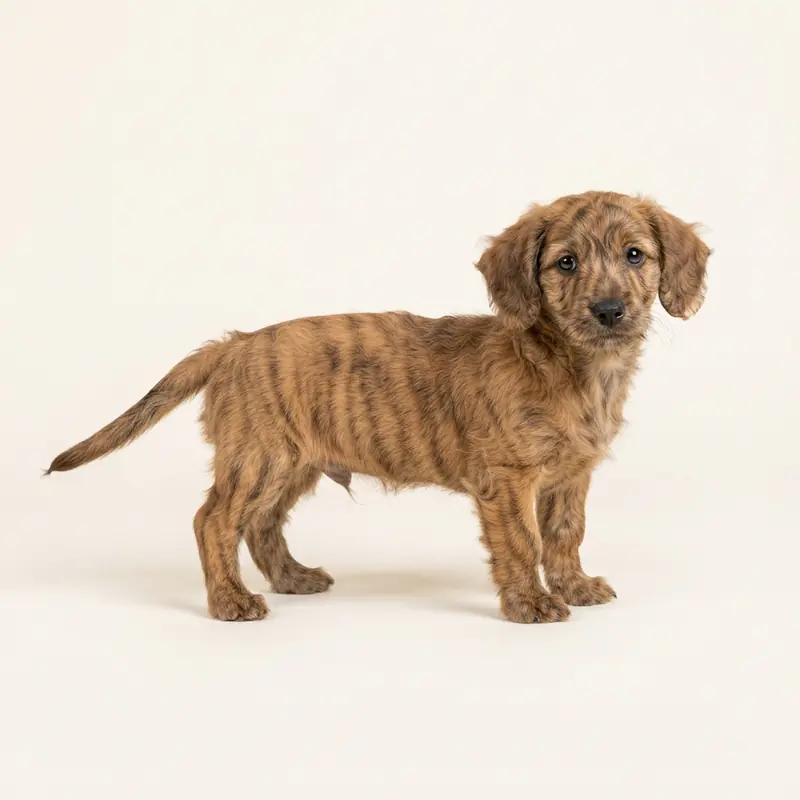
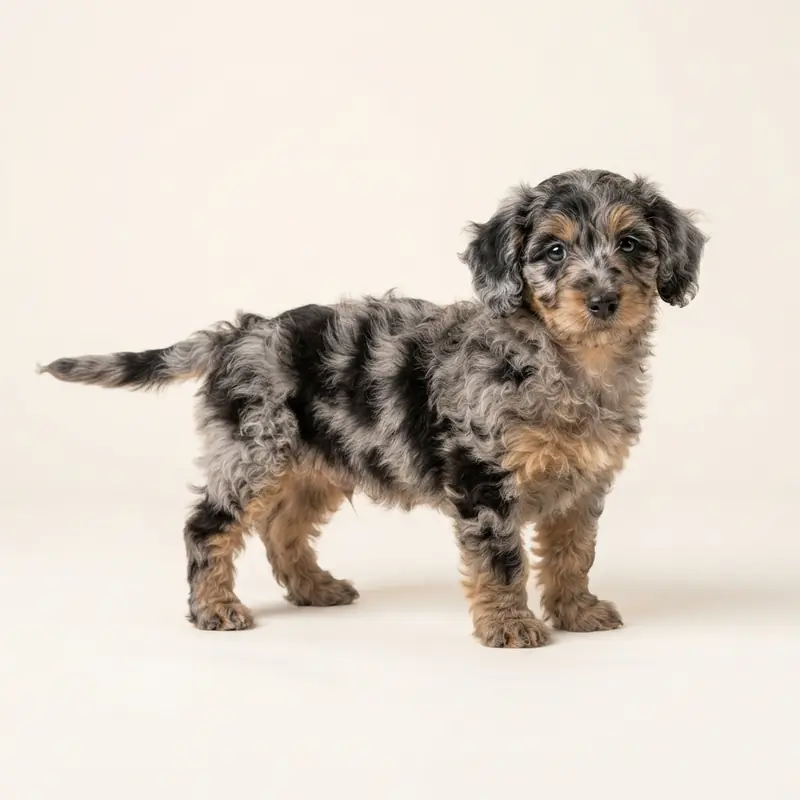
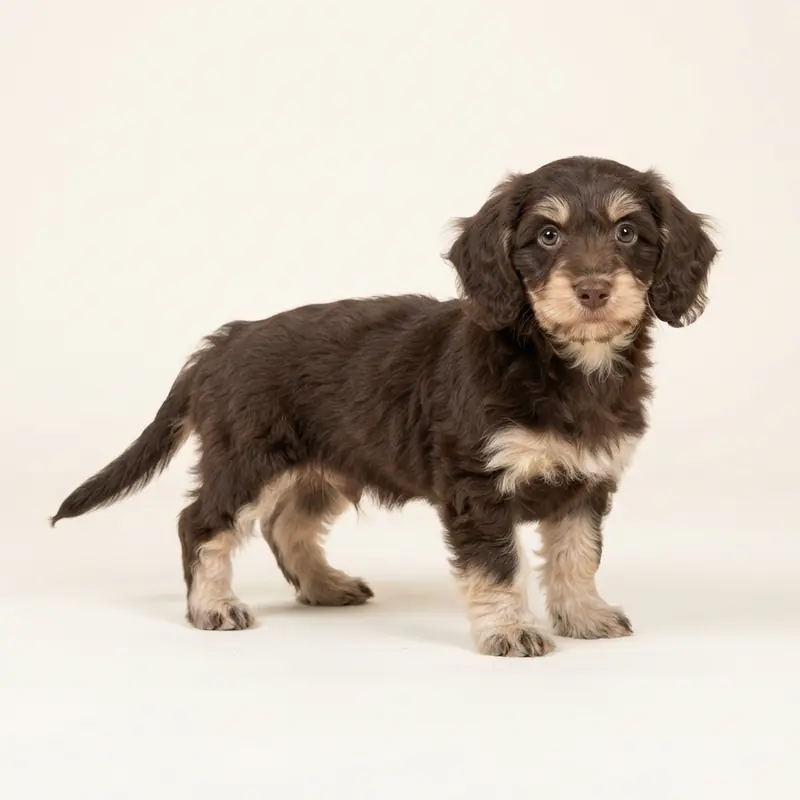
What colors does the Doxiepoo come in?
The coat colors you will see in Doxiepoo litters — including which ones fall outside the breed standard and which carry genetic risk.
Eye colors
 Brown
Brown Amber
Amber Blue
Blue
Coat type
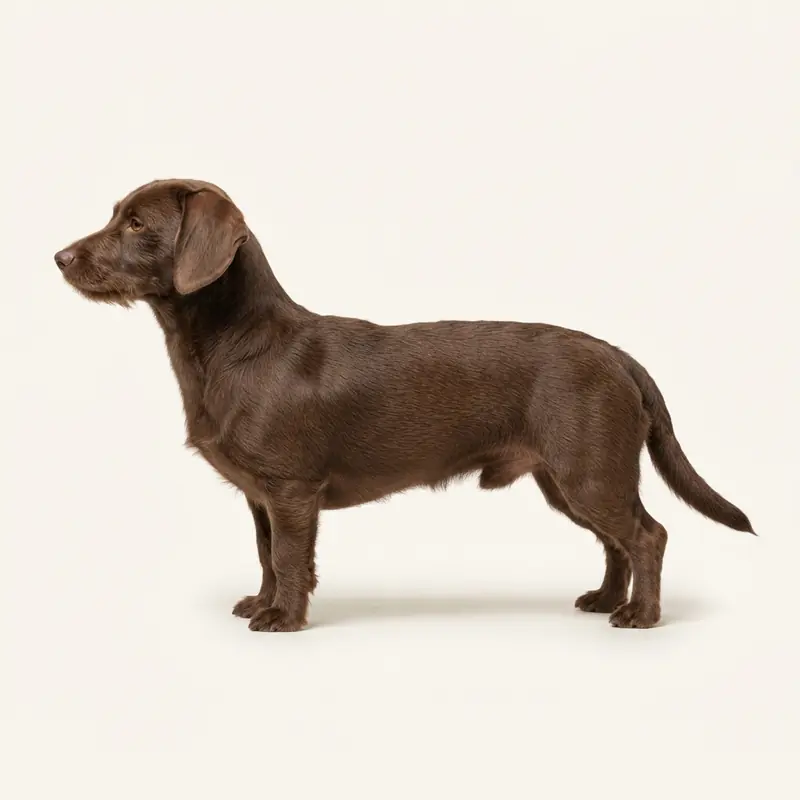 Illustrative image
Short
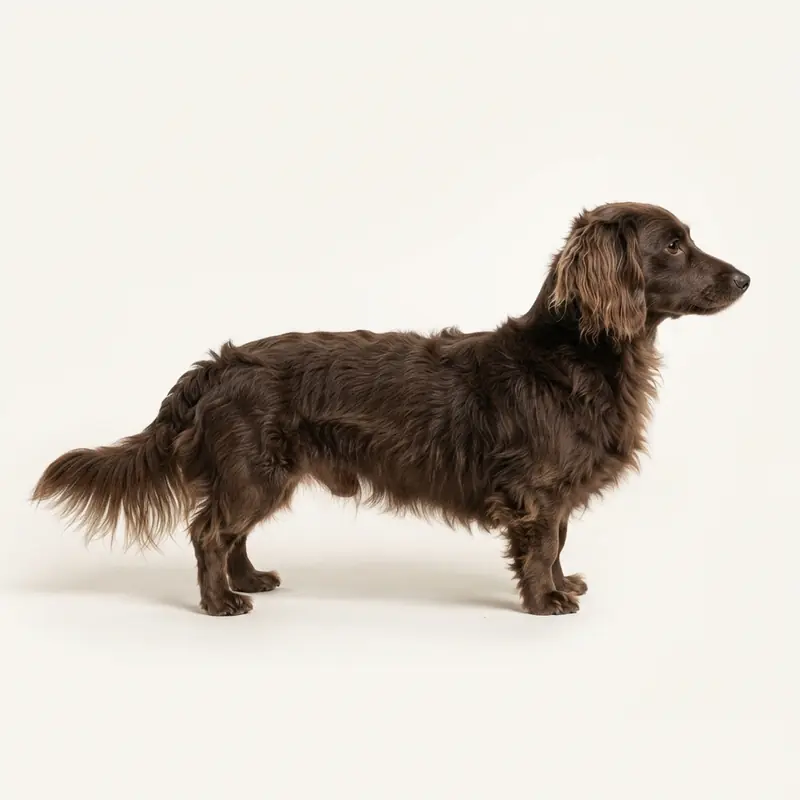 Illustrative image
Medium
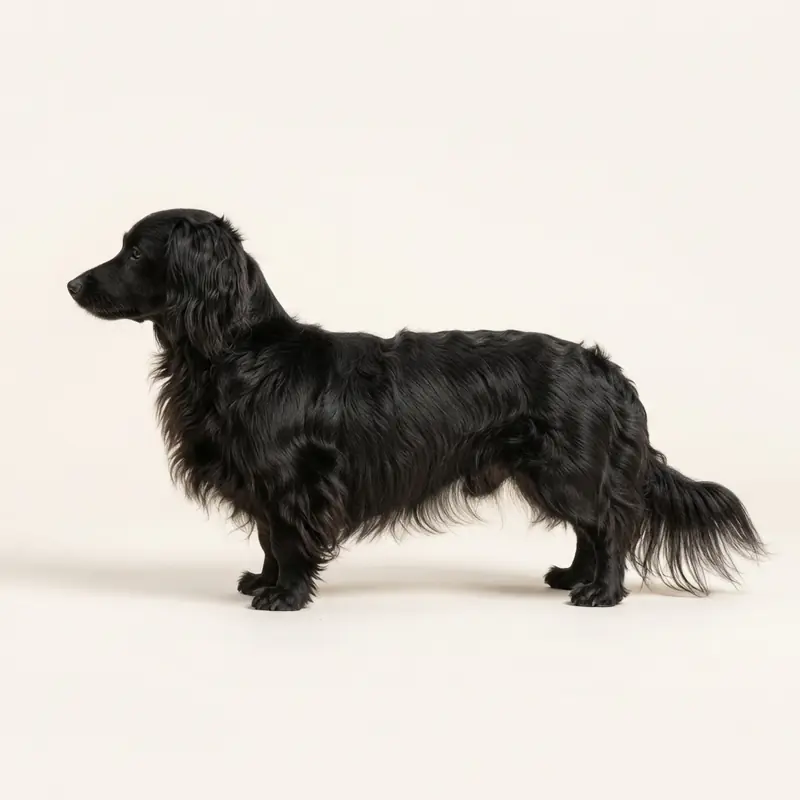 Illustrative image
Long
 Smooth
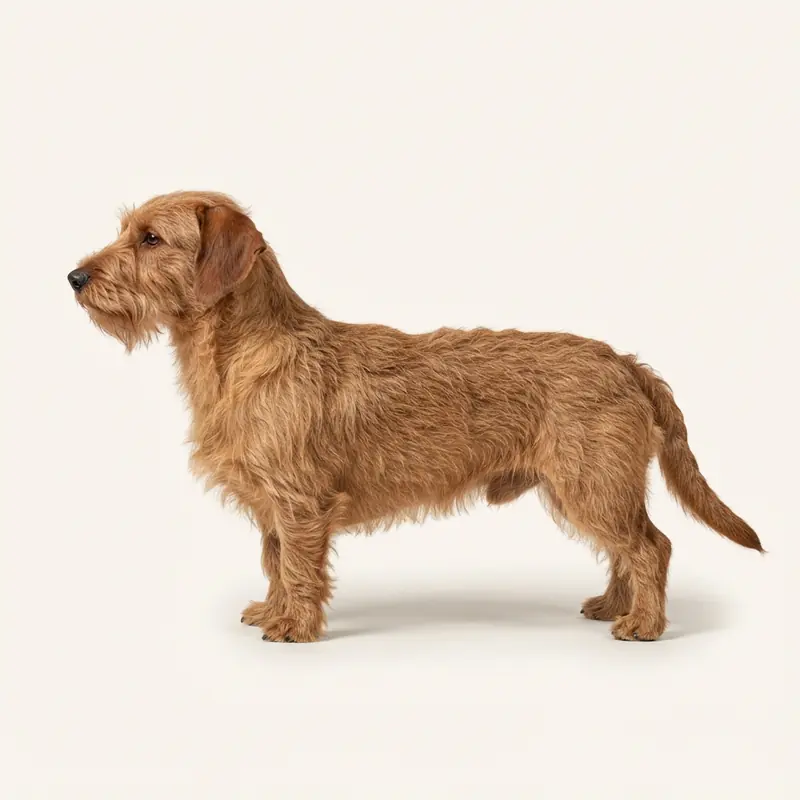 Illustrative image
Wire
 Curly
Curly
Is the Doxiepoo right for you?
Perfect for you if:
- You're ready for a genetic lucky dip and can handle both Dachshund-typical stubbornness and Poodle-like sensitivity.
- You enjoy mentally challenging and exercising a clever dog daily with brain games and scent work rather than just taking routine walks.
- You live in an environment where watchfulness and occasional barking won't immediately trigger neighbor drama.
- You're looking for a robust, active outdoor companion who, despite his handy size, is definitely no lapdog.
Less ideal if:
- You expect a guaranteed easy beginner's dog—when the Poodle's hunting drive meets the persistence of the Baujäger, things get challenging.
- You live in an extremely thin-walled apartment or on a high floor without an elevator, as prolonged stair climbing is often off-limits.
- You want to leave your dog alone for hours on end, which quickly leads to frustration and destruction with this people-oriented and intelligent mix.
The real vibes check
A Doxiepoo is like a genetic mixing console: you never know in advance whether the slider on your dog has been pushed toward the Poodle's cooperative obedience or the Dachshund's stubborn determination. The physical hardware isn't reliably predictable here—you're buying a lucky dip made of two completely different operating systems. If you take this behavioral unpredictability with humor and consistency, you'll get a highly clever, utterly unmistakable companion.
Self-check
Would the Doxiepoo really fit your life?
Answer 6 quick questions about your everyday life and see how well the Doxiepoo fits you — including an honest cost estimate per month, per year, and across the dog's lifetime.
Fit checkCost estimateRisk dice
Takes about 1 minute · free & anonymous
Breed Profile
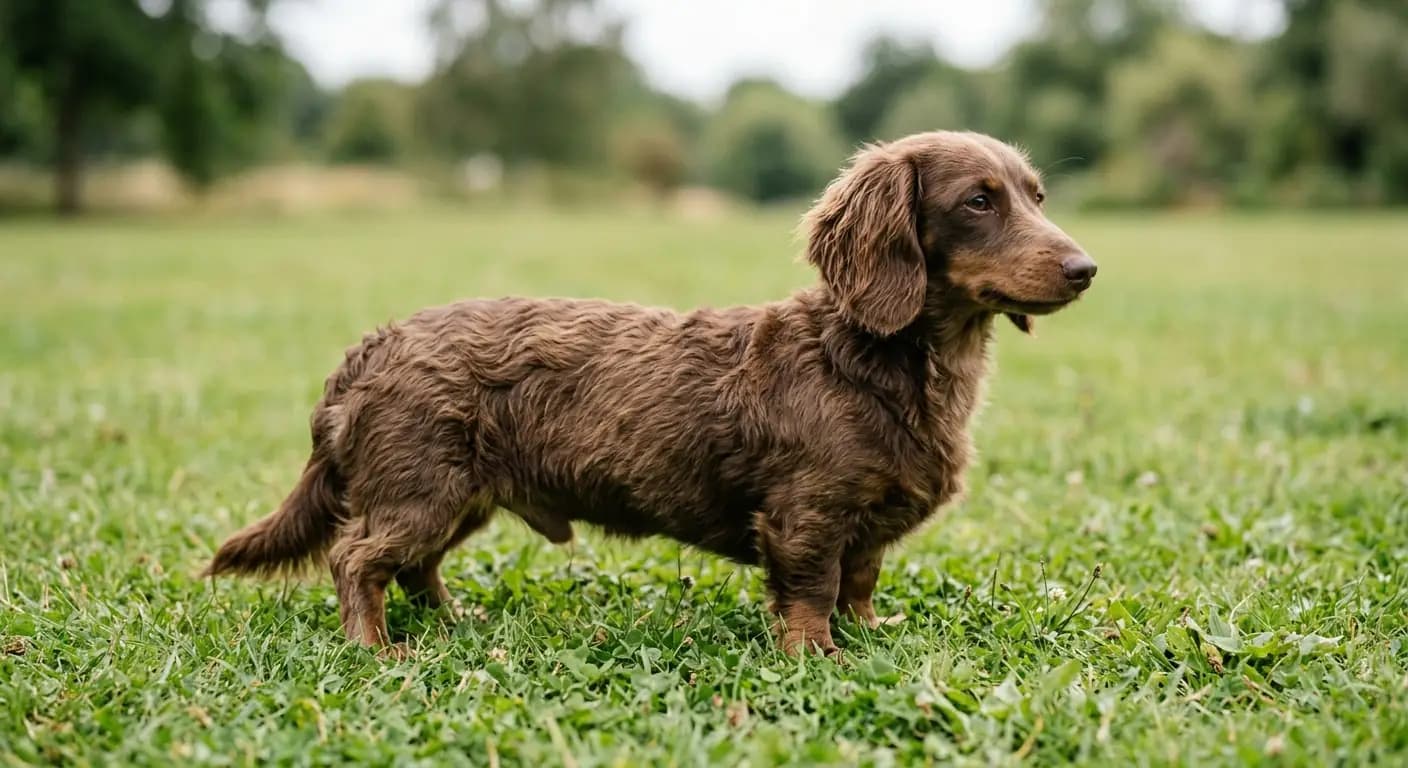
The Doxiepoo is a crossbreed between a Dachshund (usually a Miniature or Rabbit Dachshund) and a Toy or Miniature Poodle. It combines the elongated body type of the Dachshund with the eagerness to learn of the Poodle and is bred exclusively as a companion dog. How strongly the Dachshund body type manifests in an individual puppy cannot be reliably predicted in an F1 cross.
All measurements in detail
- Height
- 18 - 28 cm (Female), 20 - 30 cm (Male)
- Weight
- 4 - 8 kg (Female), 4 - 9 kg (Male)
- Life Expectancy
- 12 - 15 yrs
- Character
- headstrong, alert, playful, courageous, affectionate
- Coat
- short to medium length, smooth to slightly wavy
- Coat Color
- brown, black, red, piebald
- Price
- 1200 - 2800 €
Character & Temperament
Doxiepoos are considered alert, headstrong, and often surprisingly independent—a clear heritage from the Dachshund, which had to work independently as a hunting dog. They are frequently reserved to suspicious toward strangers and tend to bark at unfamiliar noises. The Poodle portion makes many Doxiepoos more biddable and eager to learn than purebred Dachshunds, but they rarely lose their stubborn streak entirely. Most get along well with children, provided their sensitive back is respected during play.
| Watchfulness Reports unusual activity but stays controlled. | Moderate |
| Openness to Strangers Careful around unfamiliar people — thaws slowly. | Cautious |
| Hunting or Herding Drive Powerful instinct that can override recall when triggered. | Strong |
Fun Fact!
Despite its small size, the Doxiepoo can inherit the Dachshund's strong digging instinct and dig surprisingly thorough holes in the garden.
What Awaits You
Fully grown Doxiepoos usually weigh between 3.5 and 9 kilograms, depending on which Dachshund and Poodle sizes were mated. Many puppies partially inherit the characteristically long back and short legs of the Dachshund, which presents orthopedic challenges. The Dachshund portion also brings a strong tracking and digging instinct, while the Poodle portion typically brings a higher willingness to learn. The Doxiepoo is not an FCI-recognized breed, but a designer crossbreed without a fixed breed standard. Despite shedding less, it is not allergy-friendly, as coat structure and allergen excretion cannot be reliably predicted in F1 puppies.
Housing & Care
With a moderate suitability for city life, the Doxiepoo does well in either a city apartment or a house. However, due to its alertness and tendency to bark at unfamiliar noises, you should keep in mind that it may react noticeably to sounds in its environment. Most Doxiepoos get along well with children. Nevertheless, it is important that the dog's sensitive back is always respected during play. When interacting with other dogs, this crossbreed shows average compatibility. A pronounced tracking and hunting instinct is present, which must be taken into account when living with other animals.
- Family Friendly
Loves family life and thrives in a group.
Family-oriented - Child Friendly
Gets on well with children — with adult supervision.
With supervision - Dog Friendly
Usually gets on fine with other dogs.
Generally tolerant - City Friendly
Adapts well to city living and urban environments.
Well-suited to city life
Owning a dog is a privilege, but it's also a real responsibility. Before you bring one into your life, be honest with yourself about the commitment it takes.
Training & Education
When training the Doxiepoo, the Poodle's eagerness to learn meets the Dachshund's stubborn streak. It is more biddable than a purebred Dachshund, but often shows surprising independence. Due to its alertness and tendency to bark, it requires consistent guidance. This crossbreed has a long back on short legs. Explicitly state that jumping and frequent stair climbing should be avoided, and that excess weight puts additional strain on the back. Since it inherits a strong tracking instinct from the Dachshund, it is best given physical and mental exercise through controlled, medium-length walks, nosework, and search games. Avoid games with sudden changes of direction as well as jumping off furniture to prevent overloading the spine. Arguments against the breed include the high risk of slipped discs due to its anatomy.
Nutrition & Care
Depending on the parents, the coat is short and smooth or longer and slightly wavy, requiring brushing once or twice a week. More important than the coat is the back: climbing stairs, jumping, and games involving sudden changes of direction should be minimized, with preference given instead to controlled, medium-length walks. The strong tracking instinct inherited from the Dachshund can be well-exercised through nosework and search games.
| Care Level Regular brushing and occasional professional grooming. | Moderate |
| Exercise Needs Needs 1–2 hours of real exercise daily. | Active |
| Shedding Regular shedding — dog hair on clothes is now normal. | Moderate |
| Trainability Willing to learn with clear rules and regular training. | Balanced |
Our experts are still reviewing this information. Spotted something wrong? Email us at info@honestdog.de.
Health & hereditary diseases
Health
D
Elevated risks
Health grade
The Doxiepoo combines the genetic traits of the Dackel and the Poodle. Due to the elongated body structure of the Dackel, a significant risk of intervertebral disc disease (Dackelglähme) remains, which cannot be bred out through crossbreeding. Furthermore, there are risks of joint disorders such as patellar luxation and hip dysplasia, as well as eye diseases including cataracts and progressive retinal atrophy. Health-focused breeding relies on comprehensive genetic testing of the parent animals, orthopedic screenings, and the targeted selection of Dackel lines with more moderate body proportions.
Grade is relative to other breeds — AI-assisted and editorially reviewed.
In daily life this can mean
You should strictly limit stair climbing and jumping, keep an eye on a lean weight, and honestly budget for higher veterinary costs for potential back and knee problems.
The breeder's role
Responsible breeders test the spine, knees, eyes, and blood clotting of the parent animals and pay attention to balanced body conformation—however, the fundamental risks of this crossbreed cannot be completely eliminated.
Note: This health overview is AI-assisted and editorially reviewed. It is for orientation only and does not replace veterinary advice.
No Health Tests Available
No specific health tests are currently available for this breed.
Costs & where to find one
How much does a Doxiepoo cost?
A Doxiepoo costs around ~€160 per month (€90 – €300, depending on your setup). The first year adds up to roughly ~€4,780 including purchase, equipment and puppy school; across the dog's life (13.5 years) it comes to about ~€29,220.
With surgery cover, running costs come to about ~€160 per month — in return, your share of a major operation drops from several thousand euros to around 20 percent.
Per month
~€160
In the first year
~€4,780
Across the dog's life
~€29,220
Purchase from a breeder: €1,200 – €2,800
Estimate at a mid-range setup (suburban, dry food, 1–2 hours of daily exercise), average German prices, as of July 2026.
Calculate your personal costs1-minute self-check with your own answers
Looking for a Doxiepoo?
HonestDog Concierge
No verified Doxiepoo breeders on HonestDog yet
We currently have no breeders for this breed who have passed our verification. Create your short buyer profile: we'll set up your search alert, review a possible source and email you within 28 days.
Appearance, variants & origin
 Illustrative imageIllustrative imageIllustrative imageIllustrative image
History
The full history
The Doxiepoo originated in the 2000s in the USA as one of many Poodle crossbreeds, with the goal of combining the personality traits of the Dachshund with a lower-maintenance, more trainable dog. The Dachshund contributes its background as an earthdog used for hunting badgers and foxes, while the Poodle stands for high trainability. An independent breeding organization or breed standard does not exist. In Germany, the Doxiepoo is currently offered by only a few specialized hobby breeders.
Original Use
The Dachshund ancestry traces back to an earth and burrow dog for hunting badger and fox; the Doxiepoo itself is not used for hunting.
Origin
USA
Date
2000
Owner experiences
Loading owner stories
FAQ & more
Frequently asked questions about the Doxiepoo
Is a Doxiepoo the right dog for me?
The Doxiepoo is an adaptable dog that adjusts well to various lifestyles. Research the temperament, grooming needs, and space requirements before deciding.
How long does a Doxiepoo live?
The average life expectancy of a Doxiepoo is 12-15 years. With proper care and regular vet visits, your dog can live a long, healthy life.
How much grooming does a Doxiepoo need?
Doxiepoo grooming requirements include regular brushing, nail trimming, and dental care. HonestDog provides detailed grooming tips for every breed.
Is a Doxiepoo good for families with children?
The Doxiepoo can be a great family dog. Proper training and socialization are key. HonestDog provides family suitability information for every breed.
What colors does the Doxiepoo come in?
The Doxiepoo comes in these colors: Black, Brown, Chocolate, Cream, Red, White, Grey, Silver, Black and tan, Brindle, Merle, Bicolor. Colors that fall outside the breed standard are marked as such on the breed page.
Loading related articles
Are you a Doxiepoo breeder?
Showcase your kennel on HonestDog and reach families searching for a responsibly bred Doxiepoo.