Jack Russell TerrierClose relative
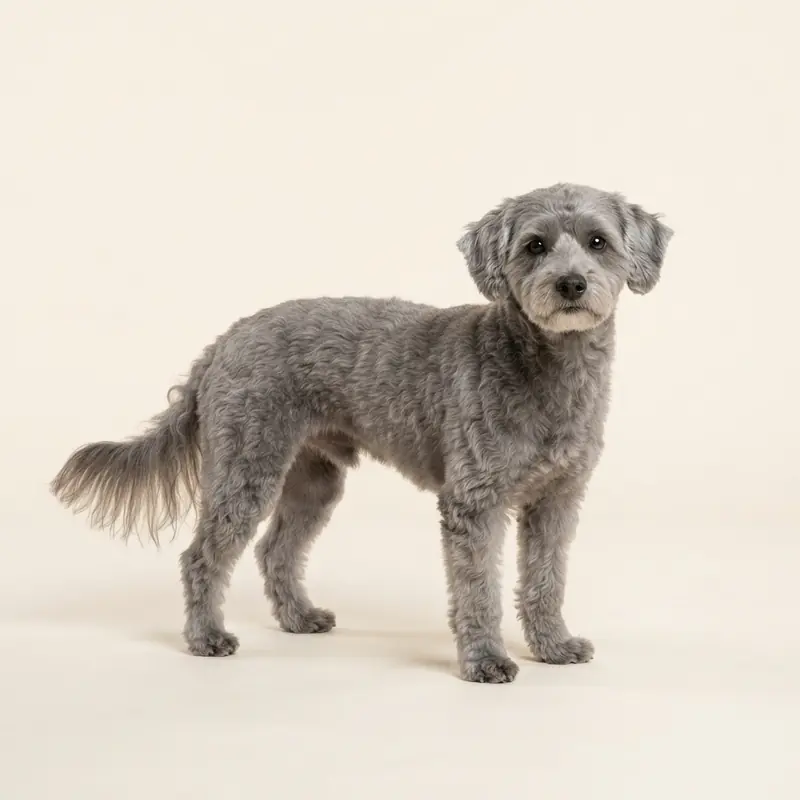
 AI-generated image
The Jackapoo is a clever, high-energy hybrid — a genetic lucky dip combining a stubborn earthdog and a highly intelligent companion dog. You get the tireless work ethic of the terrier paired with the sensitivity of the Poodle, making them surprisingly demanding in everyday life.
Self-check
Answer 6 quick questions about your everyday life and see how well the Jackapoo fits you — including an honest cost estimate per month, per year, and across the dog's lifetime.



At a glance
The essentials — key facts, traits, and health priorities — before you dive deeper.
Lifespan
13–16 yrs
Shoulder height
25–38 cm
Weight
5–10 kg
Practical
Temperament
Daily life
What matters most
Especially with a Jackapoo, choosing the right breeder is the single most important decision you'll make. Serious breeders consistently test the parents for inherited conditions, prioritize healthy early socialization, and stay accountable long after handover. A cheap puppy without health screening tends to become the most expensive dog later on.
See HonestDog breeder standards →Colors & coat
The coat colors that occur in the Jackapoo — including which ones fall outside the breed standard and which carry genetic risk.
Eye colors
 Brown
Coat type
 Illustrative image
Short
 Illustrative image
Medium
 Smooth
 Illustrative image
Wire
 Illustrative image
Curly
The real vibes check
A Jackapoo is like a Kinder Egg on four legs — you never know whether the cooperative Poodle or the uncompromising terrier will take the wheel next. This genetic lottery means you have to react extremely flexibly to the dog in front of you every day. If you embrace this charming chaos, you'll get a brilliant clown; if you're looking for guaranteed traits, a mixed breed isn't for you.
The Jackapoo is a cross between a Jack Russell Terrier and usually a Toy or Miniature Poodle. It combines the terrier's strong drive for movement and hunting with the poodle's eagerness to learn, making it significantly more active than most other poodle crosses. As a rule, it is not the right choice for quiet households or inexperienced dog owners.
Jackapoos are lively, alert, and exceptionally eager to learn when provided with sufficient physical and mental stimulation. Without enough activity, they are prone to loud barking, digging, and a strong urge to move that can hardly be satisfied in small apartments. The prey drive from the terrier line makes them unreliable around small animals and sometimes cats. They generally get along well with older children who show the necessary respect for the dog's pace and endurance.
| Watchfulness Reports unusual activity but stays controlled. | Moderate |
| Openness to Strangers Neither pushily friendly nor suspicious. | Neutral |
| Hunting or Herding Drive This drive runs deep — no amount of training eliminates it. | Very strong |
Fun Fact!
The Jack Russell Terrier was originally bred small enough to follow foxes right into their underground dens—a heritage that often manifests in the Jackapoo as a strong urge to dig.
Fully grown Jackapoos usually weigh between 5 and 10 kilograms, giving them a compact build that is nevertheless very strong and built for endurance. The Jack Russell heritage brings a high need for exercise and a strong prey drive, which, without consistent activity, can result in unwanted behaviors such as digging or chasing. The Poodle heritage generally makes the Jackapoo more eager to learn and easier to guide than a purebred Jack Russell, though its independent streak never fully disappears. The Jackapoo is not an FCI-recognized breed, but a designer crossbreed without a fixed standard; consequently, coat and temperament vary significantly from litter to litter. Despite often having wavy, lower-shedding fur, it is not allergy-friendly.
Due to its strong urge to move, the Jackapoo is hardly suitable for a small city apartment. It is much better suited to a home with a house and yard where it can burn off its high energy levels. It usually gets along well with older children who respect the dog's high pace and endurance. It shows average compatibility in interactions with other dogs. However, caution is advised with small animals and cats: its very strong prey drive makes the Jackapoo unreliable when living alongside small pets.
Gets on well with different people and varying routines.
Gets on well with children — with adult supervision.
Usually gets on fine with other dogs.
Can manage in the city, but only with very active owners.
Owning a dog is a privilege, but it's also a real responsibility. Before you bring one into your life, be honest with yourself about the commitment it takes.
The Jackapoo is lively, eager to learn, and usually easier to manage than a purebred terrier thanks to its Poodle ancestry. Nevertheless, it retains a mind of its own. Casual walks at a leisurely pace are by no means enough for this dog. It requires extensive daily exercise and challenging mental stimulation. Without this physical and mental activity, it quickly tends toward unwanted behavior such as loud barking, digging, or chasing. Due to its very strong prey drive, early and consistent recall training is essential in everyday life. During the growth phase, you must gradually and carefully build up physical exertion. Overexerting the dog too early damages its joints. Keep in mind that this is an unofficial crossbreed without a fixed standard, which means coat structure and temperament can vary greatly even within the same litter.
The coat is usually wavy to slightly curly and requires brushing once or twice a week, as well as occasional trimming. Far more important than coat care is proper mental and physical stimulation: Jackapoos need extended daily exercise and challenging mental tasks; leisurely walks are not enough. Due to the strong prey drive, early and consistent recall training is recommended, as well as extreme caution when living alongside small animals.
| Care Level Regular brushing and occasional professional grooming. | Moderate |
| Exercise Needs Working-dog energy that needs burning off every single day. | High-drive |
| Shedding Regular shedding — dog hair on clothes is now normal. | Moderate |
| Trainability Picks up commands quickly and wants to please. | Eager to learn |
Our experts are still reviewing this information. Spotted something wrong? Email us at info@honestdog.de.
Solid
Health grade
In the Jackapoo, there are breed-typical risks for eye diseases such as cataracts and primary lens luxation (PLL), as well as for von Willebrand disease type I and patellar luxation (PL). A responsible breeder therefore has the parent animals specifically tested for these hereditary conditions in order to minimize risks for primary lens luxation (PLL), progressive retinal atrophy, and joint problems. Before buying, have the breeder show you the certificates of an ophthalmological eye exam as well as the findings for von Willebrand disease type I and patellar luxation (PL) of both parent animals.
Grade is relative to other breeds — AI-assisted and editorially reviewed.
Methodology and data: HonestDog Dog Breed Health Report 2026
What matters most for this breed
Tap any item to see details.
You should pay attention to a healthy weight and joint-friendly exercise to relieve pressure on the knees, and remind your vet about blood-clotting checks before any procedures.
Responsible breeders have the parent animals tested for cataracts and primary lens luxation (PLL) via an ophthalmological eye examination, as well as for Von Willebrand disease type I and patellar luxation (PL).
Note: This health overview is AI-assisted and editorially reviewed. It is for orientation only and does not replace veterinary advice.
What matters most for this breed — what's common, how much it affects the dog's life, and how to protect yourself as a buyer.
Tap a body region to see the inherited conditions linked to it.
The three most important risks
Pick a region on the map to explore other areas.
Tier 1 is the recommended health standard for this breed. Tiers 2 and 3 show how responsible breeders go beyond.
Recommended standard. These tests make up the recommended health standard for this breed — the baseline of any careful breeding program. Ask any reputable breeder for the results.
No entries in this tier.
Note: This health overview is AI-assisted and editorially reviewed. It is for orientation only and does not replace veterinary advice.
A Jackapoo costs around ~€170 per month (€90 – €300, depending on your setup). The first year adds up to roughly ~€4,660 including purchase, equipment and puppy school; across the dog's life (14.5 years) it comes to about ~€31,410.
With surgery cover, running costs come to about ~€160 per month — in return, your share of a major operation drops from several thousand euros to around 20 percent.
Per month
~€170
In the first year
~€4,660
Across the dog's life
~€31,410
Estimated purchase price from a breeder: €1,200 – €2,500
Estimate at a mid-range setup (suburban, dry food, 1–2 hours of daily exercise), average German prices, as of July 2026.
HonestDog Concierge
We currently have no breeders for this breed who have passed our verification. Create your short buyer profile: we'll set up your search alert, review a possible source and email you within 28 days.
 Illustrative image
 Illustrative image
 Illustrative image
 Illustrative image
 Illustrative image
The Jackapoo originated in the 2000s in North America and Great Britain as one of the more active poodle crossbreeds, created with the goal of combining the robust, working nature of the Jack Russell Terrier with the trainability of the Poodle. The Jack Russell itself was specifically bred in 19th-century England for hunting foxes underground and remains a pronounced working dog to this day. No independent breeding organization or breed standard exists for the Jackapoo, and matings are conducted freely by hobby breeders.
The Jack Russell Terrier was bred in the 19th century for underground fox hunting; the Jackapoo itself is not used for hunting.
USA/Großbritannien
2000
Many owners describe life with a Jackapoo as lively and surprisingly cuddly. Indoors these dogs are often very affectionate – some owners even call them real "Velcro dogs" that want to follow every step and, after a good workout, sleep snuggled up close to their person on the sofa. Thanks to their handy size and playful nature, they fit easily into active family households as long as they get enough to do.
Owners regularly warn, however, against underestimating the Jackapoo as a mere lap dog. They report a very high energy level and a clear tendency to react to every stimulus. When these dogs are under-challenged or don't get enough mental work, they quickly respond with restlessness, demand barking or destroying things. Being left alone also has to be trained in small steps from the start, because otherwise their close attachment to their people can easily turn into separation stress.
In accounts of training, owners almost always highlight the Jackapoo's high intelligence and how quickly it picks things up. These dogs often learn tricks, search games or agility elements in record time, since they combine the Poodle's love of learning with the terrier's drive. Many owners really value this eagerness and find that exercise alone, without anything to think about, is hardly enough to keep the dog truly content.
At the same time, owners describe training as a double-edged sword: the typical terrier stubbornness keeps breaking through. Commands are sometimes questioned, and outdoors an often strong hunting and flushing drive means off-leash time can't be taken for granted. As soon as the scent of game or something moving comes into play, many Jackapoos tune out, which is why owners describe consistent long-line and recall training as essential.
Sources:reddit.comwamiz.de
On grooming and health, owners mainly talk about how unpredictable this hybrid cross is. Despite frequent marketing claims, the Jackapoo is not automatically hypoallergenic or completely non-shedding. Depending on which genes win out, the coat ranges from soft and curly to wiry and rough. Many owners find that while the coat often sheds less than a purebred terrier's, it attracts dirt and burrs like a magnet, mats easily and needs regular brushing and trips to the groomer.
Owners generally see the cross as healthy and agile, but they repeatedly stress that mixed breeds are not immune to hereditary diseases. Owner accounts and groups point out that the typical weak spots of both parent breeds can show up – especially patellar luxation (kneecap problems), a tendency toward tartar in the small mouth, and eye problems. Experienced owners therefore strongly recommend careful preventive vet care and health-tested parent dogs.
Sources:wamiz.depetguide.com
Paraphrased from real owner reports · translated from German
The Jackapoo is an active dog that needs plenty of exercise and mental stimulation. Research the temperament, grooming needs, and space requirements before deciding.
The average life expectancy of a Jackapoo is 13-16 years. With proper care and regular vet visits, your dog can live a long, healthy life.
Jackapoo grooming requirements include regular brushing, nail trimming, and dental care. HonestDog provides detailed grooming tips for every breed.
The Jackapoo can be a great family dog. Proper training and socialization are key. HonestDog provides family suitability information for every breed.
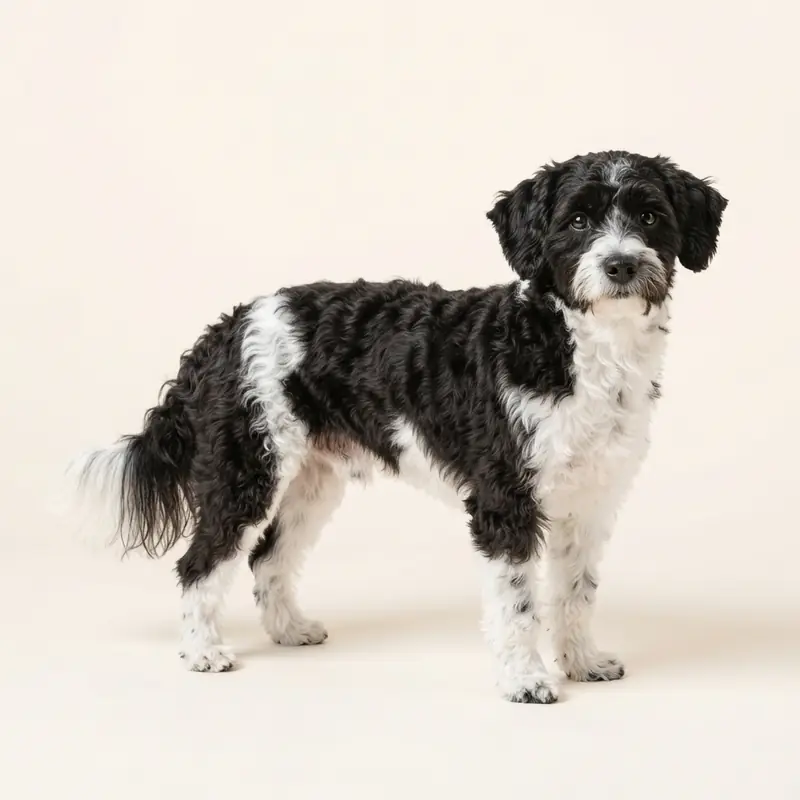
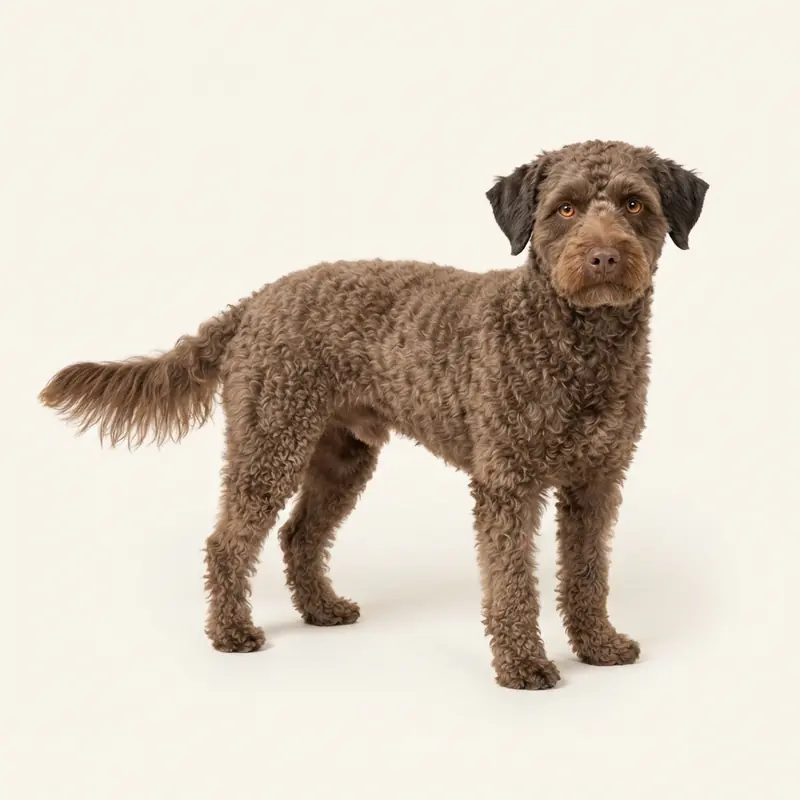
The Jackapoo comes in these colors: Black, White, Brown, Cream, Gold, Grey, Tan, Apricot, Black and white, Tricolor. Colors that fall outside the breed standard are marked as such on the breed page.
Showcase your kennel on HonestDog and reach families searching for a responsibly bred Jackapoo.