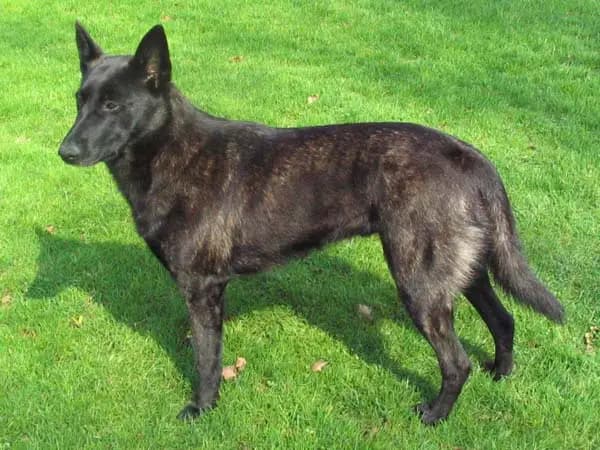
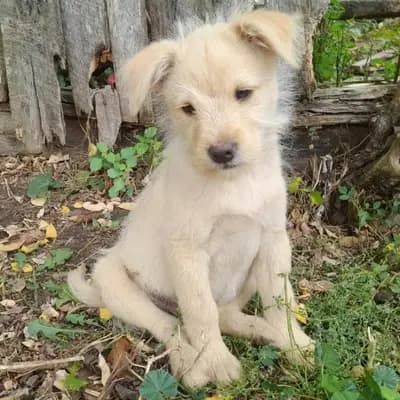
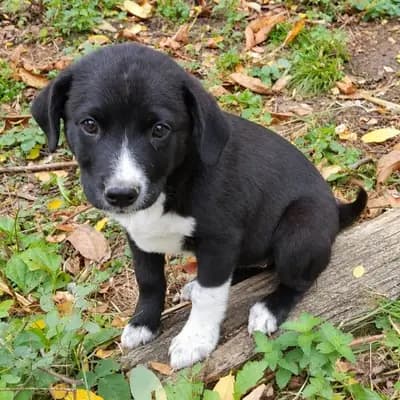
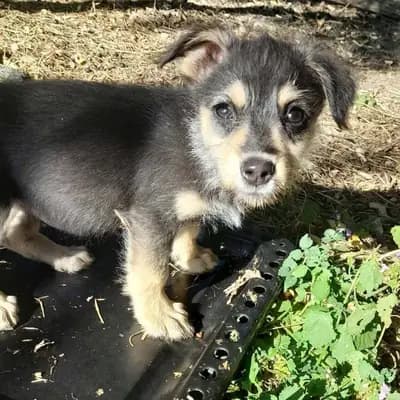
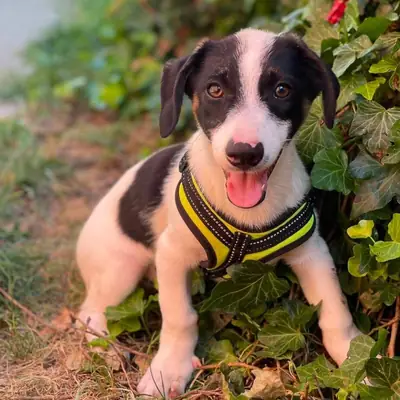
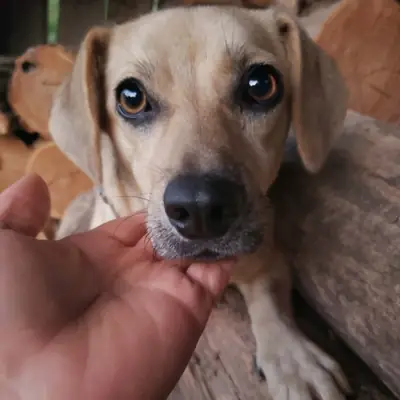
When you take on an adult dog, it already comes with life experience and established habits. In general, the breed is good with children, suited to town life and gets on well with other dogs. Even so, a second-hand dog needs time to come to terms with the loss of the people it was attached to. At first, expect some insecurity or clinginess.
Health aspects of the Dutch Smoushond
With a life expectancy of 12 to 15 years, the Dutch Smoushond is generally regarded as a robust dog. However, because the breed’s gene pool is extremely small, it does have breed-typical issues affecting the knees and eyes. Reputable breeders have the parent dogs’ knees and eyes clinically examined – the Hollandse Smoushonden Club (HSC) requires a patellar luxation examination – and pay particularly careful attention to genetic diversity in order to reduce risks within the line. Other breed-typical health issues are distichiasis, hip dysplasia and generalised progressive retinal atrophy (PRA).
With a shelter dog, or a dog from disreputable breeders, the genetic background is often unknown. So in everyday life, make a point of keeping your dog at a healthy weight and giving joint-friendly exercise to take the strain off the knees, and plan regular veterinary eye checks.