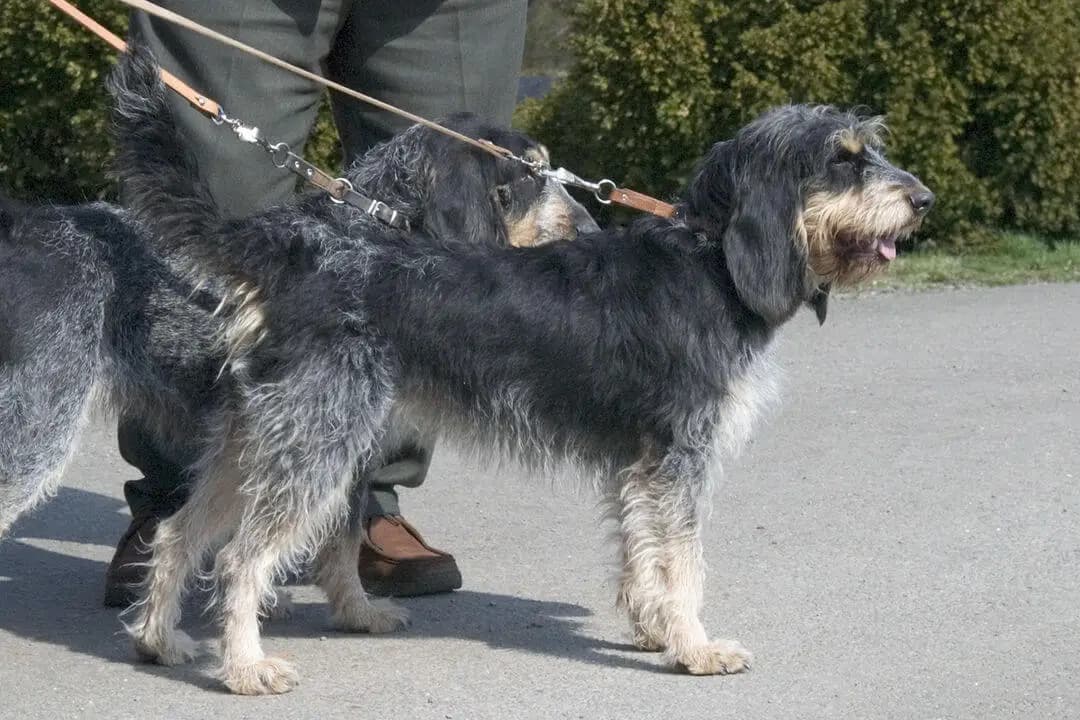
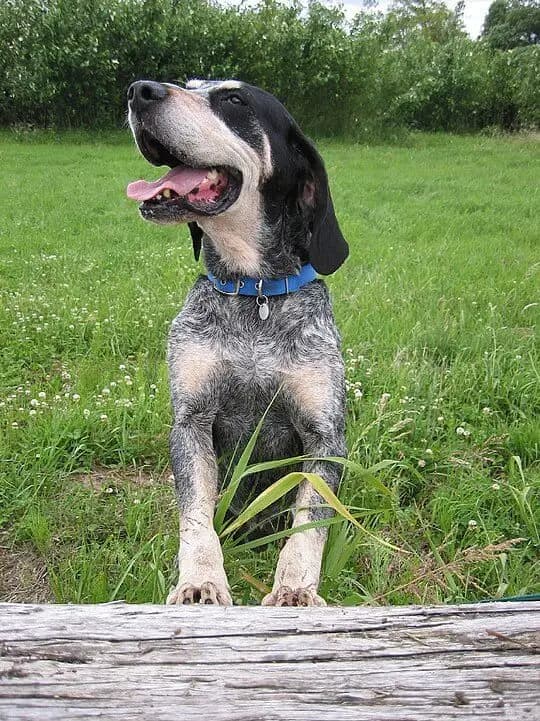
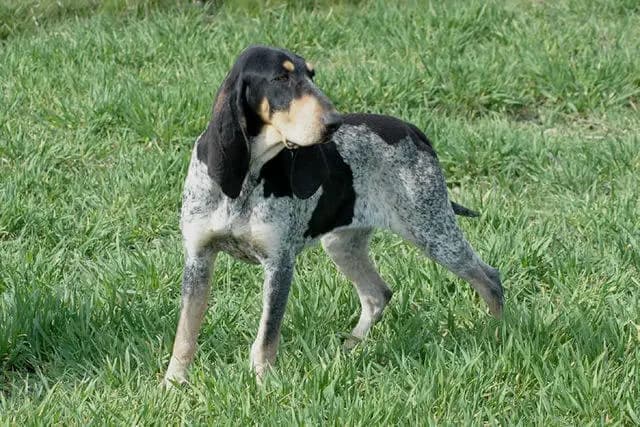
When well bred, the Griffon Bleu de Gascogne is considered a robust working dog with a life expectancy of 12 to 14 years. Even so, the breed has specific health priorities involving the joints, eyes, ears and skin, which you need to know about before buying.
Joints: hips and elbows
Because of its enormous running capacity, healthy joints are essential for this scent hound. The breed is at risk of hip dysplasia (HD) – screening for which is part of the recommended health standard – as well as elbow dysplasia (ED). A health-focused breeder has the parent dogs’ hips and elbows X-rayed by a vet before they are used for breeding. These tests significantly reduce the risk of joint problems in the offspring. In the first year of life, you should also consistently choose joint-friendly exercise and avoid strain such as climbing stairs for long periods or running alongside a bicycle too early.
Eyes, ears and skin
As far as the eyes are concerned, eyelid conditions such as ectropion (outward rolling of the eyelid) and entropion (inward rolling of the eyelid) play a role, as does the generalised form of progressive retinal atrophy (PRA), a progressive degeneration of the retina. Reputable breeders have their breeding dogs’ eyes clinically examined to reduce the risk in their lines. The typical long, low-set ears also need attention: good breeders look for well-ventilated ears and healthy skin in the parent dogs. In everyday life, you need to check and clean the heavy ears and the skin beneath the rough coat regularly to prevent chronic inflammation in good time.
Emergency risk: gastric torsion
As with many medium to large dogs with deep chests, the Griffon Bleu de Gascogne is at risk of life-threatening gastric torsion. Split the daily food ration into at least two meals and consistently keep to rest periods after eating.