
Belgian Shepherd DogClose relative
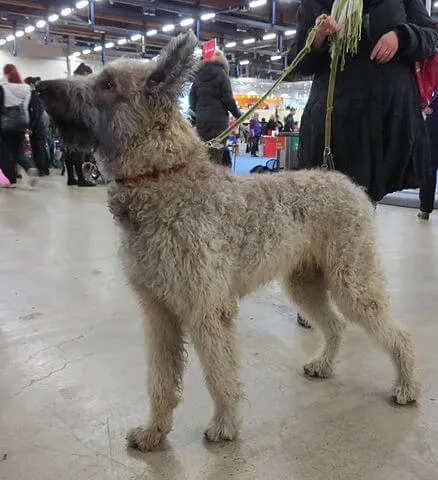
The Laekenois is a primitive, razor-sharp, and incredibly responsive herding dog—bred to herd livestock in Flanders and guard linen on the fields. This rustic variety of the Belgian Shepherd brings full-on working intensity wrapped in a scruffy look.
How the health grade is calculated
Sources for required breeding screenings. Deutscher Klub für Belgische Schäferhunde e.V.
Self-check
Answer 6 quick questions about your everyday life and see how well the Belgian Laekenois fits you — including an honest cost estimate per month, per year, and across the dog's lifetime.



At a glance
The essentials — key facts, traits, and health priorities — before you dive deeper.
Lifespan
12–14 yrs
Shoulder height
56–64 cm
Weight
20–30 kg
Practical
Temperament
Daily life
What matters most
Especially with a Belgian Laekenois, choosing the right breeder is the single most important decision you'll make. Serious breeders consistently test the parents for inherited conditions, prioritize healthy early socialization, and stay accountable long after handover. A cheap puppy without health screening tends to become the most expensive dog later on.
See HonestDog breeder standards →Colors & coat
The coat colors that occur in the Belgian Laekenois — including which ones fall outside the breed standard and which carry genetic risk.
Eye colors
 Brown
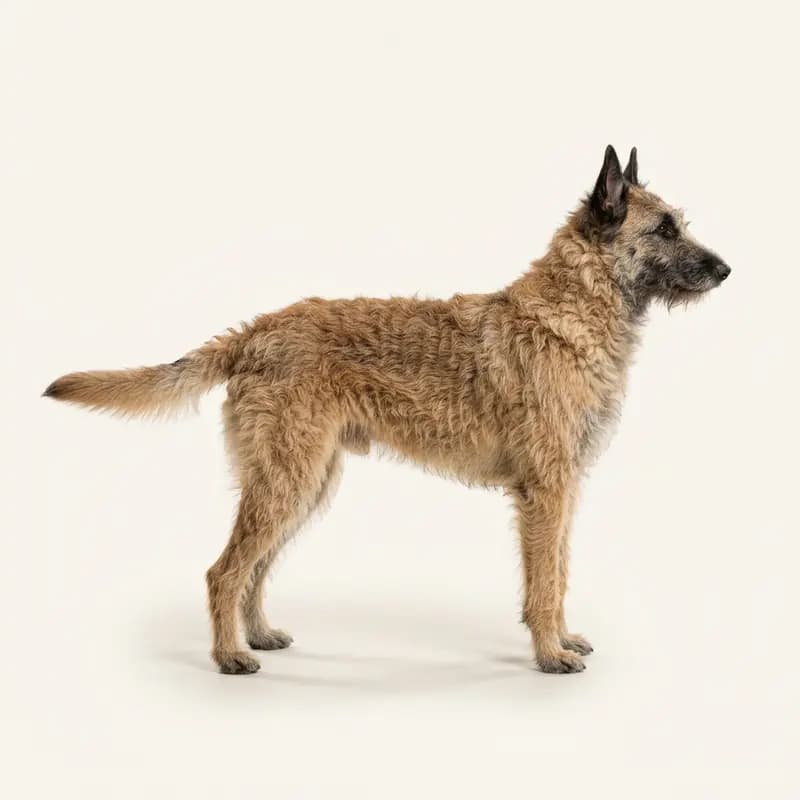
Coat type
 Illustrative image
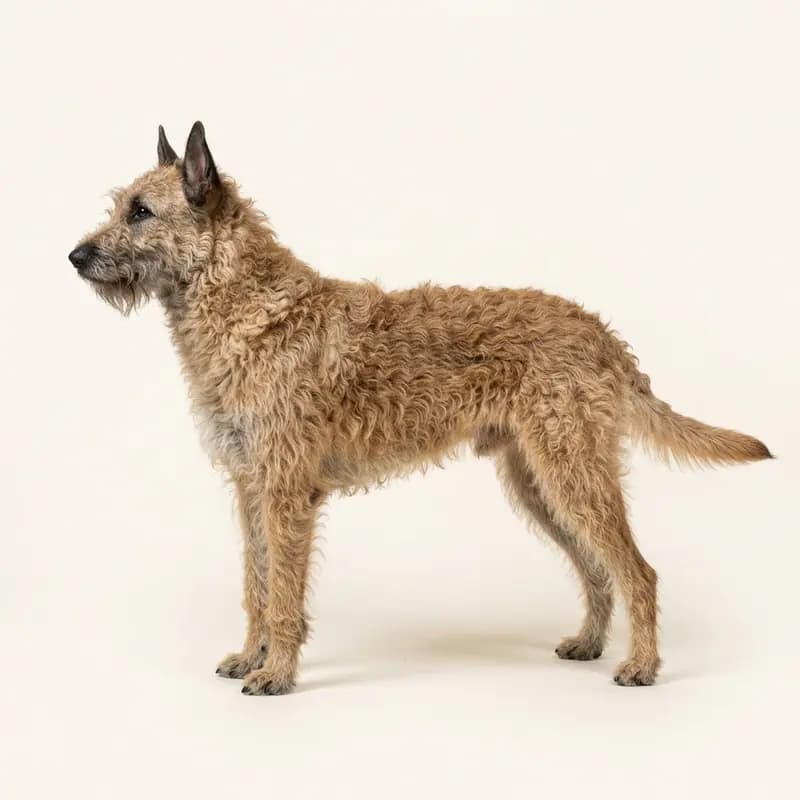
Wire
 Illustrative image
Medium
 Double coat
The real vibes check
Don't let the scruffy appearance fool you—under that rough coat lies the high-revving engine of a true Belgian working dog. A Laekenois forgives little inconsistency and is constantly scanning his environment, ready to take charge for you if necessary. If you provide him with a clear task and leadership, you get an incorruptible partner; if you don't, he will find his own job—and you won't like the result in your daily life.
The Laekenois is one of the four Belgian Shepherd dog varieties and is characterized by its distinctive, rough-haired coat. The loose waves in the fur give it a rustic look. Its muscular build and attentive eyes radiate strength and alertness. The Laekenois belongs to FCI Group 1, Section 1, and is classified as a herding dog. This breed generally does not differentiate between performance and show lines.
The Laekenois is known for its intelligent and alert nature. He is very people-oriented and forms a close bond with his family. His loyalty and protective instinct make him a wonderful guard dog. But be careful: his alertness can sometimes cause him to be suspicious of strangers. It is important that you get him used to different people and situations as a puppy. The Laekenois' intelligence also means that he needs to be mentally challenged. It is ideal for various dog sports such as agility, obedience and protection dog training. Since he is originally a herding dog, he also has a natural ability to work and complete tasks. The Laekenois can also be used successfully in rescue and therapy dog work. By nature, the Laekenois is an active dog that needs a lot of exercise. A large garden to run around in is ideal, but long walks or hikes are also a good way to give him enough physical exercise. He is also a playful dog who loves interacting with his humans. The Laekenois is a breed that loves being with its family and does not like to be alone for long periods of time. He can learn to be alone for short periods of time, but he should not be left alone for long hours on a regular basis or he will become unhappy and possibly develop destructive behavior. In terms of hunting behavior, the Laekenois typically does not show a strong interest in hunting, but it may exhibit some prey-catching behavior, especially when bored or not getting enough exercise. Although originally bred for work, the Laekenois also has a gentle side and enjoys spending time with his family. He is loving and affectionate towards the people he knows and can be a loyal and loving companion. Overall, the Laekenois is an intelligent, alert and loyal dog that makes a good family dog if properly socialized and kept busy. He needs an owner who is willing to invest time and energy in his upbringing and training and who will provide him with the mental and physical stimulation he needs to be happy and well-adjusted.
| Watchfulness A natural watchdog with real protective instinct. | High |
| Openness to Strangers Neither pushily friendly nor suspicious. | Neutral |
| Hunting or Herding Drive Noticeable drive — needs attention around small animals. | Moderate |
Fun Fact!
Did you know that the Laekenois is one of the four Belgian Shepherd breeds and is often considered the wiriest and most independent of the group?
Laekenois are very active and easily excitable working dogs. They are often kept as service and sporting dogs. These dogs are not beginner or family dogs.
The Laekenois can adapt to city life, but requires sufficient exercise and mental stimulation. He prefers a garden or a larger outdoor area where he can run around. If you live in an apartment, daily long walks and activities are essential. He usually gets along well with children, but should always be supervised, especially when the children are young. The Laekenois is also often friendly with cats and other pets, especially if he has been socialized with them from an early age.
Gets on well with different people and varying routines.
Gets on well with children — with adult supervision.
Usually gets on fine with other dogs.
Can manage in the city, but only with very active owners.
Owning a dog is a privilege, but it's also a real responsibility. Before you bring one into your life, be honest with yourself about the commitment it takes.
The Laekenois is an intelligent and active dog that likes to be kept busy. He is well suited to various dog sports such as agility, obedience and herding. It is important to be careful not to over-exercise the dog as this can lead to stress and behavior problems. The breed has a strong work drive, meaning frustration tolerance and impulse control are important elements in training. It is advisable to train the dog from an early age using positive reinforcement. The Laekenois can also become a "ball junkie" if he becomes too focused on playing with balls. It is important to offer a variety of activities, not just ball games, to ensure the dog develops a balanced behavior.
A Laekenois needs a balanced diet to stay healthy and active. High-quality dog food that is appropriate for the dog's size and activity level is a good choice. It is also important to pay attention to the dog's weight and avoid overfeeding, as excess weight can affect the dog's health. In terms of grooming, the Laekenois has a rough coat with an undercoat. This fur offers him protection from the weather conditions and he can cope well with the climate in Germany. The coat should be brushed regularly to prevent matting and remove dead hair. The Laekenois sheds moderately, but regular brushing can reduce shedding.
| Care Level Regular brushing and occasional professional grooming. | Moderate |
| Exercise Needs Needs several hours of serious exercise every day. | Very active |
| Shedding Hair everywhere, always — no white clothing survives. | Very heavy |
| Trainability Picks up commands quickly and wants to please. | Eager to learn |
Our experts are still reviewing this information. Spotted something wrong? Email us at info@honestdog.de.
Solid
Health grade
In the Laekenois, hip dysplasia (HD) and elbow dysplasia (ED) are the main orthopedic risks that can lead to painful joint damage. Responsible breeders therefore have their breeding dogs thoroughly X-rayed in advance to ensure only resilient dogs are used in breeding. The Deutscher Klub für Belgische Schäferhunde e.V. makes these examinations mandatory. When buying a puppy, consistently pay attention to the official X-ray evaluations of the parents and demand proof of HD A–B as well as ED 0 or borderline.
Grade is relative to other breeds — AI-assisted and editorially reviewed.
Methodology and data: HonestDog Dog Breed Health Report 2026
What matters most for this breed
Tap any item to see details.
You should ensure the dog is raised in a way that protects its joints, keep its weight low, and schedule regular check-ups for the eyes and back to detect potential issues early.
Responsible breeders have their dogs X-rayed for hip dysplasia (HD) and elbow dysplasia (ED) to specifically prevent painful joint damage in the Laekenois.
Note: This health overview is AI-assisted and editorially reviewed. It is for orientation only and does not replace veterinary advice.
What matters most for this breed — what's common, how much it affects the dog's life, and how to protect yourself as a buyer.
Tap a body region to see the inherited conditions linked to it.
The three most important risks
Pick a region on the map to explore other areas.
Tier 1 reflects the tests Deutscher Klub für Belgische Schäferhunde e.V. actually mandates. Tiers 2 and 3 show how responsible breeders go beyond.
Club standard. Deutscher Klub für Belgische Schäferhunde e.V. requires these tests for breeding approval. Ask any reputable breeder for the results.
Not health tests, but required for breeding: the club asks for these results too. They don't count toward the risks or the rating.
DNA-Identitätsnachweis
Required by Deutscher Klub für Belgische Schäferhunde e.V.
Acceptable result: Proof of parentage provided
Wesensbeurteilung
Required by Deutscher Klub für Belgische Schäferhunde e.V.
Acceptable result: Passed (demonstrated by a performance test, a separate behaviour test or a behaviour test held as part of a show)
No entries in this tier.
No entries in this tier.
Note: This health overview is AI-assisted and editorially reviewed. It is for orientation only and does not replace veterinary advice.
A Belgian Laekenois costs around ~€190 per month (€100 – €350, depending on your setup). The first year adds up to roughly ~€5,050 including purchase, equipment and puppy school; across the dog's life (13 years) it comes to about ~€31,740.
With surgery cover, running costs come to about ~€190 per month — in return, your share of a major operation drops from several thousand euros to around 20 percent.
Per month
~€190
In the first year
~€5,050
Across the dog's life
~€31,740
Estimated purchase price from a breeder: €1,500 – €2,500
Estimate at a mid-range setup (suburban, dry food, 1–2 hours of daily exercise), average German prices, as of July 2026.
HonestDog Concierge
We currently have no breeders for this breed who have passed our verification. Create your short buyer profile: we'll set up your search alert, review a possible source and email you within 28 days.
 Illustrative imageIllustrative image
 Illustrative image
 Illustrative image
The Laekenois is one of the four variants of the Belgian Shepherd Dog and has its origins in the Belgian region of Laeken, after which it is named. The four varieties of Belgian Shepherd, which also include the Groenendael, Tervuren and Malinois, were originally bred as working dogs to herd sheep and guard property. In the mid-19th century, breeders in Belgium began systematically breeding sheepdogs, and in 1891 the first Belgian Shepherd Dog club was founded. The different coat types of Belgian Shepherd Dogs were initially viewed as regional variations and were later recognized as separate breeds. The Laekenois was officially recognized as a separate breed in 1893. During the two world wars, Laekenois dogs were often used as couriers and guard dogs due to their intelligence and alertness. Despite their use during the wars, the breed's population declined and had to be rebuilt after World War II.
The Laekenois is a variety of the Belgian Shepherd Dog and was used for herding flocks of sheep and as a guard dog.
Belgium
1900
Owners describe Laekenois as very loyal, affectionate dogs devoted to their immediate family. Compared directly with the Malinois, many owners find this rough-coated Belgian a bit more settled and steadier-nerved at home. It's still a full-blooded working dog, though: without the right amount of exercise and work, these dogs demand attention or tend to patrol house and yard on their own and develop unwanted barking.
A recurring everyday challenge is the breed's typical distrust of strangers and its instinctive watchdog and guarding drive. Owners stress that visitors can't simply be welcomed carelessly until the dog has a clear release or guidance from its person. For lively households with a lot of comings and goings, that means ongoing management, since the Laekenois naturally registers every change and wants to keep it under control.
Sources:mit-tier.dezooplus.depurina.dezoomalia.demein-haustier.de
In training accounts, owners highlight the breed's quick understanding and strong work ethic. The Laekenois responds to cues in a flash and learns new exercises quickly. At the same time, experienced Belgian Shepherd owners warn that this intelligence is a double-edged sword: poor timing, harshness or inconsistency quickly make the sensitive dog insecure, or lead it to shut down or find its own solutions.
According to owners, the training focus isn't on building drive but on deliberately teaching calm and frustration tolerance. Because the breed can react to movement, such as running animals or passersby, impulse control and loose-leash walking need to be built consistently from puppyhood. Walks alone rarely satisfy these dogs; most owners involve them in dog sports such as tracking, agility or search-and-rescue training to keep them mentally content.
From a health perspective, owner accounts and breed portals describe the Laekenois as probably the most original and hardy variety of the Belgian Shepherd. Because the breeding population is very small, however, owners and enthusiasts point out how crucial it is to choose a responsible breeder who screens rigorously for hip dysplasia (HD), elbow dysplasia (ED) and hereditary eye diseases.
One practical point that often surprises newcomers is grooming the rough coat. Weekly brushing takes little effort, but the wiry coat needs regular plucking or trimming (hand-stripping) two to four times a year to remove dead hair and preserve its weatherproof texture. Owners make a point of not clipping the coat, since this ruins the rough protective layer.
Sources:zoomalia.demein-haustier.dekokogenetics.comzooplus.detackenberg.de
Paraphrased from real owner reports · translated from German
The Belgian Laekenois is an active dog that needs plenty of exercise and mental stimulation. Research the temperament, grooming needs, and space requirements before deciding.
The average life expectancy of a Belgian Laekenois is 12-14 years. With proper care and regular vet visits, your dog can live a long, healthy life.
Belgian Laekenois grooming requirements include regular brushing, nail trimming, and dental care. HonestDog provides detailed grooming tips for every breed.
The Belgian Laekenois can be a great family dog. Proper training and socialization are key. HonestDog provides family suitability information for every breed.
The Belgian Laekenois comes in these colors: Fawn, Sable.
Showcase your kennel on HonestDog and reach families searching for a responsibly bred Belgian Laekenois.