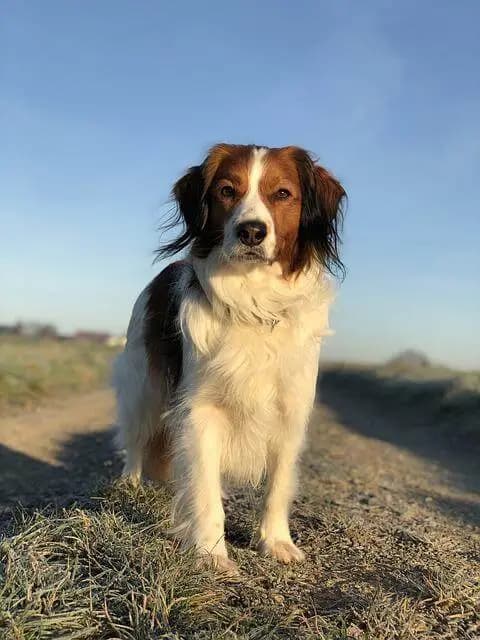
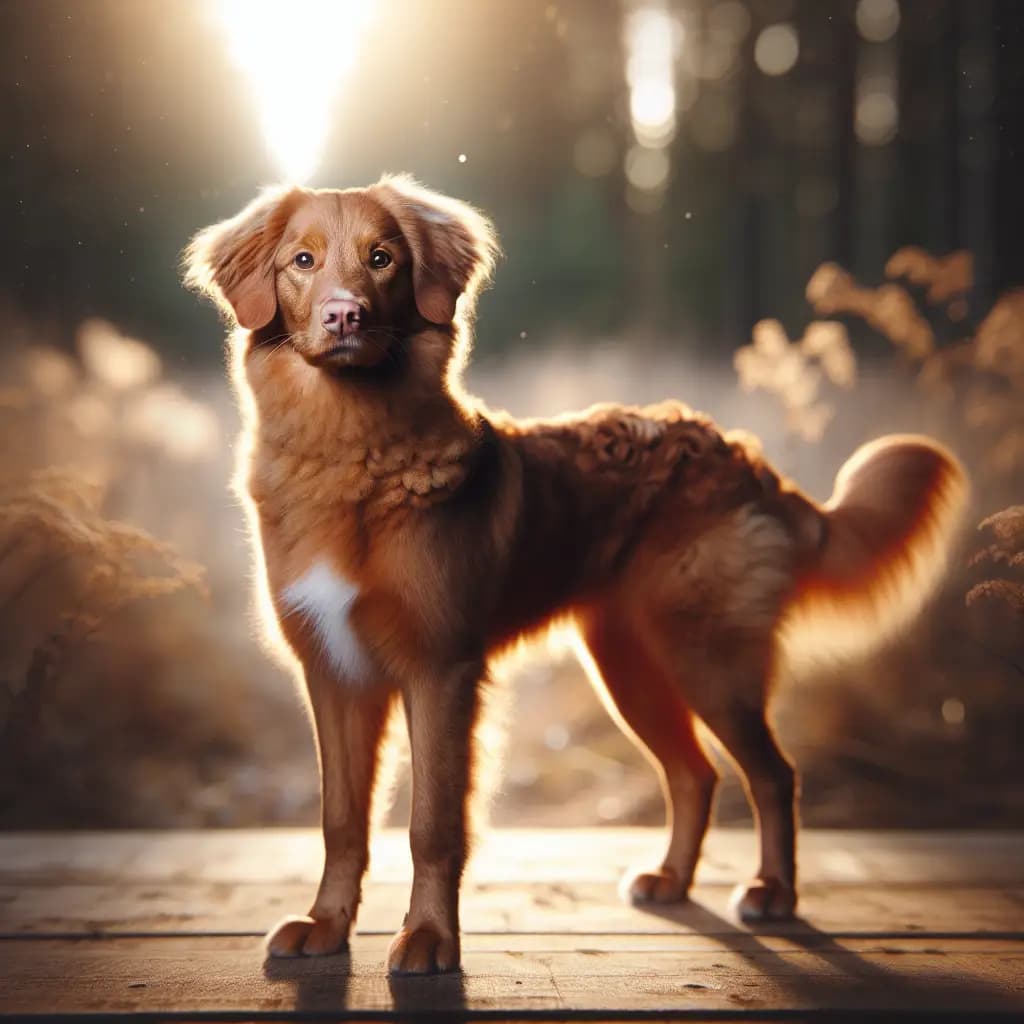
Don’t be fooled by the cute looks: with an energy level of 4/5 and trainability of 5/5, the Toller demands mental and physical exercise. Walks alone are not enough for him. He has a passion for retrieving and thrives on dummy training, nose work or dog sports. With family and around children he is absolutely friendly and affectionate, scoring 5/5, and he also gets on well with other dogs (4/5).
He is only moderately suited to city life (city suitability 3/5). This is partly down to an acoustic peculiarity: when highly excited and full of anticipation, the breed tends to produce the so-called “Toller scream” – a piercing, high-pitched shriek that quickly becomes a problem in a thin-walled rented flat. Impulse control and calmness exercises are therefore on the agenda from day one. His water-repellent, medium-length coat with a dense undercoat, on the other hand, is very easy to manage: despite moderate shedding (3/5), grooming needs are a relaxed 2/5, as dirt often simply falls out of the dry coat.
Your checklist for the first conversation with a Toller breeder
- Official X-ray results: Ask to see the HD and ED evaluations for both parent dogs.
- Check the DNA test certificates: Request the written laboratory results for prcd-PRA and degenerative encephalopathy (DE) – at least one parent must be “clear” (N/N).
- Current eye examination report: Check the clinical findings of a veterinary eye specialist for cataract, retinal dysplasia, CPRA, and for signs of PPM, corneal dystrophy and eyelid malpositions (ectropion/entropion).
- The parents’ dental status: Ask for proof that both parent dogs have been checked for dental malformations.
- An open conversation about autoimmune diseases: Ask specifically about known cases of Addison’s disease (hypoadrenocorticism) or other autoimmune reactions in the ancestral lines, as there is no simple DNA test for this and knowledge of the bloodlines is what counts.
- Observe the dam’s temperament: In keeping with the breed, she may be briefly reserved with strangers at first, but she must come across as outgoing, steady-nerved and free from fear or aggression.
On HonestDog, a breeder profile only goes online once the breeder has completed registration: identity verification by ID and selfie, proof of club membership or a §11 permit where applicable, a knowledge test on breeding and animal welfare, and agreement to the HonestDog breeding standards, which among other things rule out breeding from dogs with extreme traits that cause suffering. Health test results for the parent dogs that breeders upload are visible directly in the profile; you should ask to see the original reports when you visit. Your next step: compare the profiles of Nova Scotia Duck Tolling Retriever breeders on HonestDog, look at the health records they have uploaded and ask directly about the next litter.