Loading breed
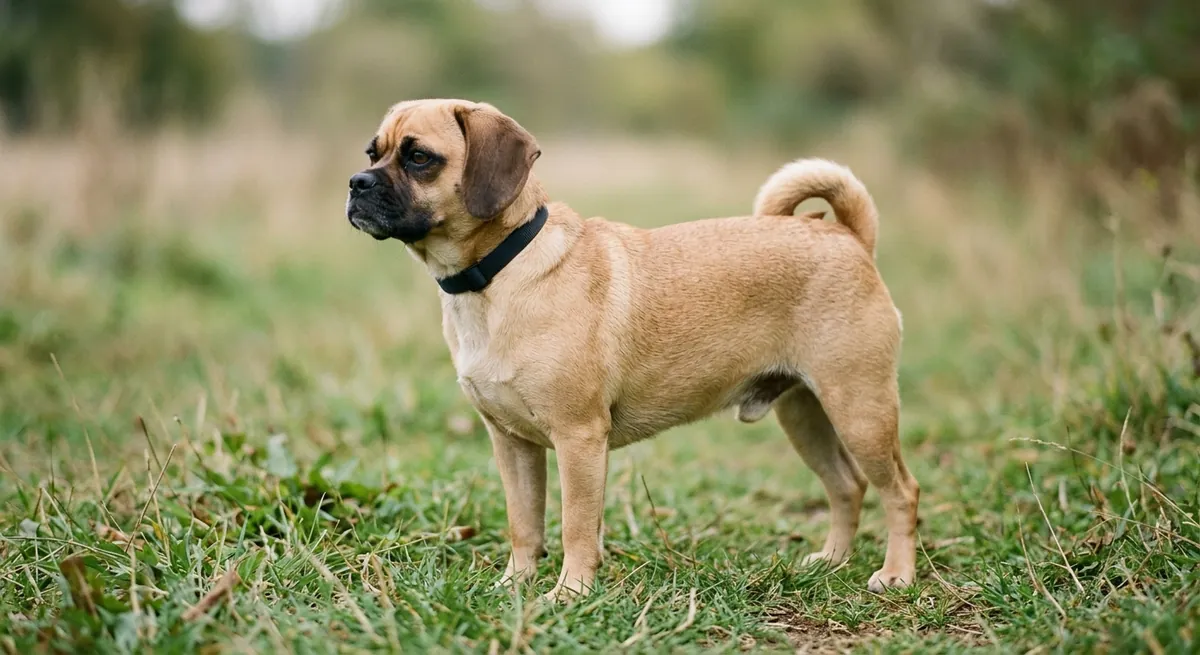
Puggle
Health grade D- Height23–38 cm
- Weight7–14 kg
- Life expectancy10–14 yrs
- Puppy price1,200–2,200 €
- Energy3/5
The Essentials at a Glance
The Puggle is a charming, strong-willed hybrid of scenthound and companion dog—bred as a compromise between the fine nose of the Beagle and the absolute human-focused nature of the Mops (Pug).
- Health grade D: As a crossbreed between the Beagle and Pug, the Puggle combines the inherited risks of both parent breeds.
- You enjoy nosework or tracking games to keep the Beagle heritage properly exercised without demanding peak athletic performance.
- You're looking for a humorous, people-oriented companion who loves being right in the middle of family hustle and bustle.
- You expect guaranteed traits—with this crossbreed, you never know beforehand whether the scenthound's nose or the companion dog's laid-back attitude will take the lead.
Is the Puggle right for you?
At a glance
Puggle overview
The essentials — key facts, traits, and health priorities — before you dive deeper.
Health grade
Relative to other breeds
S
A
B
C
D
E
Very healthyHigher risk
Elevated risk — responsible breeding really matters.
See full health info & tests →
Note: This health overview is AI-assisted and editorially reviewed. It is for orientation only and does not replace veterinary advice.
Lifespan
10–14 yrs
Height
23–38 cm
Weight
7–14 kg
Practical
- Puppy price: 1,200 – 2,200 €
- Coat: short, smooth
- Origin: USA
Temperament
Energy
Trainability
Family fit
With kids
Daily life
Care effort
Shedding
Barking
City-friendly
Guard instinct
What matters most
Especially with a Puggle, choosing the right breeder is the single most important decision you'll make. Serious breeders consistently test the parents for inherited conditions, prioritize healthy early socialization, and stay accountable long after handover. A cheap puppy without health screening tends to become the most expensive dog later on.
See HonestDog breeder standards →Colors & coat
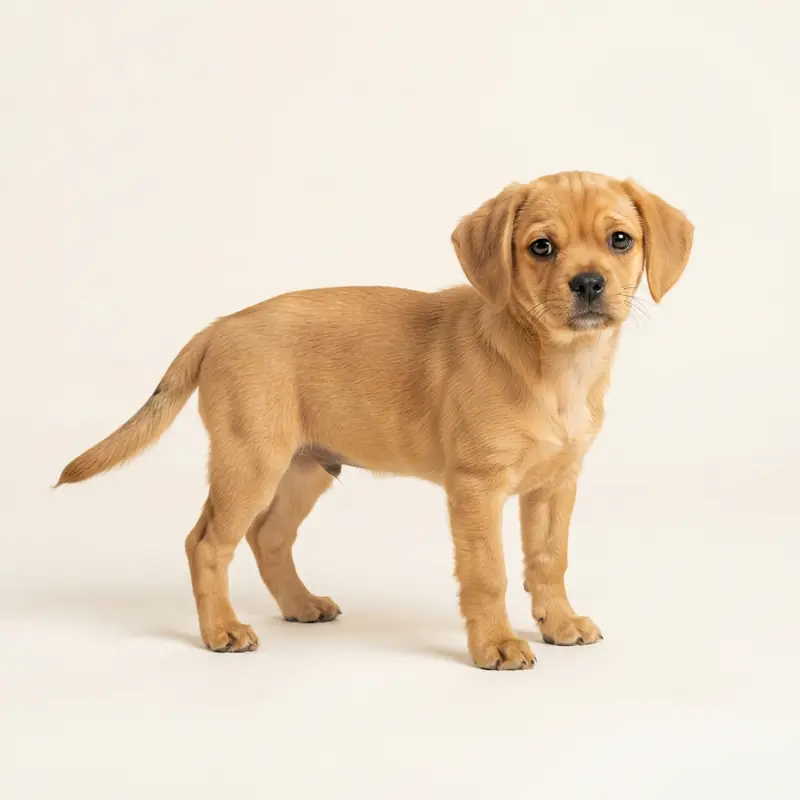
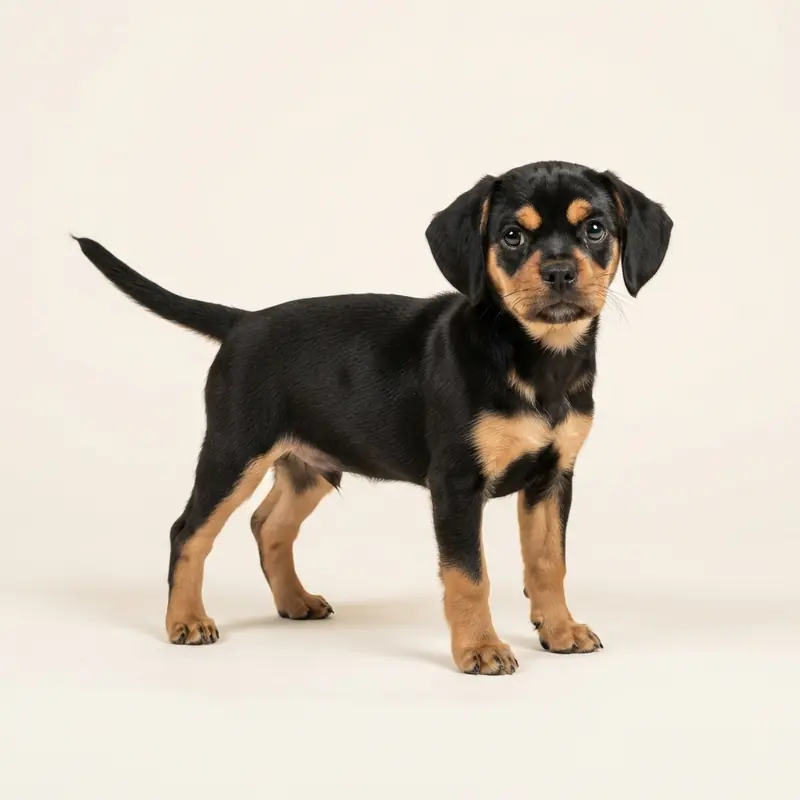
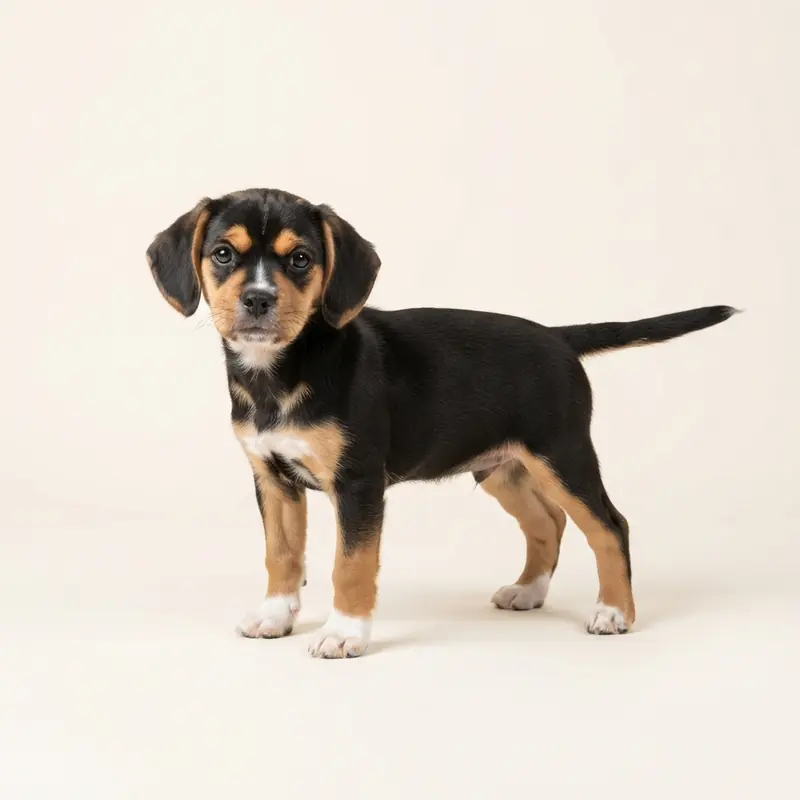
What colors does the Puggle come in?
The coat colors you will see in Puggle litters — including which ones fall outside the breed standard and which carry genetic risk.
Eye colors
 Brown
Brown Amber
Amber
Coat type
 Short
Short Smooth
 Double coat
Is the Puggle right for you?
Perfect for you if:
- You enjoy nosework or tracking games to keep the Beagle heritage properly exercised without demanding peak athletic performance.
- You're looking for a humorous, people-oriented companion who loves being right in the middle of family hustle and bustle.
- You can handle a healthy dose of stubbornness and don't expect blind obedience on every walk.
- You live in an environment where the talkative Beagle voice won't trigger neighbor disputes.
Less ideal if:
- You expect guaranteed traits—with this crossbreed, you never know beforehand whether the scenthound's nose or the companion dog's laid-back attitude will take the lead.
- You have to leave him alone for more than four hours on weekdays, as both parent lines are extremely pack- and people-oriented.
- You're looking for an endurance running or cycling partner for athletic workouts.
The real vibes check
A Puggle is a genetic grab bag: in the best case, you get a Beagle in cozy Mops (Pug) mode; in the worst case, you get a companion dog with the relentless hunting drive of a tracker. He loves to negotiate, loves sniffing even more, and easily wraps you around his little finger. If you're ready to love whatever operating system ultimately grows out of that puppy, you'll get an absolutely unique clown.
Self-check
Would the Puggle really fit your life?
Answer 6 quick questions about your everyday life and see how well the Puggle fits you — including an honest cost estimate per month, per year, and across the dog's lifetime.
Fit checkCost estimateRisk dice
Takes about 1 minute · free & anonymous
Breed Profile
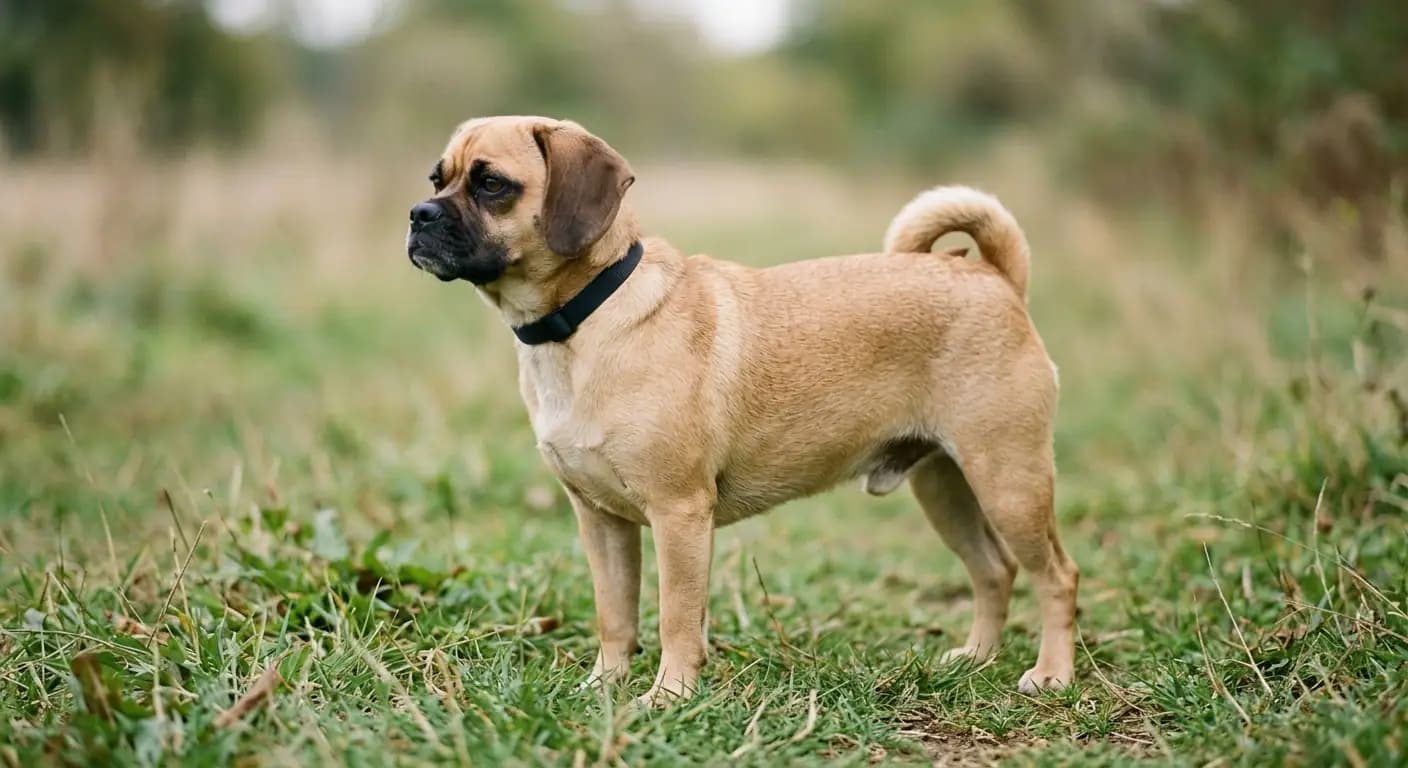
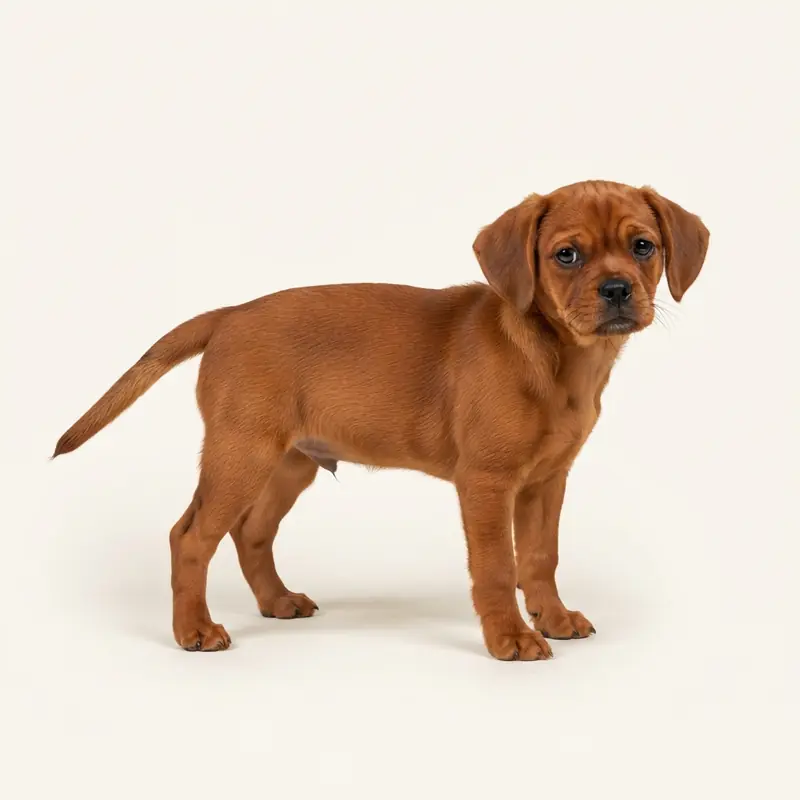
The Puggle is a cross between a Beagle and a Pug, usually small to medium-sized with a short to medium-length muzzle. It is not a 'healthier Pug', as coat pattern, muzzle length, and health are unpredictably mixed from both parent breeds in every individual puppy.
All measurements in detail
- Height
- 23 - 35 cm (Female), 25 - 38 cm (Male)
- Weight
- 7 - 12 kg (Female), 8 - 14 kg (Male)
- Life Expectancy
- 10 - 14 yrs
- Character
- playful, curious, sociable, affectionate, stubborn
- Coat
- short, smooth
- Coat Color
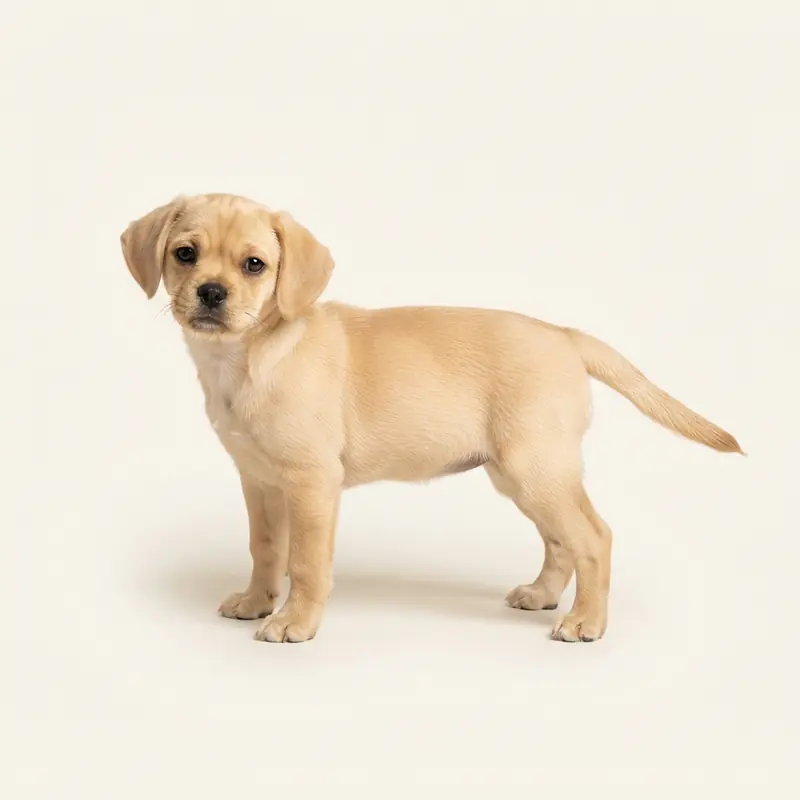
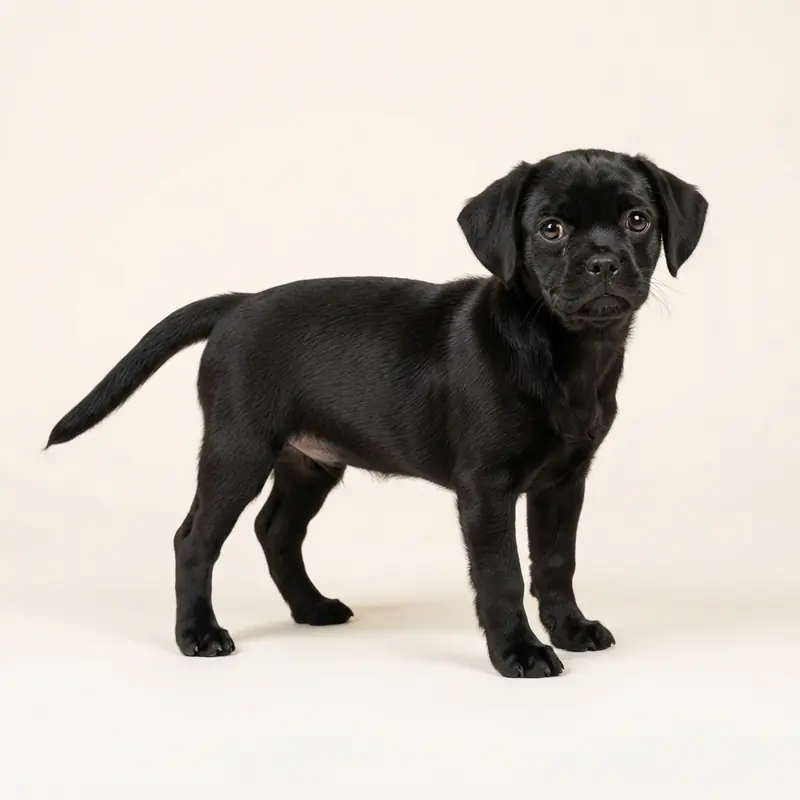
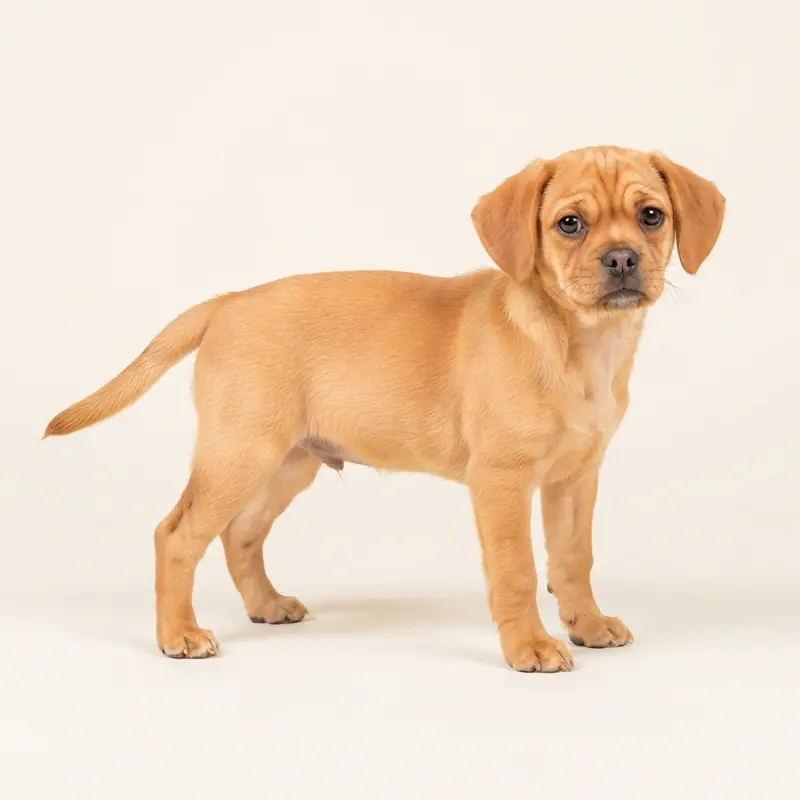
- beagle brown-black-white, pug fawn, sometimes with a black mask
- Price
- 1200 - 2200 €
Character & Temperament
Puggles are usually playful, sociable, and people-oriented, with a dose of Beagle-typical curiosity and stubbornness. Many individuals like to follow their nose and can be harder to recall than purebred Pugs when picking up interesting scents. They are generally friendly and easygoing toward family and strangers alike. Some Puggles are prone to barking or Beagle-typical howling when bored or left alone.
| Watchfulness Greets everyone as a friend — no natural guarding instinct. | Very low |
| Openness to Strangers Warms up quickly and is generally welcoming. | Friendly |
| Hunting or Herding Drive Noticeable drive — needs attention around small animals. | Moderate |
Fun Fact!
The Puggle was one of the very first popular designer dogs in the USA, but its muzzle length can vary greatly even between littermates.
What Awaits You
The Puggle combines the curious, playful character of the Beagle with the affectionate, people-oriented nature of the Pug. Visually, the range extends from more Beagle-typical elongated muzzles to distinctly short Pug-like muzzles, depending on which traits prevail in the individual puppy. Due to this unpredictability, every Puggle puppy should be evaluated individually for muzzle length and breathing sounds rather than relying on the breed name. The Puggle is usually playful and sociable, but can also inherit a strong tracking instinct and a degree of stubbornness from the Beagle parent. In a family setting, it is generally considered affectionate and good-natured, but requires a controlled exercise and diet regimen due to its tendency toward obesity.
Housing & Care
With its high level of friendliness toward families and children, the Puggle is excellently suited to living with household members of all ages. Thanks to its fairly good adaptability to city life, it can feel comfortable in an urban apartment as well as in a house with a garden. Living together is usually straightforward, as it proves to be friendly toward its own family and strangers alike. When interacting with other dogs, this four-legged companion is generally well-compatible and sociable. Nevertheless, owners should keep in mind that a certain prey drive may be present due to the Beagle parentage. Living with other pets therefore requires appropriate caution when its typical Beagle curiosity and keen sense of smell take over.
- Family Friendly
Lives for its family — the born family companion.
Ideal family dog - Child Friendly
Extraordinarily patient and loving — a true family dog.
Excellent with children - Dog Friendly
Actively enjoys the company of other dogs.
Dog-friendly - City Friendly
Adapts well to city living and urban environments.
Well-suited to city life
Owning a dog is a privilege, but it's also a real responsibility. Before you bring one into your life, be honest with yourself about the commitment it takes.
Training & Education
When training a Puggle, you should prepare for a certain degree of stubbornness and willfulness. Since some dogs will follow their nose when they catch interesting scents and may be harder to recall, consistent yet loving guidance is important. A tendency to bark or the typical Beagle-like howling can occur if the dog is understimulated or left alone. Because this crossbreed is brachycephalic, you must strictly limit exertion and exposure to heat during activities. Short, varied training sessions are far better suited than long, exhausting ones. Pay close attention to your dog during daily routines: heavy panting or distinct breathing noises are a clear sign to stop. In such cases, do not hesitate to end the training immediately, give the dog a break, and protect it from overheating. A controlled exercise routine also helps prevent obesity.
Nutrition & Care
Due to the potential brachycephalic predisposition, exercise during warm weather and physical effort should be tailored to the individual dog's airways, with sufficient breaks and no overheating. The short to medium-length coat requires little grooming; regular brushing is usually sufficient. Because of the tendency toward obesity, food intake and exercise levels should be consistently monitored, and skin folds in short-muzzled dogs should be checked regularly for irritation.
| Care Level Minimal effort — occasional brushing and bathing. | Low-maintenance |
| Exercise Needs Needs 1–2 hours of real exercise daily. | Active |
| Shedding Hair everywhere, always — no white clothing survives. | Very heavy |
| Trainability Willing to learn with clear rules and regular training. | Balanced |
Our experts are still reviewing this information. Spotted something wrong? Email us at info@honestdog.de.
Health & hereditary diseases
Health
D
Elevated risks
Health grade
As a crossbreed between the Beagle and Pug, the Puggle combines the inherited risks of both parent breeds. Despite the heterosis effect, anatomical issues such as Brachycephalic Airway Obstruction Syndrome (BAOS) from the Pug lineage, as well as eye conditions like keratoconjunctivitis sicca and hip dysplasia, can still manifest. Genetic diseases like Lafora epilepsy are also relevant. Forward-thinking breeding therefore relies on targeted genotyping of the parent animals, along with thorough examinations of the respiratory tract, eyes, and musculoskeletal system.
Grade is relative to other breeds — AI-assisted and editorially reviewed.
In daily life this can mean
You should strictly limit heat and heavy exertion, ensure joint-friendly exercise, and honestly factor in a higher veterinary budget.
The breeder's role
Responsible breeders thoroughly test airways, joints, knees, and eyes, and watch for hereditary neurological disorders—though the fundamental risks of this crossbreed cannot be completely eliminated even then.
Note: This health overview is AI-assisted and editorially reviewed. It is for orientation only and does not replace veterinary advice.
No Health Tests Available
No specific health tests are currently available for this breed.
Costs & where to find one
How much does a Puggle cost?
A Puggle costs around ~€160 per month (€90 – €300, depending on your setup). The first year adds up to roughly ~€4,470 including purchase, equipment and puppy school; across the dog's life (12 years) it comes to about ~€25,760.
With surgery cover, running costs come to about ~€160 per month — in return, your share of a major operation drops from several thousand euros to around 20 percent.
Per month
~€160
In the first year
~€4,470
Across the dog's life
~€25,760
Purchase from a breeder: €1,200 – €2,200
Estimate at a mid-range setup (suburban, dry food, 1–2 hours of daily exercise), average German prices, as of July 2026.
Calculate your personal costs1-minute self-check with your own answers
Looking for a Puggle?
HonestDog Concierge
No verified Puggle breeders on HonestDog yet
We currently have no breeders for this breed who have passed our verification. Create your short buyer profile: we'll set up your search alert, review a possible source and email you within 28 days.
Appearance, variants & origin
 Illustrative image
 Illustrative image
 Illustrative image
 Illustrative image
History
The full history
The Puggle originated in the USA, where it was deliberately bred from the Beagle and Pug starting in the 1980s and especially in the 1990s, gaining wider recognition through breeder Wallace Havens, among others. The goal was a small, sociable, and playful companion dog. The Puggle was one of the first popular 'designer dogs' in the USA and achieved widespread popularity in the 2000s, partly through celebrity owners. There is no FCI recognition or uniform breeding standard for the crossbreed, and in Germany, the Puggle is still relatively rare.
Original Use
The Puggle has no historical working function; it was intentionally bred as a small, sociable companion dog.
Origin
USA
Date
1980
Owner experiences
Loading owner stories
FAQ & more
Frequently asked questions about the Puggle
Is a Puggle the right dog for me?
The Puggle is an adaptable dog that adjusts well to various lifestyles. Research the temperament, grooming needs, and space requirements before deciding.
How long does a Puggle live?
The average life expectancy of a Puggle is 10-14 years. With proper care and regular vet visits, your dog can live a long, healthy life.
How much grooming does a Puggle need?
Puggle grooming requirements include regular brushing, nail trimming, and dental care. HonestDog provides detailed grooming tips for every breed.
Is a Puggle good for families with children?
The Puggle can be a great family dog. Proper training and socialization are key. HonestDog provides family suitability information for every breed.
What colors does the Puggle come in?
The Puggle comes in these colors: Fawn, Black, Apricot, Red, Tan, Black and tan, Tricolor. Colors that fall outside the breed standard are marked as such on the breed page.
Loading related articles
Are you a Puggle breeder?
Showcase your kennel on HonestDog and reach families searching for a responsibly bred Puggle.