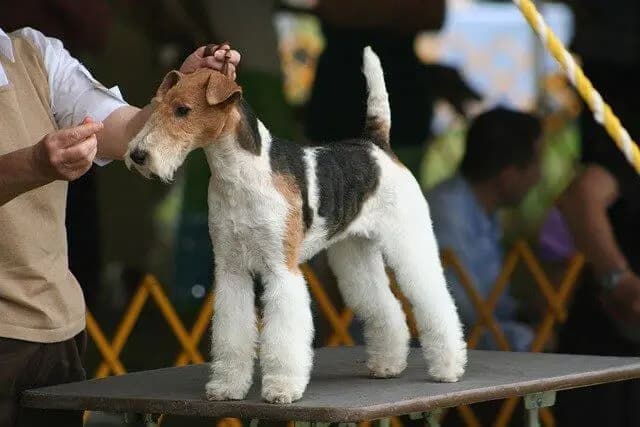
Wire Fox TerrierClose relative
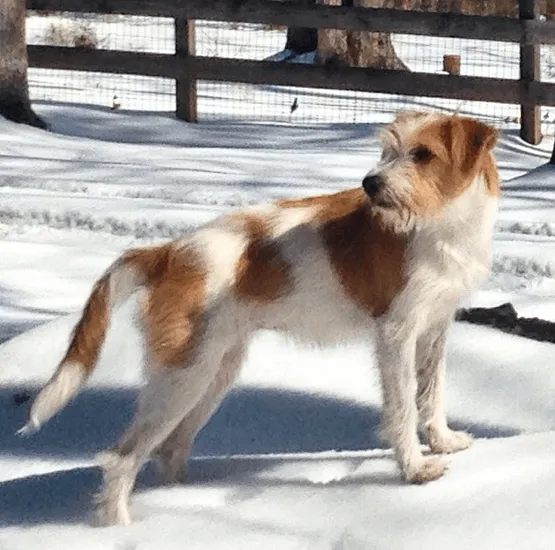
The Kromfohrländer is a sensitive, extremely people-oriented companion dog—bred from Terrier and Griffon roots purely for companionship, which makes him a loyal, though often one-person-focused, partner.
How the health grade is calculated
Sources for required breeding screenings. Rassezuchtverein der Kromfohrländer e.V. (RZV)
Self-check
Answer 6 quick questions about your everyday life and see how well the Kromfohrländer fits you — including an honest cost estimate per month, per year, and across the dog's lifetime.

At a glance
The essentials — key facts, traits, and health priorities — before you dive deeper.
Lifespan
12–15 yrs
Shoulder height
38–46 cm
Weight
9–16 kg
Practical
Temperament
Daily life
What matters most
Especially with a Kromfohrländer, choosing the right breeder is the single most important decision you'll make. Serious breeders consistently test the parents for inherited conditions, prioritize healthy early socialization, and stay accountable long after handover. A cheap puppy without health screening tends to become the most expensive dog later on.
See HonestDog breeder standards →Colors & coat
The coat colors that occur in the Kromfohrländer — including which ones fall outside the breed standard and which carry genetic risk.
Eye colors
 Brown
Coat type
 Illustrative image
Short
 Illustrative image
Medium
 Smooth
 Illustrative image
Wire
 Double coat
The real vibes check
A Kromfohrländer is like an exclusive club with only one VIP member: you. He doesn't need other dogs or strangers petting him; instead, he clings to his primary person with his whole soul. If you are looking for this intense, almost shadow-like loyalty and can confidently manage his distance from the rest of the world, you will get a companion who reads your every wish from your eyes.
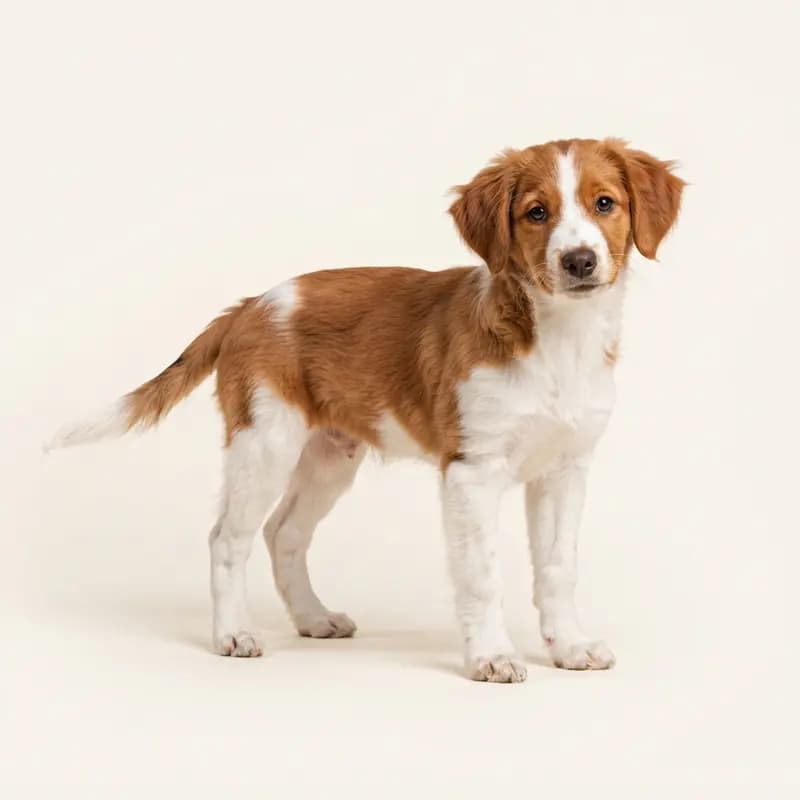
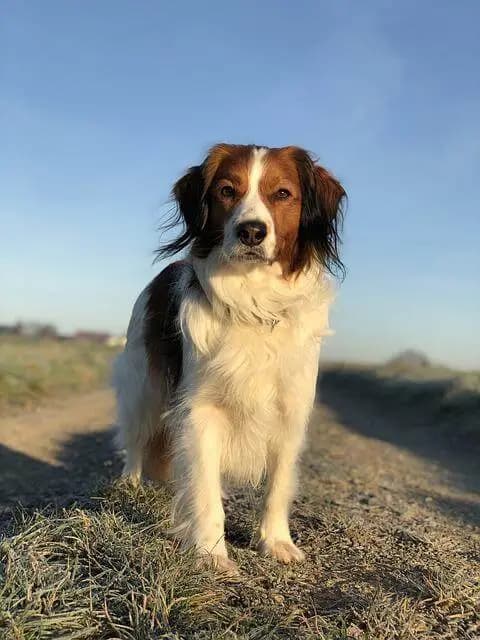
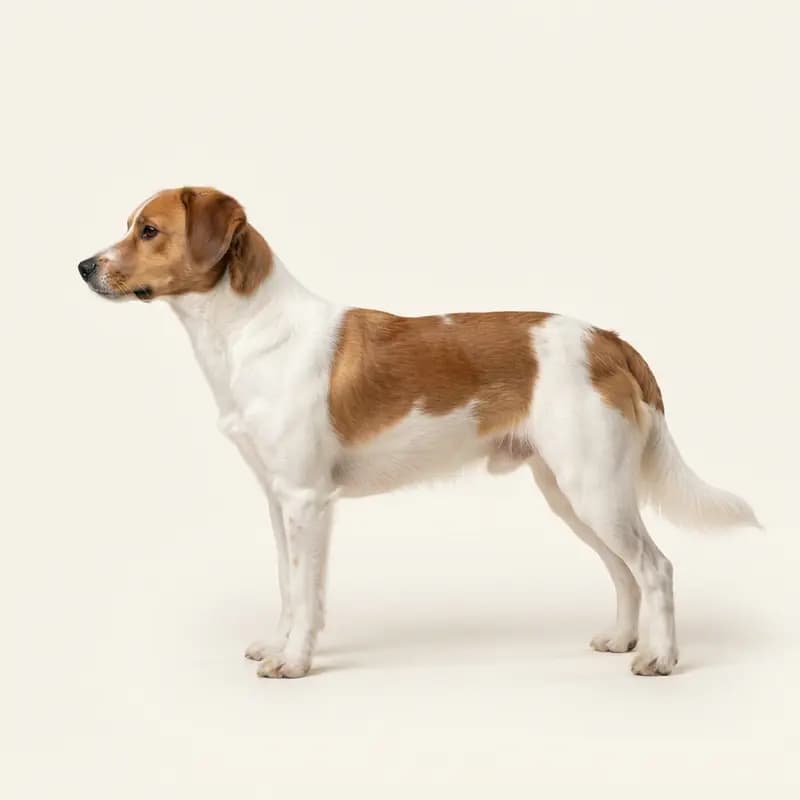
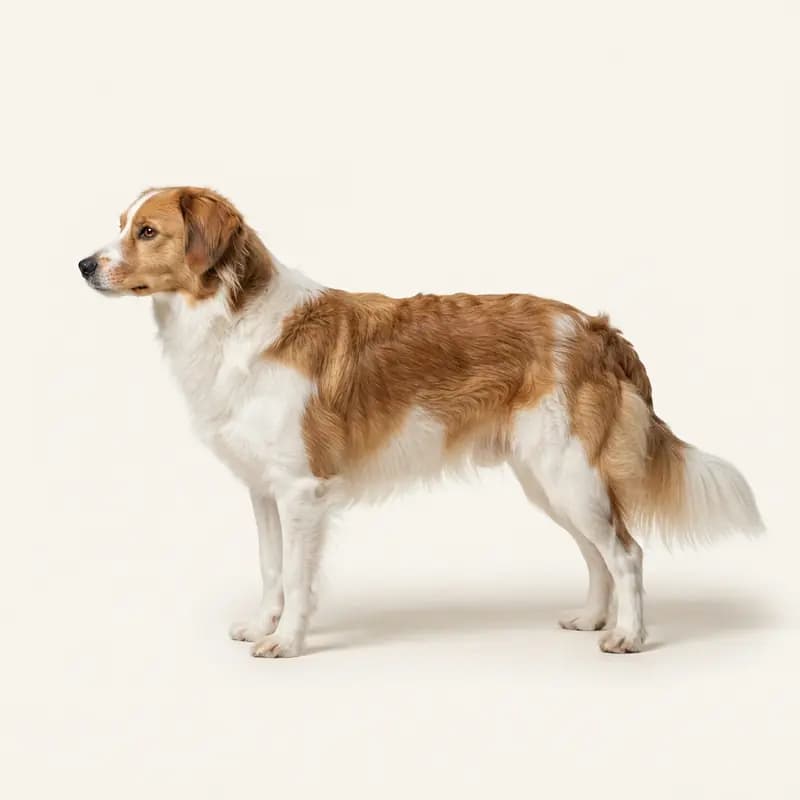
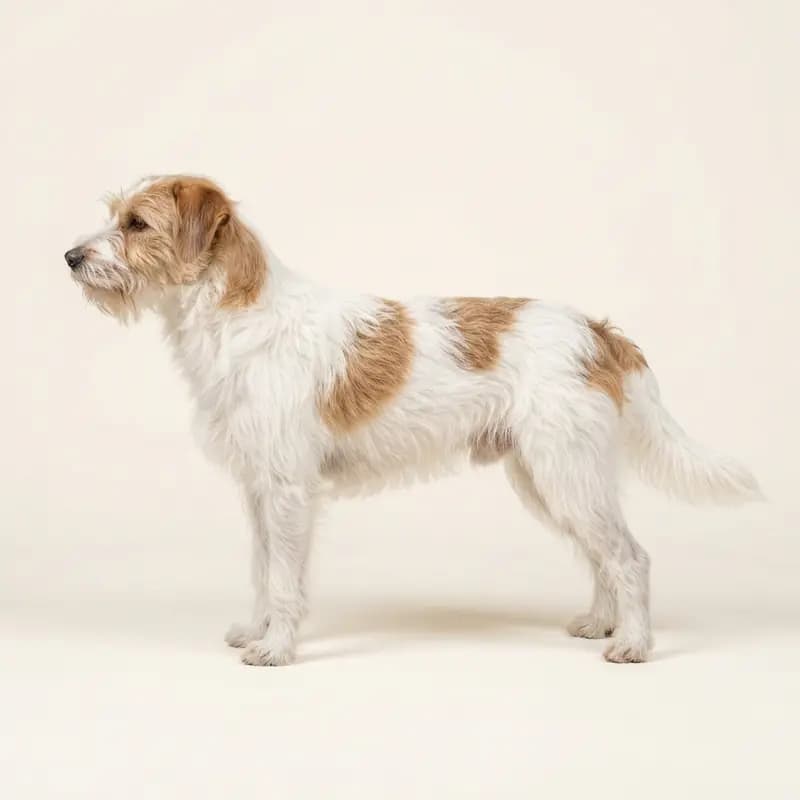
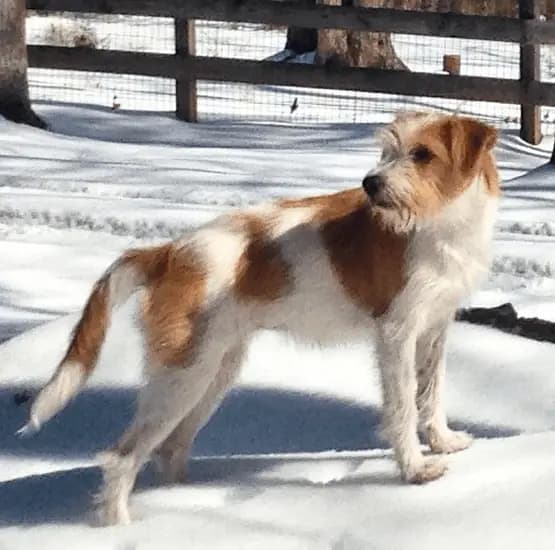
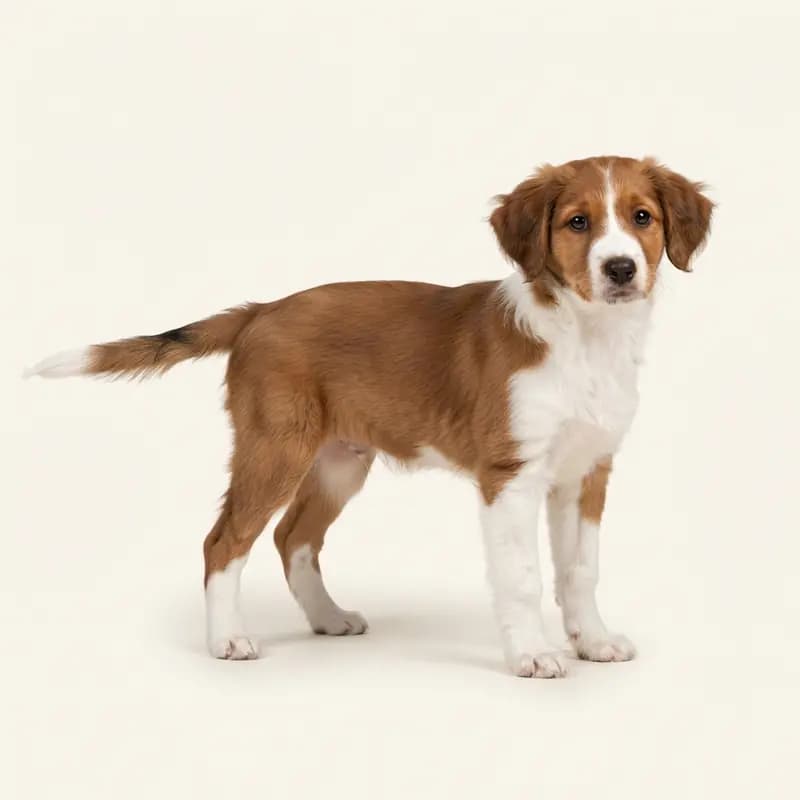
The Kromfohrländer, often just “Kromi”, is a small to medium-sized dog with a charming expression and an endearing personality. With its dense, wavy or smooth fur and distinctive brown markings on a white background, it is a real eye-catcher. He is well proportioned and has a strong, muscular build, which gives him a certain elegance. As a member of FCI Group 9, Section 10, the Kromfohrländer belongs to the group of companion and toy dogs. He makes an excellent companion and adapts easily to different lifestyles and environments. There are two variants of the Kromfohrländer, the smooth-haired and the rough-haired, which differ mainly in the coat structure. Both variants are equivalent and no distinction is made between show and working lines.
The Kromfohrländer is known for his friendly and even-tempered temperament. He is a very people-oriented dog who builds a strong bond with his family and seeks close contact with his people. This makes him an excellent companion and family dog. Compared to other breeds, the Kromfohrländer is rather calm and not hyperactive. He is capable , regulates his energy well and adapts to the activity level of his family. That doesn't mean he's a couch potato - the Kromi needs daily walks and mental stimulation to stay healthy and happy. When it comes to independence, the Kromfohrlander is more inclined to stay close to their people and less likely to explore on their own. He learns to stay alone quite well if this is practiced carefully and patiently. As a companion dog, the Kromfohrländer usually does not show any strong hunting behavior. However, he can show some prey drive, especially when small animals quickly run away from him. Early socialization and training can help control this behavior. The Kromfohrländer is a vigilant dog that is alert to changes in its environment. He doesn't bark excessively, but can certainly bark if he notices something suspicious. Despite his alertness, he is not an aggressive guard dog - he is more inclined to greet strangers in a friendly manner, especially when introduced by his people. When dealing with other dogs, the Kromfohrländer usually shows social and friendly behavior. He gets along well with other dogs and can also live well with other pets in the household as long as he is used to it from an early age.
| Watchfulness Occasionally alerts but is fundamentally open. | Low |
| Openness to Strangers Warms up quickly and is generally welcoming. | Friendly |
| Hunting or Herding Drive Mild interest in movement and small animals — easily managed. | Low |
Fun Fact!
Did you know that the Kromfohrländer is one of the youngest German dog breeds and only emerged after the Second World War?
Kromfohrländer are considered active dogs that can be rather insecure around strangers. Their motivation to hunt is rather low, but so is their compatibility with dogs.
The Kromfohrländer is a very adaptable dog and can be kept well in both the city and the country. Its moderate size and calm nature make it an ideal companion for city life, as long as it receives enough exercise and mental stimulation. The breed typically gets along well with children and can make a great family dog. However, it is always important to monitor all interactions between dogs and young children to ensure they are safe and respectful. The Kromfohrländer can also get along well with other pets, including cats, as long as he is used to them from an early age.
Lives for its family — the born family companion.
Takes boisterous and affectionate children in its stride.
Actively enjoys the company of other dogs.
Adapts well to city living and urban environments.
Owning a dog is a privilege, but it's also a real responsibility. Before you bring one into your life, be honest with yourself about the commitment it takes.
The Kromfohrländer is an intelligent and willing to learn animal, which usually makes training quite easy. They respond well to positive reinforcement and can learn a variety of commands and tricks. Although they are not overly energetic, Kromfohrländer still enjoy mental and physical challenges. Therefore, dog sports such as agility or obedience training could be a good way to satisfy their need to move and think. However, it is important not to overwhelm them and to plan enough rest periods. The Kromfohrlander doesn't tend to be a "ball junkie," but he enjoys playtime and can learn to retrieve objects. As with any breed, it is important to teach the dog frustration tolerance and impulse control.
When it comes to nutrition, the Kromfohrländer is not particularly demanding and can be fed both commercial dog food and home-cooked meals. It is important that his diet is balanced and nutritious and meets his individual needs. Caring for the Kromfohrländer is quite straightforward. He has a dense coat with no undercoat that usually only needs brushing once a week to keep it clean and healthy. The Kromfohrländer sheds moderately and can adapt well to the climate Adjust Germany.
| Care Level Minimal effort — occasional brushing and bathing. | Low-maintenance |
| Exercise Needs Needs 1–2 hours of real exercise daily. | Active |
| Shedding Hair everywhere, always — no white clothing survives. | Very heavy |
| Trainability Bred to work closely alongside humans. | Highly trainable |
Our experts are still reviewing this information. Spotted something wrong? Email us at info@honestdog.de.
Solid, watch carefully
Health grade
In the Kromfohrländer, genetic risks such as hereditary footpad hyperkeratosis (FAM83G) as well as hyperuricosuria (HUU), epilepsy, and cystinuria define the breed-typical health profile. The Rassezuchtverein der Kromfohrländer e.V. (RZV) therefore prescribes a genetic test for hereditary footpad hyperkeratosis (FAM83G) as mandatory for breeding approval. Responsible breeders additionally test for hyperuricosuria (HUU), whereby a carrier may only be mated with a clear partner, and obtain findings on patellar luxation (PL) with a result of 0 to a maximum of 1 (grade 1 only mated with grade 0), freedom from cataracts, and freedom from cystinuria. Have these examination results of the parent animals presented to you completely before buying a puppy, and ask specifically about the familial occurrence of epilepsy.
Grade is relative to other breeds — AI-assisted and editorially reviewed.
Methodology and data: HonestDog Dog Breed Health Report 2026
What matters most for this breed
Tap any item to see details.
You should take any changes to the paw pads seriously early on, ensure exercise is easy on the joints, and have any health abnormalities closely monitored by a vet.
Responsible breeders mandatorily test for Hereditary Footpad Hyperkeratosis (FAM83G) and additionally screen for Hyperuricosuria (HUU), Patellar Luxation (PL), Cataracts, and Cystinuria.
Note: This health overview is AI-assisted and editorially reviewed. It is for orientation only and does not replace veterinary advice.
What matters most for this breed — what's common, how much it affects the dog's life, and how to protect yourself as a buyer.
Tap a body region to see the inherited conditions linked to it.
The three most important risks
Pick a region on the map to explore other areas.
Tier 1 is the core standard: the tests Rassezuchtverein der Kromfohrländer e.V. (RZV) requires, plus further tests from the recommended health standard for this breed. Tiers 2 and 3 show how responsible breeders go beyond.
Core standard. Tests marked “Club standard” are required by Rassezuchtverein der Kromfohrländer e.V. (RZV) for breeding approval; the others are part of the recommended health standard for this breed. Ask any reputable breeder for the results.
No entries in this tier.
Note: This health overview is AI-assisted and editorially reviewed. It is for orientation only and does not replace veterinary advice.
A Kromfohrländer costs around ~€160 per month (€90 – €300, depending on your setup). The first year adds up to roughly ~€4,750 including purchase, equipment and puppy school; across the dog's life (13.5 years) it comes to about ~€28,790.
With surgery cover, running costs come to about ~€160 per month — in return, your share of a major operation drops from several thousand euros to around 20 percent.
Per month
~€160
In the first year
~€4,750
Across the dog's life
~€28,790
Estimated purchase price from a breeder: €1,500 – €2,500
Estimate at a mid-range setup (suburban, dry food, 1–2 hours of daily exercise), average German prices, as of July 2026.
HonestDog Concierge
We currently have no breeders for this breed who have passed our verification. Create your short buyer profile: we'll set up your search alert, review a possible source and email you within 28 days.
 Illustrative imageIllustrative imageIllustrative image
 Illustrative image
The Kromfohrländer has an interesting and relatively short history. The breed originated in Germany and emerged after the Second World War. A woman named Ilse Schleifenbaum found a mixed-breed dog in the war zones in France and took him with her to Germany. This dog, named "Peter", was a cross between Fox Terrier and Grand Griffon Vendéen and became the basis for the new breed. Ilse Schleifenbaum crossed Peter with a dog named Fifi, who probably had Fox Terrier blood. The offspring of this pairing were carefully selected and further bred to create the Kromfohrländer. In 1955 the Kromfohrländer was recognized as an independent breed by the FCI. Today the Kromfohrländer is still relatively well known in Germany, while it is rather rare in other parts of the world.
The Kromfohrländer was bred as a companion dog with a friendly nature.
Germany
1945
Owners describe the Kromfohrländer as a very affectionate, loyal and adaptable family companion. Its focus on people is unusually strong; within its familiar circle it's seen as cuddly, sensitive and attentive. On walks through fields and woods, many owners appreciate its hunting drive, which is usually moderate compared with terriers or hunting breeds, so the dog stays responsive to recall and can often go off-leash. Indoors, with enough to do, it's calm and unobtrusive.
At the same time, experienced owners stress that the image of the uncomplicated family dog can be misleading. Its sensitivity can sometimes turn into stress in a hectic household with small children or frequent, changing visitors. Kromfohrländers are typically very aloof with strangers and usually dislike being touched by outsiders. They also have a strong watchdog instinct and tend to defend house and yard loudly. Owners therefore unanimously advise providing clear retreat spots and rest periods from the start.
Sources:dogforum.defamilienkromi-kromfohrlaender.dekromfohrlaender-siegen.jimdoweb.commit-tier.deder-kromfohrlaender.de
On training and socialization, owners consistently describe a double-edged sword. On the one hand, the Kromfohrländer learns very quickly thanks to its intelligence and willingness to cooperate. On the other, it calls for a great deal of tact. It reacts very sensitively to pressure or harshness, which can lead to insecurity or loss of trust; but if its handling lacks consistency, the dog quickly starts making its own decisions.
The biggest recurring challenge in forums and training reports is how the adult dog deals with other dogs and unfamiliar people. Many owners describe a dog that was outgoing as a puppy but developed clear insecurities or macho posturing from its second year. Leash aggression, rowdy behavior toward unfamiliar dogs and low frustration tolerance in encounters are widespread topics. Many owners see early, forward-thinking socialization, in which the young dog is shielded from overwhelming stimuli, as essential for a relaxed everyday life.
Sources:familienkromi-kromfohrlaender.dekromfohrlaender-siegen.jimdoweb.commit-tier.dexn--kromfohrlnder-biberach-84b.devrk-rauhaarige-kromfohrlaender.de
On health, owner accounts reveal a noticeable gap between theory and practice. While Kromfohrländers often seem active, tough and easy to feed in daily life, the breed's very narrow gene pool is a constant and serious topic among owners and breeders. Many owners dig deep into the breed's history, since it goes back to only a handful of founding dogs and the effects of inbreeding are noticeable.
Owners repeatedly report hereditary predispositions and chronic problems. The most frequently discussed are autoimmune diseases, allergies, joint problems such as early osteoarthritis, blood clotting disorders (von Willebrand disease) and isolated cases of epilepsy. Owner circles and forums therefore actively discuss outcross projects (for example with the Danish-Swedish Farmdog) to restore the breed's genetic diversity and vitality. These communities strongly urge prospective buyers to look closely at the bloodlines and the parents' genetic tests before buying a puppy.
Sources:pro-kromfohrlaender-zucht.dexn--rotenbeker-vierpfter-kbc.defamilienkromi-kromfohrlaender.debegleithund-kromfohrlaender.dekromfohrlaender-allgaeu.de
Paraphrased from real owner reports · translated from German
The Kromfohrländer is an adaptable dog that adjusts well to various lifestyles. Research the temperament, grooming needs, and space requirements before deciding.
The average life expectancy of a Kromfohrländer is 12-15 years. With proper care and regular vet visits, your dog can live a long, healthy life.
Kromfohrländer grooming requirements include regular brushing, nail trimming, and dental care. HonestDog provides detailed grooming tips for every breed.
The Kromfohrländer can be a great family dog. Proper training and socialization are key. HonestDog provides family suitability information for every breed.
The Kromfohrländer comes in these colors: Brown and white, Red and white.
Showcase your kennel on HonestDog and reach families searching for a responsibly bred Kromfohrländer.