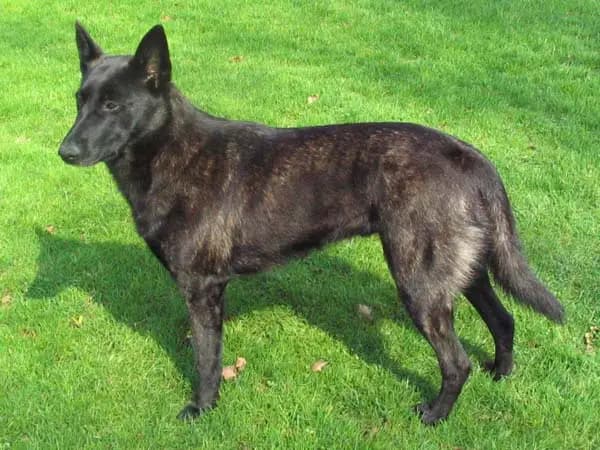
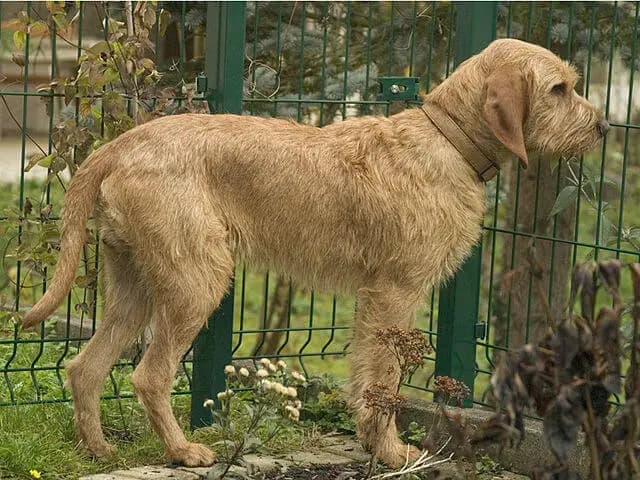
Because of its origins, the Kromfohrländer has a small gene pool. This brings specific health challenges, above all in the areas of autoimmune diseases, neurological conditions such as epilepsy, the knee joints, the urinary tract and the skin on the paws. A responsible breeder meets these risks with transparency and targeted diagnostics.
Genetic tests for paws and metabolism
The Rassezuchtverein der Kromfohrländer e.V. (RZV) requires a genetic test for FAM83G-associated pad hyperkeratosis (also known as digital hyperkeratosis, a painful hardening and cracking of the paw pads); the test for hyperuricosuria (HUU), a predisposition to forming urinary stones, is part of the recommended health standard. A DNA test of this kind reliably shows whether a parent dog is clear, a carrier or affected. Because both conditions are inherited in an autosomal recessive manner, a reputable breeder only mates carriers with genetically clear partners. This way, no puppy inherits the tested mutation from both parents, and the risk of these specific conditions falls significantly.
Clinical screening and researching bloodlines
In addition, forward-thinking breeders voluntarily screen their breeding dogs through clinical examinations for patellar luxation (PL) (a kneecap slipping out of place) and the eye condition cataract, and by laboratory testing for the metabolic disorder cystinuria. These clinical findings noticeably reduce the risk for the offspring. For complex issues such as epilepsy or autoimmune diseases, there is no genetic test for the Kromfohrländer. Here, the only thing that helps is an open look at the pedigree and an honest account from the breeder of any known cases in the breeding lines. In everyday life later on, take changes to the paw pads seriously at an early stage, make sure exercise is gentle on the joints during the first year of life, and have a vet check any health concerns and follow them up closely.