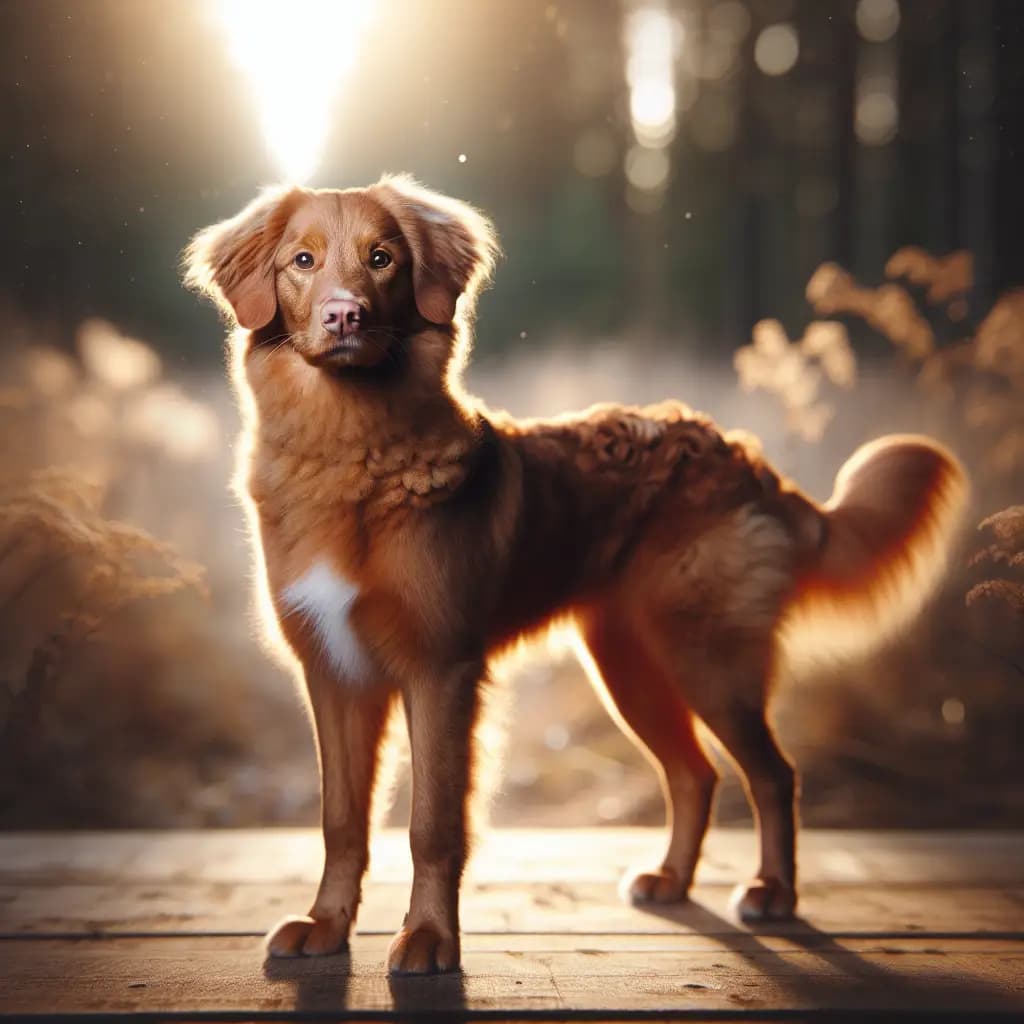
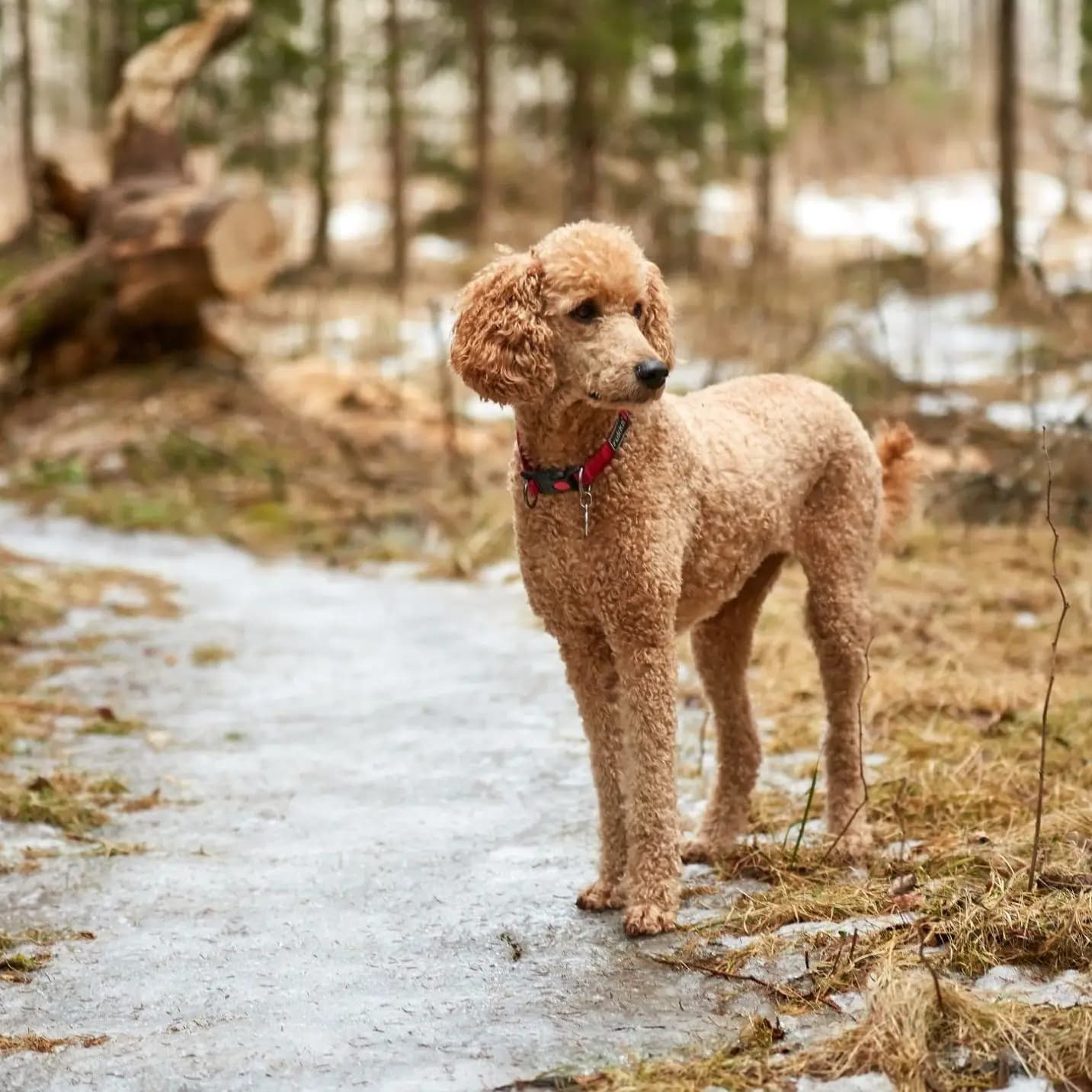
With an energy level and trainability of 4 out of 5 points each, the Tollerdoodle is not a dog for people who only want leisurely walks. It demands daily physical and, above all, mental exercise. Dummy work, retrieving games on and in the water, or scent work are in its blood. It copes moderately well in the city (urban suitability 3/5) – a flat only works if you have direct access to extensive green spaces and bodies of water and you consistently give it enough exercise. In everyday life it gets on extremely well with children and other dogs and is very sociable (4/5 each).
Never underestimate coat care: although the Tollerdoodle sheds little (shedding 2/5), which makes it appealing to many allergy sufferers, the combination of a dense, water-repellent Toller coat and Poodle curls means high grooming needs (4/5). You will need to brush the coat thoroughly several times a week to prevent matting down to the skin, and plan regular clipping or trimming appointments. In the first year of life, it is also essential to make sure this active dog is raised in a joint-friendly way, without early stair climbing or overexertion.
Your checklist for the first conversation with a Tollerdoodle breeder
- Parent dogs’ joint results: Ask to see the official X-ray evaluations for hip dysplasia (HD) and elbow dysplasia (ED), as well as the clinical examination findings for patellar luxation, for both parent dogs.
- Eye examinations: Request up-to-date clinical eye examination results for the parents, as well as the DNA result for prcd-PRA.
- DNA tests and knowledge of the lines: Ask for the written results of targeted DNA tests for blood clotting disorders (such as von Willebrand disease type I) and specifically ask about known cases of disease in the breeding lines.
- Parent dogs’ temperament: Observe the mother on site – she should seem friendly, open and well balanced, not nervous or fearful.
- Coat and grooming advice: An experienced breeder will show you, using the parent dogs and puppies, exactly what coat type to expect and how to establish the right grooming routine from the start.
On HonestDog, a breeder profile only goes online once the breeder has completed registration: identity verification by ID and selfie, where applicable proof of club membership or a §11 permit, a knowledge test on breeding and animal welfare, and agreement to the HonestDog breeding standards, which among other things rule out breeding from dogs with traits that cause suffering. You can see the parent dogs’ health test results uploaded by breeders directly in the profile; ask to see the original results when you visit. Your next step: compare the profiles of the Tollerdoodle breeders on HonestDog, look at the uploaded health evidence and ask directly about the next litter.