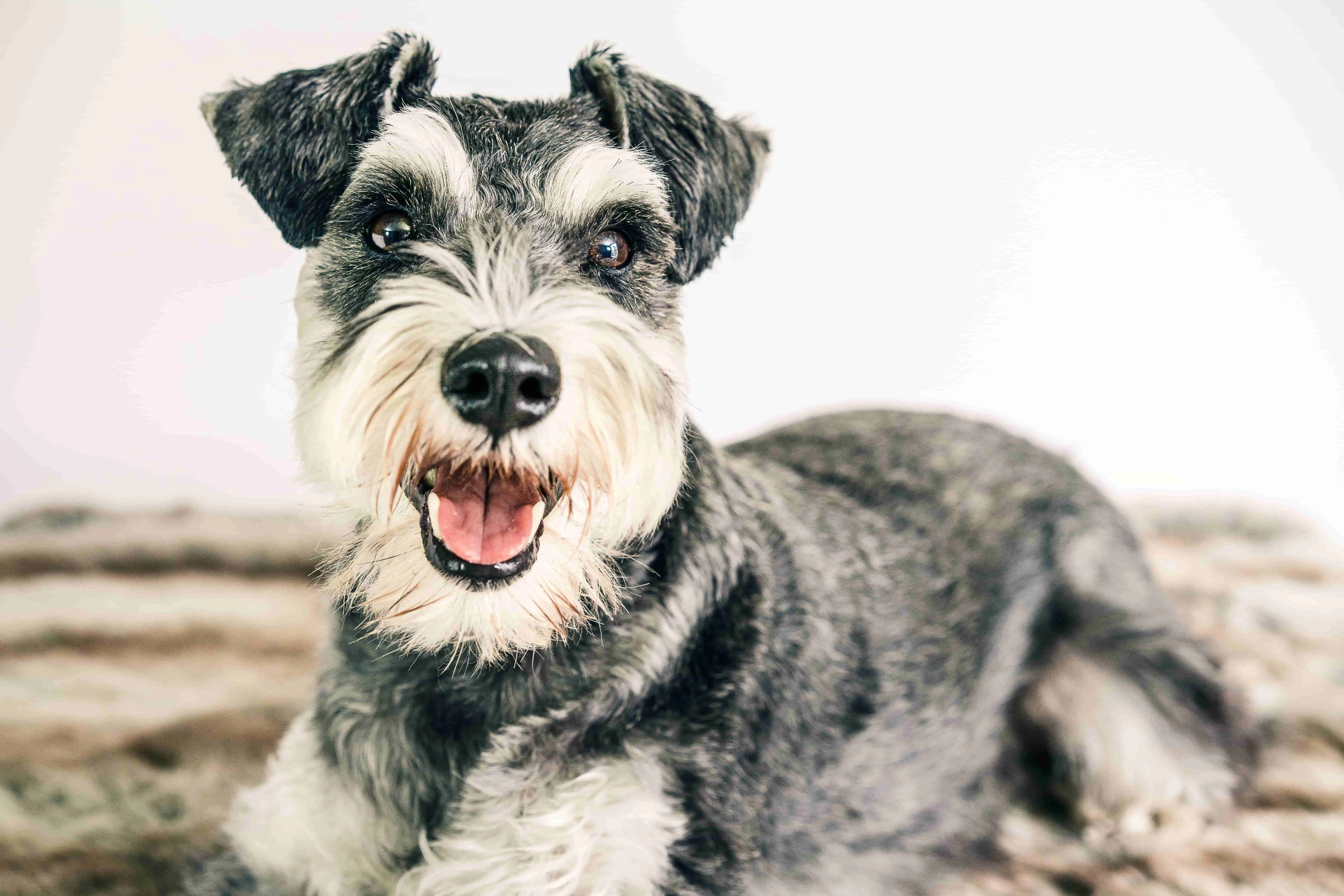
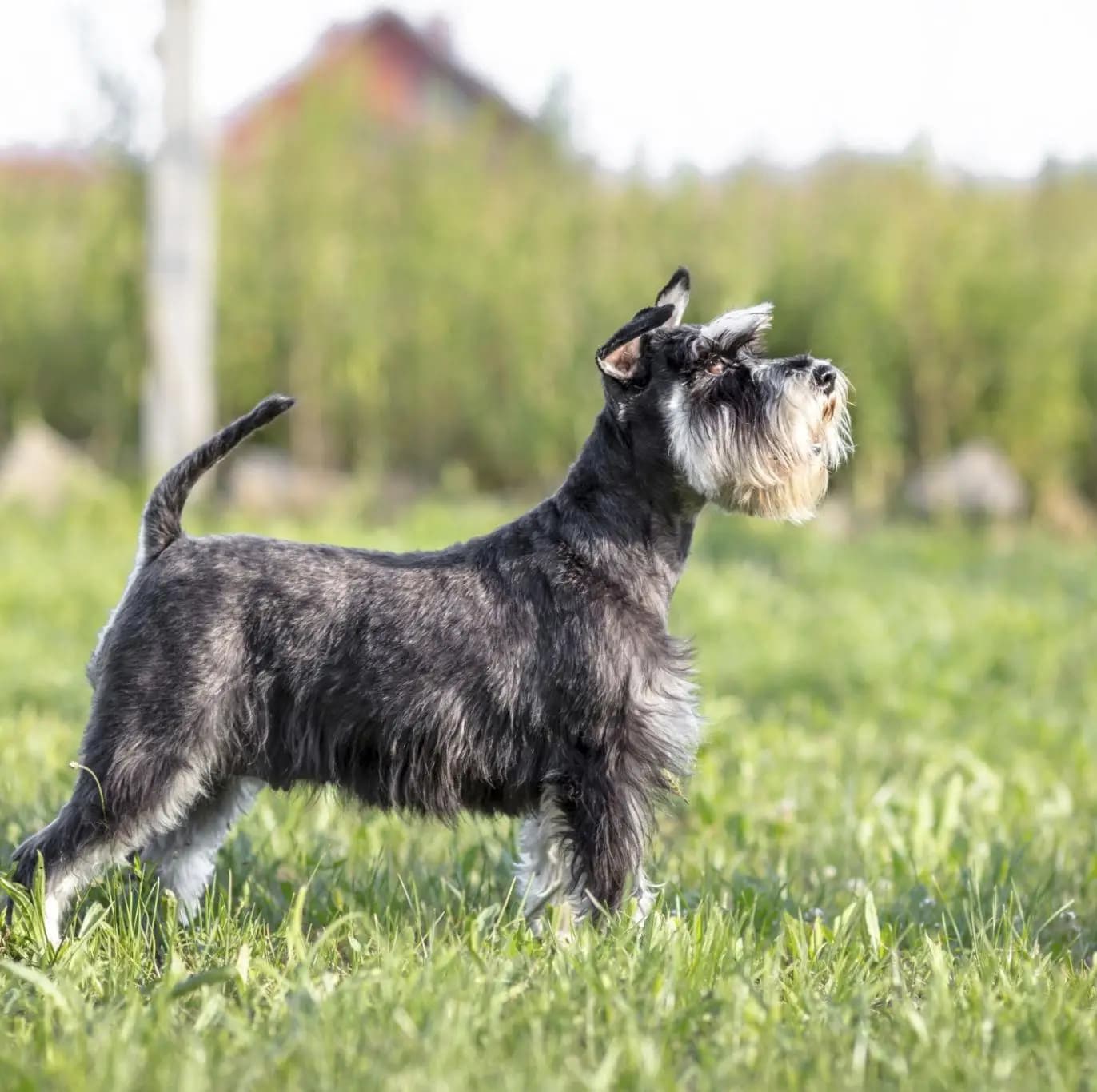
Miniature Schnauzers are generally considered very robust dogs, but they do come with a few breed-typical issues affecting the eyes and knees, as well as specific metabolic and immune risks. A key issue is the eyes: the Pinscher-Schnauzer-Klub 1895 e.V. requires a clinical eye examination, which screens for conditions such as cataract, lens luxation, primary open-angle glaucoma, distichiasis, ectropion/entropion, persistent pupillary membranes (PPM), PHTVL/PHPV, as well as optic nerve hypoplasia and micropapilla. Because some eye changes only develop over the course of a lifetime, a current, annual eye examination of the parent dogs considerably reduces the risk for the offspring.
In addition, responsible breeders use targeted genetic tests for progressive retinal atrophy (form B / HIVEP 3) and for the breed-specific immune deficiency relating to the Mycobacterium avium complex (MAC). Such DNA tests reliably show whether a parent dog is clear, a carrier or affected, so that breeders can deliberately mate carriers only with clear partners. For the musculoskeletal system, a clinical examination for patellar luxation (slipping kneecap) is part of the recommended health standard. Beyond this, other issues occur in the breed for which there are no standard genetic screening tests – including hyperlipidaemia (a disorder of fat metabolism), diabetes mellitus, hypothyroidism, portosystemic shunt, sick sinus syndrome, epilepsy, atopic dermatitis, keratoconjunctivitis sicca (dry eye), IMHA, cleft palate and cryptorchidism. Here, what protects you most is an open conversation about the longevity and health of the breeding line and, later in everyday life, a lean body weight and a joint-friendly upbringing.
Your checklist for the first conversation with the breeder
When you visit in person, ask to see the following documents and results for the parent dogs in their original form before you decide on a puppy:
- Current eye examination certificate: A report from a specialist veterinary ophthalmologist (no more than twelve months old) that covers cataract, glaucoma, lens luxation and eyelid conformation defects.
- Genetic test results: The laboratory certificates for the parent dogs for PRA-B (HIVEP 3) and the Mycobacterium avium complex (MAC).
- Patellar luxation result: The veterinary confirmation that the kneecaps of both parent dogs sit firmly in place (grade 0 is ideal).
- Information on the line’s history: Ask specifically whether metabolic issues such as hyperlipidaemia or diabetes, heart conditions (sick sinus syndrome) or liver shunts are known among close relatives.
- Impression of the mother and puppies: Look for clear eyes with no discharge, a well-kept, wiry coat and an open, curious nature with no fear of everyday noises.
On HonestDog, a breeder profile only goes online once the breeder has completed registration: identity verification by ID and selfie, where applicable proof of club membership or a §11 permit, a knowledge test on breeding and animal welfare, and agreement to the HonestDog breeding standards, which among other things rule out breeding dogs with traits that cause suffering. Health test results for the parent dogs that breeders upload are shown directly in their profile; ask to see the original results when you visit. Your next step: compare the profiles of Miniature Schnauzer breeders on HonestDog, look at the health evidence that has been uploaded and ask directly about the next litter.