Congenital deafness(CHSD)
Also known as: Angeborener Hörverlust · Sensorineural Deafness · Congenital Sensorineural Deafness · Erbliche Taubheit · Congenital Hereditary Sensorineural Deafness · …
Overview
What it is
Congenital deafness is a hereditary hearing loss present from birth that affects the inner ear's sensory cells, preventing sound signals from reaching the brain. It is often linked to specific genetic variants, such as those associated with certain coat patterns like merle or piebald, or breed-specific conditions like Early Onset Adult Deafness (EOAD). This genetic defect causes the vital blood supply to the inner ear to fail, leading to the permanent degeneration of the hearing nerve cells.
How it presents
Owners typically notice signs of deafness in early puppyhood, as affected dogs do not respond to sounds, sleep very deeply, and may startle easily when touched. Puppies might also bark unusually or fail to react to their littermates.
Treatment
There is no cure for congenital deafness, making it a lifelong condition. While there are no direct medical treatments, owners typically spend between 100 and 1000 EUR on specialized training, hand-signal education, or safety aids like vibration collars.
How it's tested
BAER-Hörtest(BAER)
Primary testhearingBrainstem Auditory Evoked Response: objektiver Hörtest, erkennt einseitige und beidseitige Taubheit.
Issuing body: BAER
Result scheme: BAER
Affected breeds
24 of 58 breeds
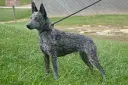 Mandatory testAustralian Stumpy Tail Cattle Dog
 Mandatory testBasset Fauve de Bretagne
 Mandatory testBriard
 Mandatory testCatahoula Leopard Dog
 Mandatory testChow Chow
 Mandatory testDogo Argentino
 Mandatory testDutch Shepherd (Longhair)
 Mandatory testDutch Shepherd (Wire-Haired)
 Mandatory testGerman Hound
 Mandatory testGriffon Fauve de Bretagne
 Mandatory testJagdterrier
 Mandatory testKorean Jindo
 Mandatory testMiniature Bull Terrier
 Mandatory testNorwegian Buhund
 Mandatory testSmooth-haired Dachshund
 Mandatory testTibetan Spaniel
 Mandatory testWire-haired Dachshund
 RecommendedAustralian Cattle Dog
 RecommendedAustralian Shepherd
 RecommendedBeagle
 RecommendedBeauceron
 RecommendedBerger Picard
 RecommendedBorder Collie
 RecommendedBordoodle
Why is this linked to extreme breeding?
This condition can be tied to a trait dogs are bred for. These pages explain how it arises, which breeds are affected and how to recognise dogs bred for health.
- White Dogs and Deafness: When White Becomes a RiskNot every white dog is at risk – but where pigment cells are missing from the head, they are often missing from the inner ear too, and a puppy can go deaf in its first weeks of life.
- Merle and Double Merle: Why Merle × Merle Breeding Harms DogsOne merle parent gives the marbled coat many people love; two merle parents can produce puppies born deaf or with malformed eyes.
Treatment cost
Estimated range of typical treatment cost. Actual cost depends on severity, clinic and region.
Frequently asked
What is Congenital deafness?
Congenital deafness is a hereditary hearing loss present from birth that affects the inner ear's sensory cells, preventing sound signals from reaching the brain. It is often linked to specific genetic variants, such as those associated with certain coat patterns like merle or piebald, or breed-specific conditions like Early Onset Adult Deafness (EOAD). This genetic defect causes the vital blood supply to the inner ear to fail, leading to the permanent degeneration of the hearing nerve cells.
How is Congenital deafness tested?
Tests currently in our database: BAER-Hörtest.
Which breeds are most affected?
Most commonly affected: Australian Stumpy Tail Cattle Dog, Basset Fauve de Bretagne, Briard, Catahoula Leopard Dog, Chow Chow, Dogo Argentino, Dutch Shepherd (Longhair), Dutch Shepherd (Wire-Haired).