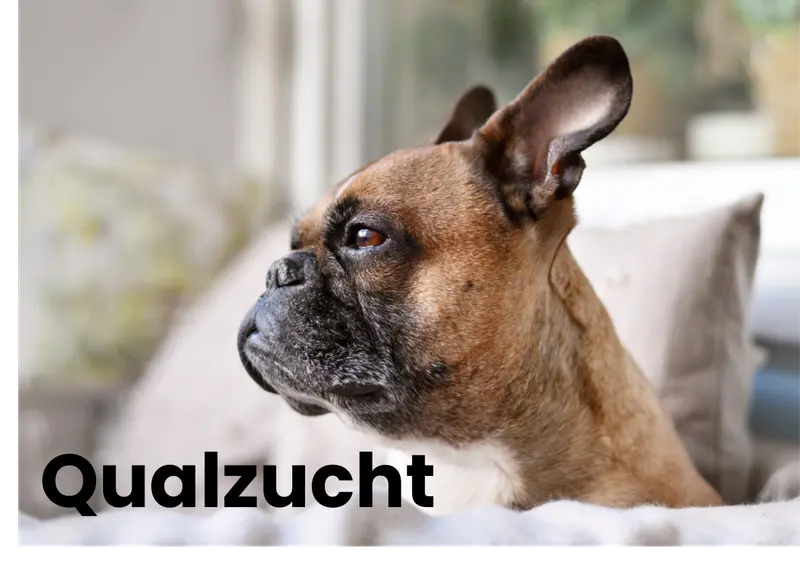
Torture-breeding refers to the deliberate breeding or tolerance of anatomical and genetic traits in dogs that cause them pain, suffering, lasting harm, or behavioral disorders. In Germany, animal welfare legislation prohibits this practice, with veterinary focus firmly on anatomical exaggerations such as extreme brachycephaly, deformed spines, or defective color-linked genes.
| Criterion | Legal & Professional Status (Germany) |
|---|---|
| Key Legal Basis | Section 11b of the Animal Welfare Act (TierSchG) prohibits breeding animals with traits likely to cause suffering or harm. |
| Exhibition Ban | Since January 1, 2022, Section 10 of the Dog Welfare Ordinance (TierSchHuV) has banned showing dogs that display torture-breeding traits. |
| Animal Welfare Act Amendment | Specification of Section 11b TierSchG with an open-ended symptom catalog (including respiratory distress, hairlessness, and gait abnormalities) to close enforcement loopholes for veterinary authorities. |
| EU Pet Regulation | An EU Parliament-approved framework introducing uniform microchipping, traceability, and an EU-wide ban on extreme breeding characteristics. |
| Veterinary Position | Professional bodies like the Federal Chamber of Veterinarians (BTK) provide clinical assessment forms and emphasize that extreme exaggerations are not an aesthetic ideal. |
Status: September 2026. Does not constitute legal advice.
This guide does not replace professional veterinary advice.
What Is Torture-Breeding in Dogs?
The term torture-breeding in dogs describes an aberration in selective breeding where human aesthetic preferences are prioritized over an animal's biological health and functional anatomy. Dogs are selectively bred toward breed standards that exaggerate specific physical features: extremely shortened muzzles, severely compressed spines, deep skin folds, or rare coat colorations.
This issue goes far beyond appearance. These structural changes severely compromise vital organ systems. When a dog cannot breathe freely, move naturally, or regulate its body temperature in the heat due to its anatomical build, it meets the clinical criteria for hereditary impairment. In veterinary medicine, this is also referred to as defect breeding or over-typing.
Torture-Breeding and the Law: Section 11b TierSchG and Regulations
The legal framework surrounding torture-breeding in Germany is anchored in federal law but enforced locally by municipal veterinary authorities. Anyone looking to bring a dog home should understand current statutes and evolving reforms.
Section 11b of the Animal Welfare Act (TierSchG)
At the heart of national law lies Section 11b of the Animal Welfare Act. It explicitly forbids breeding vertebrates when it must be expected that the offspring will inherit missing, malformed, or dysfunctional body parts or organs, resulting in pain, suffering, or physical harm. Furthermore, breeding goals that inevitably lead to behavioral disorders or make species-appropriate housing impossible without chronic pain are prohibited.
Exhibition Ban Under Section 10 TierSchHuV
To eliminate the commercial and competitive platform for torture-bred dogs, Section 10 of the Dog Welfare Ordinance establishes a clear ban: dogs exhibiting inherited torture-breeding traits (such as visible respiratory distress, eyelid defects, or tail malformations) may not be entered into trials, competitions, or dog shows. At pedigree exhibitions, veterinary offices routinely demand official health certificates before granting entry.
Animal Welfare Act Reforms: Clearer Criteria Through Symptom Lists
For decades, Section 11b TierSchG was notoriously difficult to enforce because broad legal definitions resulted in protracted court battles. Recent amendments provide authorities with an authoritative, open-ended catalog of symptoms. It details conditions such as blindness, deafness, dental misalignments, inherited airway obstructions, and neurological deficits. Breeders of high-risk breeds must prove their breeding stock cannot pass these defects on to their litters.
The EU Pet Regulation
Complementing national legislation in Germany, the European Union is harmonizing animal welfare standards across member states. The regulation adopted by the European Parliament regarding the welfare and traceability of dogs and cats mandates an EU-wide ban on breeding extreme traits, mandatory identification, and stricter rules against inbreeding. The primary objective is closing single-market loopholes that allow animals with defect traits to cross borders unchecked.
Torture-Breeding Dog List: Core Traits and Affected Breeds
A comprehensive torture-breeding dog list is not an arbitrary list of breed names. Instead, it evaluates specific phenotypic traits that, according to the Torture Breeding Evidence Network (QUEN) and veterinary panels, cause measurable health detriments. Below are the most widespread complexes:
1. Brachycephaly (Flat-Faced Anatomy)
Shortening the facial skull causes Brachycephalic Obstructive Airway Syndrome (BOAS). In dogs with severely shortened muzzles, soft tissues like the soft palate are far too long and thick for the compressed cranial cavity, nostril openings and nasal passages are narrowed, and the larynx is prone to collapse.
- Consequences: Chronic breathing distress, constant snorting, loud snoring, choking spells, inability to pant effectively leading to acute heatstroke risk, and disrupted sleep.
- Commonly affected breeds: French Bulldog, Pug, English Bulldog, Pekingese, Boxer. Read more health specifics in our Dog Breed Health Ranking.
2. Chondrodysplasia (Dwarfism & Disproportionate Skeletal Frames)
A genetically fixed disorder affecting the growth of long limb bones results in severely shortened, often bowed legs while maintaining a disproportionately long torso.
- Consequences: Premature calcification of intervertebral discs, extreme susceptibility to painful herniated discs resulting in hind-limb paralysis (often called "Dachshund paralysis"), and early-onset osteoarthritis.
- Commonly affected breeds: Dachshund, Basset Hound, Corgi.
3. Merle Syndrome and Color-Linked Genetic Defects
The merle gene randomly lightens dark pigment (eumelanin) in the coat. Pairing two merle carriers together (double merle or homozygous carriers) leads to severe developmental deformities.
- Consequences: Unilateral or bilateral sensorineural deafness due to lack of melanocytes in the inner ear, microphthalmia (abnormally small eyes), pupil abnormalities, and complete blindness. Other pigment dilutions (such as "dilute" coats producing blue or silver fur) carry a high risk of Color Dilution Alopecia (CDA), causing permanent hair loss and chronic, itchy skin infections.
- Commonly affected breeds: Australian Shepherd, Border Collie, Great Dane (harlequin varieties).
4. Hairlessness (Hairless Breeds)
Mutations responsible for hairlessness (hypotrichotic genes) exert pleiotropic effects on ectodermal tissue development. Consequently, not only the coat is affected, but several interconnected bodily structures fail to form properly.
- Consequences: Oligodontia (congenitally missing teeth), enamel hypoplasia, missing tactile vibrissae (whiskers vital for sensory perception), and severe vulnerability to sunburn, skin tears, and cuts.
- Commonly affected breeds: Chinese Crested (hairless variety), Xoloitzcuintli, Peruvian Hairless Dog.
5. Excessive Skin Folds
A genetic flaw in hyaluronic acid metabolism (hyaluronosis) causes dermal layers to thicken excessively, draping the head and body in deep, heavy folds.
- Consequences: Chronic intertrigo (deep, painful skin-fold infections caused by trapped moisture and bacteria) and entropion (inward-rolling eyelids where eyelashes scrape the cornea constantly, causing corneal ulcers and vision damage).
- Commonly affected breeds: Shar-Pei, Neapolitan Mastiff, Bloodhound.
6. Extreme Dwarfism (Toy and Teacup Lines)
Breeding for unnaturally low body weights (often under two to three kilograms) violates the biological minimum dimensions of canine physiology.
- Consequences: Persistent fontanelles (open skull cranial gaps), hydrocephalus, collapsing trachea, and acute vulnerability to life-threatening hypoglycemic crashes.
- Commonly affected breeds: Chihuahua, Teacup Poodle, Pomeranian.
7. Cranial and Spinal Anomalies (Screw-Tails & Syringomyelia)
Screw-tails originate from congenital hemivertebrae and butterfly vertebrae. Furthermore, when the occipital bone is too small (Chiari-like malformation), the cerebellum is forced downward into the spinal canal, creating fluid-filled cavities within the spinal cord (syringomyelia).
- Consequences: Debilitating chronic neck and head pain, phantom scratching, severe neuropathic pain, and progressive neurological deficits or paralysis.
- Commonly affected breeds: Cavalier King Charles Spaniel, French Bulldog, Boston Terrier.
What This Means for Puppy Buyers in Practice
Consumer demand directly drives breeding trends. When you choose a dog, you play an active role in deciding whether exaggerated traits continue or are phased out. Take time to explore our guide on dog breeds you should reconsider before forming an emotional attachment.
Keep these practical criteria in mind when choosing your companion:
- Check for clear breathing: Snoring, resting panting, and rattling breaths are not "cute quirks"—they are warning signs of airway deprivation.
- Assess physical balance: Healthy dogs display balanced leg-to-body proportions, completely closed skull bones, fully formed tails, and eye sockets that protect the globes naturally without bulging.
- Demand veterinary clearances: Responsible breeders voluntarily test their stock for breed-specific issues prior to mating (such as BOAS respiratory exercise tests, spinal X-rays, and DNA panels for hereditary conditions). For reliable comparisons, check out our overview of the healthiest dog breeds.
- Scrutinize listings: Be wary of anonymous classified ads, quick handovers in car parks, or trendy "rare" colors marketed at a premium ("merle bully", "silver lab"). The illegal puppy trade profits heavily off poorly bred, trendy dogs plagued by extreme anatomical defects.
You can also use our independent Breed Finder to discover dogs that are physically sound and a genuine fit for your daily life.
Frequently Asked Questions
Does the torture-breeding ban affect owners who already have one of these dogs?
No. Animal welfare laws and related rules govern breeding, commercial reproduction, and showing—not the ownership of existing companion animals. If you share your home with a pug or a French bulldog, you will not have to surrender your pet. Your responsibility is simply to provide tailored care, regular veterinary support, and protection against overheating so they can enjoy a comfortable, pain-free life.
Why are regulations tightening so significantly now?
Breeding sick or compromised animals has technically been illegal under Section 11b TierSchG for years. In practice, however, local veterinary offices found it difficult to sanction breeders because broad wording made cases tough to defend against legal appeals. Newer ordinances and revised bills introduce clear symptom lists that make bans and mandatory health screenings directly enforceable.
Is every dog belonging to a brachycephalic breed considered torture-bred?
Legally and clinically, dogs are evaluated individually. Several conscientious breeding initiatives (such as retro pugs or outcross programs) work to restore longer muzzles, open nostrils, and sound windpipes through targeted selection. Even so, individual dogs must pass objective, standardized exercise and respiratory tests to confirm they can breathe and run without distress.
What veterinary costs should owners expect?
Managing chronic deformities frequently leads to steep veterinary bills. Corrective soft-tissue surgeries (such as opening stenotic nares and shortening elongated soft palates), spinal interventions, or eyelid repairs can quickly run into thousands of euros. Additionally, many pet insurance policies exclude hereditary defect traits and their associated treatments from standard coverage.
Responsible Puppy Buying: Finding a Healthy Dog
The goal across modern animal welfare is simple: move away from extreme visual trends and return to durable health, vitality, and genuine quality of life. When you are looking for a puppy, do your research into family lineages, breeding priorities, and official health test certificates for both parent dogs.
Platforms like HonestDog prioritize transparency and dog health above all else. Breeders are screened thoroughly beforehand, giving buyers the tools to make responsible, well-informed choices without inadvertently funding over-bred lines. By doing your homework, you help ensure dogs can run, play, and breathe freely again.