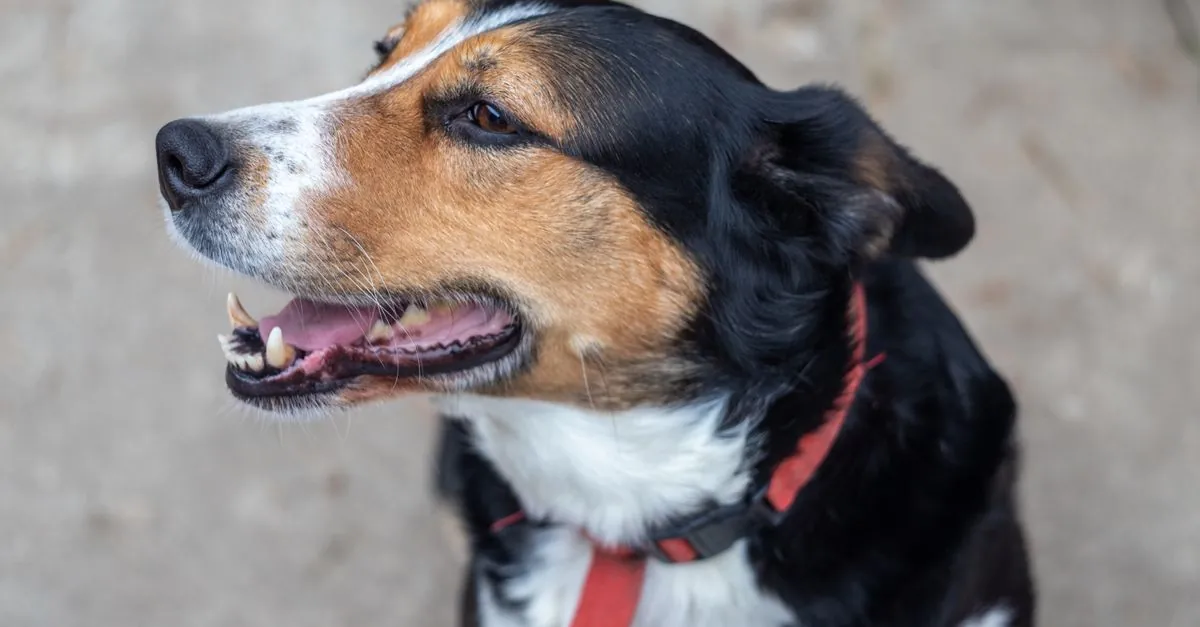
When discussing the most dangerous dog breeds in October 2026, the public spotlight has shifted once again following the latest annual canine statistics released by the Ministry of Agriculture and Consumer Protection in North Rhine-Westphalia (MLV NRW). While traditional restricted breeds under the NRW State Dog Act—such as the American Staffordshire Terrier or the Pitbull Terrier—are widely perceived as the primary threat, official reports reveal that popular working and family dogs like the German Shepherd, the Belgian Shepherd (Malinois), and the Australian Shepherd top the absolute numbers of recorded bite incidents. Crossing paths in the park with an on-leash dog wearing a yellow warning ribbon rarely means you are looking at an inherently vicious animal; more often, it is simply the result of stress, an unsuitable breed choice, or misread canine body language in everyday life.
Why "most dangerous dog breeds" are trending again in October 2026
The recent surge in search interest around dangerous dogs has a clear catalyst: in October 2026, detailed dog statistics from North Rhine-Westphalia for the previous reporting year were broadly analyzed and debated across the media. Because Germany has no uniform nationwide reporting mandate for dog bites, data collected from its most populous federal state—home to 972,464 registered dogs—serves as the country's most vital barometer for dog ownership trends.
The latest annual dog statistics from the Ministry of Agriculture and Consumer Protection NRW recorded a total of 1,356 bite incidents involving injuries to humans—a decrease of around 6.7 percent compared to the previous year (1,454 cases), with 349 incidents classified as severe. What surprised the public most was how these cases broke down across legal categories under the State Dog Act (LHundG NRW): the majority did not involve strictly regulated "dangerous dogs" (22 incidents) or "dogs of specific breeds" like the Rottweiler (33 incidents), but rather standard "large dogs" measuring at least 40 centimeters at the withers or weighing 20 kilograms or more, accounting for 1,093 cases.
In the absolute figures from NRW authorities, three breeds stood out in particular:
- German Shepherd: 111 bite incidents resulting in human injuries (34 of which were severe).
- Belgian Shepherd (Malinois): 52 registered incidents.
- Australian Shepherd: 44 reported bite incidents.
A similar downward trend at a low overall baseline was reported during 2026 by the State Administration Office of Saxony-Anhalt: despite an increase to 184,012 registered dogs, bite incidents dropped noticeably from 115 to 84 cases (58 of which involved humans). Relative to the overall population, the German Shepherd (13 incidents among 12,457 dogs, or 0.10 percent) again ranked ahead of the Labrador Retriever (8 incidents among 20,278 dogs, or 0.04 percent).
Statistics vs. reality: why breed-specific legislation obscures the real risk
Jumping to the conclusion that German Shepherds or herding dogs are universally Germany's most dangerous breeds means falling into a classic statistical trap. Authorities like the MLV NRW explicitly note that smaller dogs are often underreported in official records, and bite incidents typically only enter the database when an official report or complaint is lodged. Furthermore, absolute numbers primarily reflect a breed's sheer popularity: when tens of thousands of German Shepherds or Australian Shepherds live in family homes, statistical probability naturally leads to more recorded incidents than with heavily regulated, restricted breeds whose numbers have been declining for years in NRW.
Canine experts and veterinary organizations have long emphasized that a dog's propensity for aggression cannot reliably be determined by breed alone. Multiple comparative scientific studies show that breed-specific bans or restrictions do not significantly reduce total bite incidents in practice. European mortality data on fatal dog attacks—such as the analysis of Eurostat statistics (ICD-10 W54) published on the PubMed scientific portal—further demonstrate that severe attacks occur predominantly in familiar domestic settings, completely detached from rigid breed lists.
When assessing real-world risk, three scientifically and statistically proven factors matter far more:
- Familiar environments: Between 75 and 90 percent of all dog bites do not involve strange dogs in a park; they happen in domestic and social settings involving dogs familiar to the victim.
- Defensive motivation: The overwhelming majority of bites are not unprovoked offensive attacks. They are defensive reactions triggered by pain, fear, sensory overload, or resource guarding around food and toys.
- The trend-dog effect: The prominent presence of breeds like the Malinois or Australian Shepherd in 2026 statistics stems from their specialized genetics. A highly sensitive herding or working dog kept merely as a companion in a busy city apartment—under-stimulated mentally or wound up into chronic arousal through repetitive fetch games—quickly develops frustration and controlling behaviors.
If you are unsure which genetic drives and traits specific working breeds carry, explore our detailed breed directory for in-depth profiles on temperament, exercise needs, and lifestyle compatibility.
Practical lifestyle tips: how to instantly improve safety in daily dog life
True safety at the other end of the leash does not come from legal ban lists, but from proactive everyday management. Whether you handle a powerful molosser, a reactive rescue dog, or a spirited family retriever, these five practical habits will help you defuse critical situations right away:
- Establish an untouchable resting zone at home: Since most incidents happen indoors, your dog needs a dedicated retreat (a bed or open crate) where they are never disturbed. This is especially vital for children and guests: when your dog is in their spot, petting and talking to them are strictly off-limits.
- Learn the subtle steps of the canine escalation ladder: No healthy dog bites out of the blue. Before snapping, dogs display calming signals. Watch for yawning in tense moments, nose licking, sudden body freezing, or "whale eye" (where the whites of the eyes become visible). Whenever you spot these subtle cues, quietly increase the distance from the trigger.
- Turn muzzle training into a positive wellness routine: A well-fitted wire or Biothane muzzle that allows your dog to pant freely and drink water is not a badge of shame for an "aggressive dog"—it is a responsible safety tool. Introduce it gradually at home using liver paste or peanut butter smeared inside. This ensures relaxed, stress-free vet visits, train journeys, or treatments when your dog is in pain.
- Practice strict resource management when guests arrive: Before friends, kids, or delivery couriers ring the doorbell, put away chews, food bowls, and favorite toys. Many conflicts erupt simply because a dog feels compelled to protect a high-value item from an approaching visitor.
- Actively advocate for your dog's personal space: In tight spots during walks, get into the habit of keeping your dog on the side away from oncoming pedestrians, acting as a physical buffer in the middle. If strangers try to reach out and pat your dog's head, step in politely but firmly. Your dog will learn that you handle uncomfortable encounters, eliminating their need to react defensively.
For detailed guides on canine body language, avoiding common training pitfalls, and fulfilling your dog's natural drives, visit our free HonestDog Education Center.
Legal framework: what dog owners in Germany need to know
While experts like Thomas Pleye, President of the Saxony-Anhalt State Administration Office, emphasize that owner diligence and responsibility dictate public safety, the legal framework in Germany remains strict. Breed categorization falls under state jurisdiction: while states like Lower Saxony and Thuringia avoid general breed lists entirely, states such as North Rhine-Westphalia, Bavaria, and Berlin (where the Senate Department for Justice and Consumer Protection also publishes detailed annual bite statistics) impose specific mandates on designated breeds.
Regardless of breed, many owners must comply with broader regulations—such as NRW's 20/40 rule—requiring a certificate of competence (Sachkundenachweis), valid dog liability insurance, and tamper-proof microchipping. Before moving or traveling within Germany, always check with the local public order office (Ordnungsamt) regarding regional leash and muzzle laws.
The bottom line: education and ethical breeding over prejudice
The conversation around the most dangerous dog breeds in October 2026 confirms once again that true risk is not defined by coat color or head shape. It arises from irresponsible breeding, poor early puppy socialization, and an owner's lifestyle clashing with a dog's innate needs. Choosing a demanding working breed like the Malinois or an energetic herding dog requires a genuine commitment to tailoring your daily routine to their instincts.
This is where HonestDog supports you as a trusted platform for ethical dog rehoming. We screen breeders and partner shelters against stringent health and welfare criteria so puppies receive optimal early socialization—giving you clear, transparent guidance to find the dog that truly fits your life.
FAQ: Common questions about dangerous dog breeds and bite statistics
Which dog breed bites the most in Germany?
In absolute numbers, the German Shepherd and its crossbreeds regularly top official state bite statistics—as reflected in the figures analyzed for North Rhine-Westphalia in 2026, with 111 reported incidents. However, this is largely because the German Shepherd remains one of the most widely owned large breeds in the country. When incidents are calculated relative to the total breed population, the incident rate consistently remains well below one percent.
Are restricted breeds naturally more aggressive toward humans?
No. Scientific studies and behavioral assessments show that breeds such as the American Staffordshire Terrier or Bull Terrier have no inherent genetic predisposition toward human-directed aggression compared to other dogs. While historically exploited in animal fights, these breeds were selectively handled by humans and required to be entirely safe to touch and separate. Problematic behavior is almost always the result of improper handling, lack of socialization, or inappropriate training.
What should I do when encountering an insecure or growling dog?
Stay calm, stop moving, or back away slowly without running. Avoid direct eye contact, as prolonged staring is perceived as a threat. Turn your body slightly sideways and keep your arms relaxed against your sides. If you are walking your own dog, guide them calmly to the opposite side and take a wide arc across the street to give both animals plenty of space.