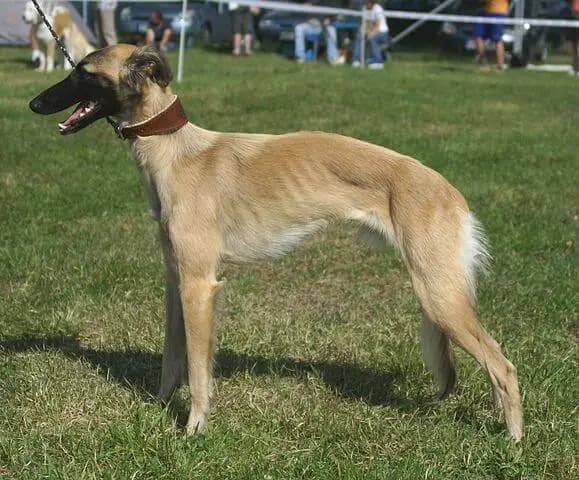
Although Borzois are generally considered fairly robust dogs with a life expectancy of 10 to 14 years, as extremely long-legged, deep-chested sighthounds they come with specific anatomical and genetic particularities. Their build is designed for maximum sprinting ability, which places particular demands on the cardiovascular system, the musculoskeletal system and the nervous system. Disreputable backyard breeders mate animals with no regard for hereditary weaknesses in their lines. A responsible breeder, by contrast, selects breeding animals specifically for health and temperament, in order to lower the risk of serious breed-typical diseases in their line in the long term.
Specific health tests and preventive care in the Borzoi
A health-focused Borzoi breeder does not rely on the outward appearance of their dogs, but has the parents’ heart, eyes, thyroid and nerves examined by a vet before they are used for breeding. Make sure the following examinations and topics are explained to you transparently:
- Degenerative myelopathy (DM): This progressive disease of the spinal cord leads to paralysis of the hindquarters in later life. Testing for DM is part of the recommended health standard for the breed. A DNA test shows whether a parent is genetically clear, a carrier or affected. Because the disease does not develop in every dog despite a genetic predisposition (incomplete penetrance), a prudent breeder combines the test results deliberately in order to minimise the risk for the offspring.
- Heart examination (focus on tricuspid valve dysplasia): As large, high-performance athletes, Borzois need a strong heart. A cardiological examination by echocardiogram provides information on heart health and reduces the risk of passing on congenital malformations such as tricuspid valve dysplasia.
- Eye examination: A veterinary eye specialist clinically examines the parents for changes such as generalised progressive retinal atrophy (PRA, a progressive loss of the retina) and for microphthalmia (a congenital reduction in the size of the eyeball).
- Thyroid and nervous system: In a well-thought-out breeding programme, laboratory tests of thyroid function are as much a part of preventive care as a close look at the cervical spine. Cervical spondylomyelopathy (known as wobbler syndrome) is a neurological problem of the cervical spine for which there is no DNA test – here, knowing about affected animals in the pedigree is crucial.
Two further important issues will also be in your hands later on: because of the deep chest, there is an increased risk of life-threatening gastric torsion. Always keep to strict rest periods after every meal. In addition, Borzois show the sensitivity to anaesthesia typical of sighthounds, and you must expressly point this out to your vet before any procedure.