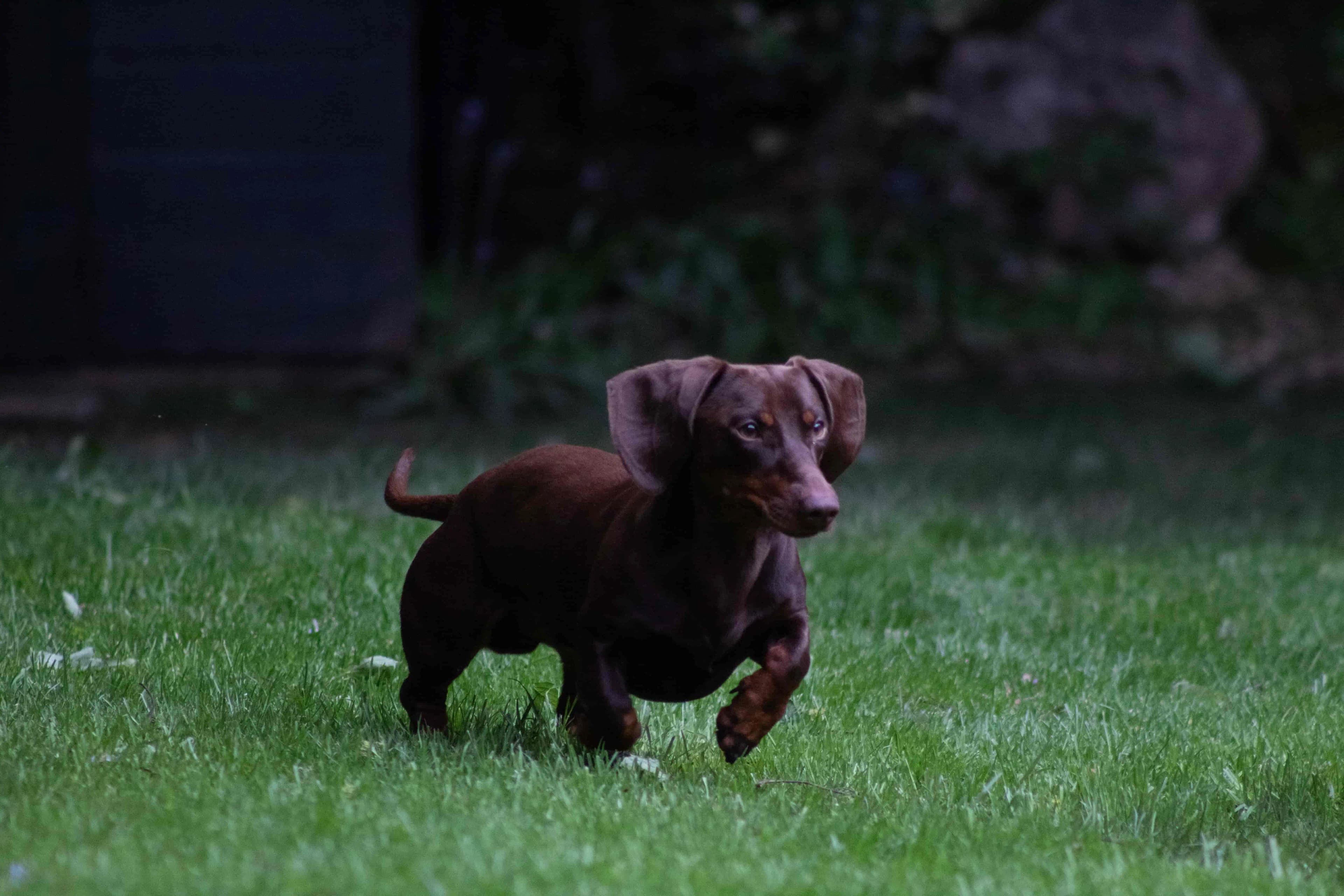
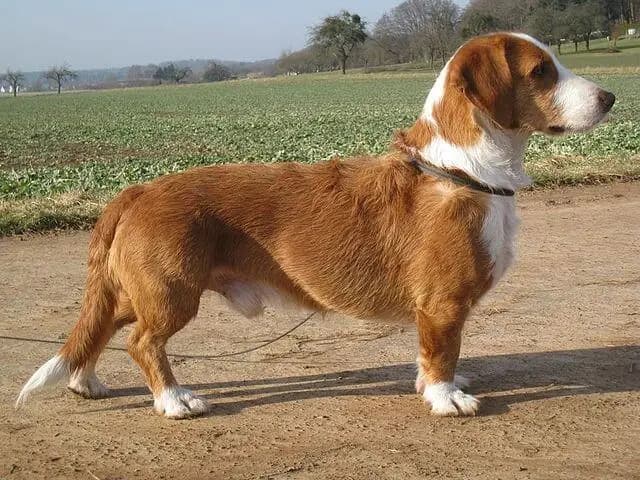
Because of their characteristic build – the long back on short legs, caused by chondrodystrophy – Smooth-haired Dachshunds have markedly higher health risks. These affect above all the spine, the knees and the eyes. The best-known risks are intervertebral disc disease (‘Dachshund paralysis’) and patellar luxation (the kneecap slipping out of place). Responsible breeders have the spine, knees, eyes and bone structure of the parent dogs thoroughly checked and, when choosing breeding partners, pay strict attention to a firm, well-muscled topline. Such clinical examinations and X-ray findings noticeably reduce the risk for the offspring – but even so, the fundamental anatomical risks of this breed cannot be eliminated completely.
Breeders in the Deutscher Teckelklub 1888 e.V. (DTK) are subject to requirements on intervertebral disc disease (IVDD), chondrodystrophy (CDDY) and the merle coat colour (no merle × merle matings). The breed’s recommended health standard also includes recording traits such as tail anomalies, dental malformations, cryptorchidism, epilepsy, as well as congenital blindness and deafness. A major focus is on clinical eye examinations to record risks of lens luxation, corneal dystrophy, retinal dysplasia, distichiasis, ectropion/entropion, Collie eye anomaly (CEA), optic nerve hypoplasia, micropapilla, as well as PPM and PHTVL/PHPV. In addition, the breed has other relevant issues such as cataract, generalised progressive retinal atrophy (PRA) and brittle bone disease (osteogenesis imperfecta). For the latter there is a DNA test that shows whether a parent dog is clear or a carrier; reputable breeders only mate carriers with clear partners.
Beware of fashionable colours: Be especially wary if Smooth-haired Dachshunds are advertised at inflated prices as ‘tiger’ Dachshunds (merle factor) or in dilute colours such as ‘blue’ or ‘Isabella’. Irresponsible backyard breeders often mate these dogs with no regard for genetics: faulty matings involving merle genes carry a high risk of severe eye and hearing damage, while dilute colours are often associated with the skin condition colour dilution alopecia (CDA).