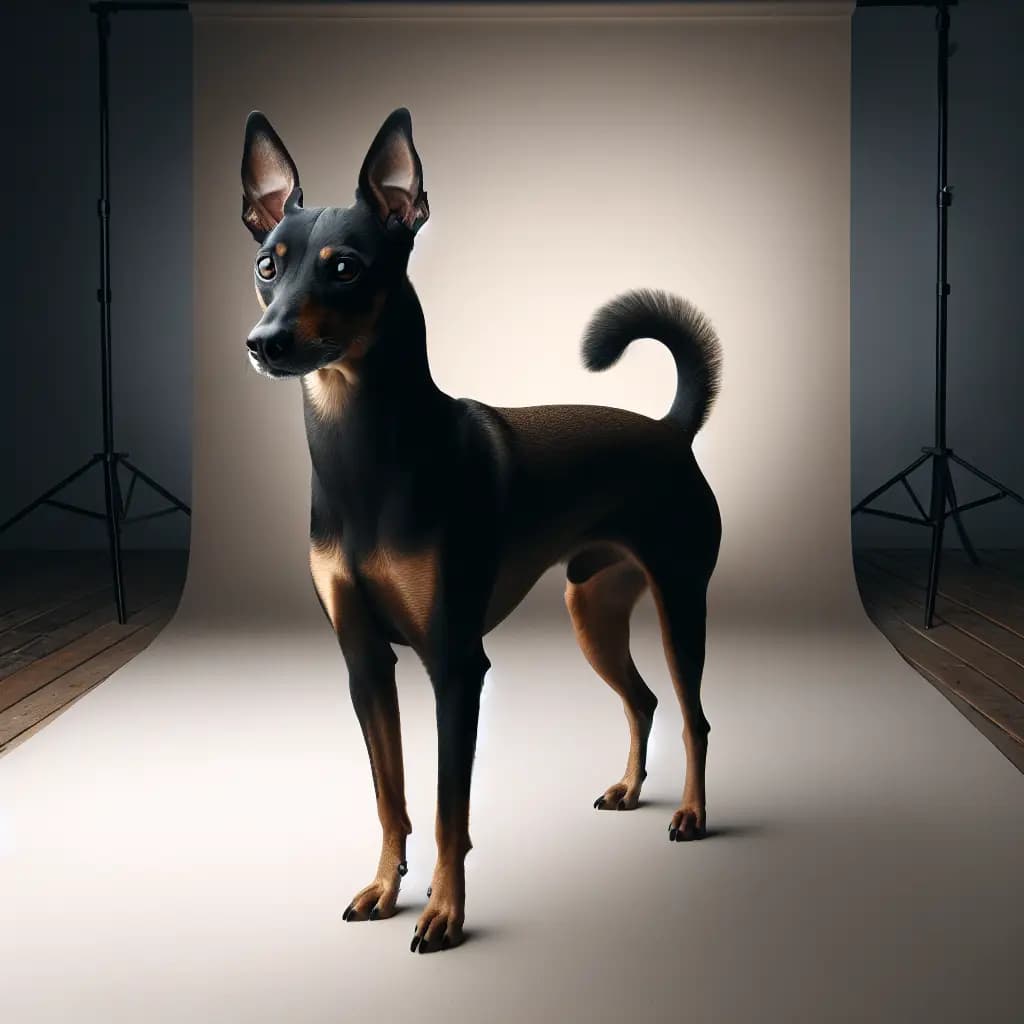
Because of its delicate build and genetic bottlenecks, the Japanese Terrier comes with specific health issues, which a good breeder addresses through targeted clinical examinations. In the German terrier club Klub für Terrier e.V. (KfT), examination for patellar luxation (the kneecap slipping out of place) is required before a dog is used for breeding. A hands-on examination by a trained vet shows the grade of kneecap stability and, through targeted selection, significantly lowers the risk for the offspring.
In addition, health-focused breeders have the parent dogs' eyes, hearing and hips clinically examined in order to minimise further breed-typical risks:
- Eye diseases: Conditions such as cataracts, generalised progressive retinal atrophy (PRA), retinal dysplasia, primary open-angle glaucoma and eyelid malpositions (ectropion / entropion) occur in the breed. Regular eye examinations of the breeding dogs by a specialist show whether the dogs are clinically clear.
- Congenital deafness: As the Japanese Terrier's coat is predominantly white, there is a risk of congenital deafness. An audiometric hearing test (BAER test) provides information about the hearing of the parents and puppies.
- Legg-Calvé-Perthes disease: This painful disorder of the blood supply to the femoral head mainly affects small breeds. X-ray examinations of the parent dogs' hip joints, together with careful monitoring of the breeding lines, help to reduce the risk for the puppies.
Before buying, ask to see the originals of all the parent dogs' written examination results. For life together later on, also plan for good protection against the cold in winter for the short, smooth coat, joint-friendly rearing without early stair climbing, and regular dental checks.