Loading breed
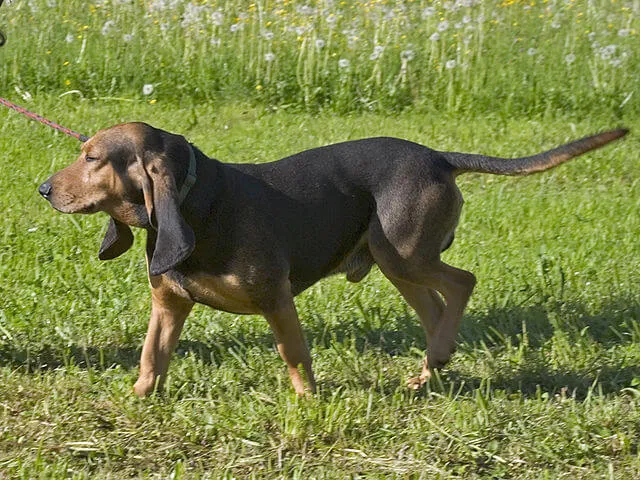
Jura Hound
Health grade A- Shoulder height47–59 cm
- Weight15–20 kg
- Life expectancy12–14 yrs
- Puppy price1,500–2,500 €
- Energy4/5
The essentials at a glance
The Jura Hound is a gentle soul indoors but an explosive hunter outdoors—a tireless scent-tracking specialist bred to pursue game trails for hours on end, baying loudly through rugged terrain.
- Health grade A: In the Jura Hound, the main focus is on orthopedic conditions such as hip dysplasia (HD) and elbow dysplasia (ED), as well as hereditary eye diseases such as progressive retinal atrophy, cataracts, and eyelid abnormalities like ectropion / entropion.
- You have a genuine passion for demanding scent work, mantrailing, or blood tracking—simple walks will never be enough to satisfy this specialist.
- You have an escape-proof garden and live in a rural area where his deep, echoing hunting bay won't bother anyone.
- You expect a dog that remains reliably recallable in the woods—once his nose catches a fresh hare trail, he switches to autopilot and turns a deaf ear to you.
Self-check
Would the Jura Hound really fit your life?
Answer 6 quick questions about your everyday life and see how well the Jura Hound fits you — including an honest cost estimate per month, per year, and across the dog's lifetime.
Fit checkCost estimateRisk dice
Takes about 1 minute · free & anonymous
Similar Breeds
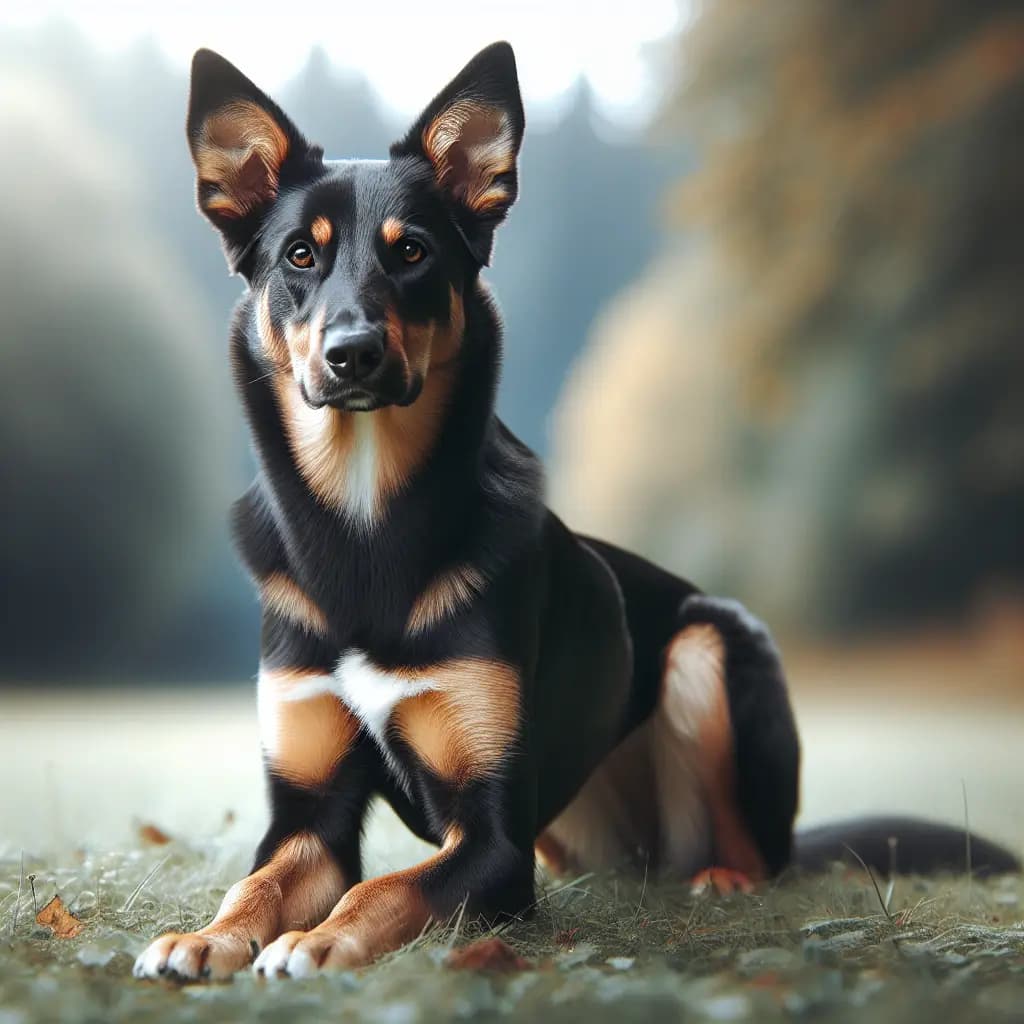
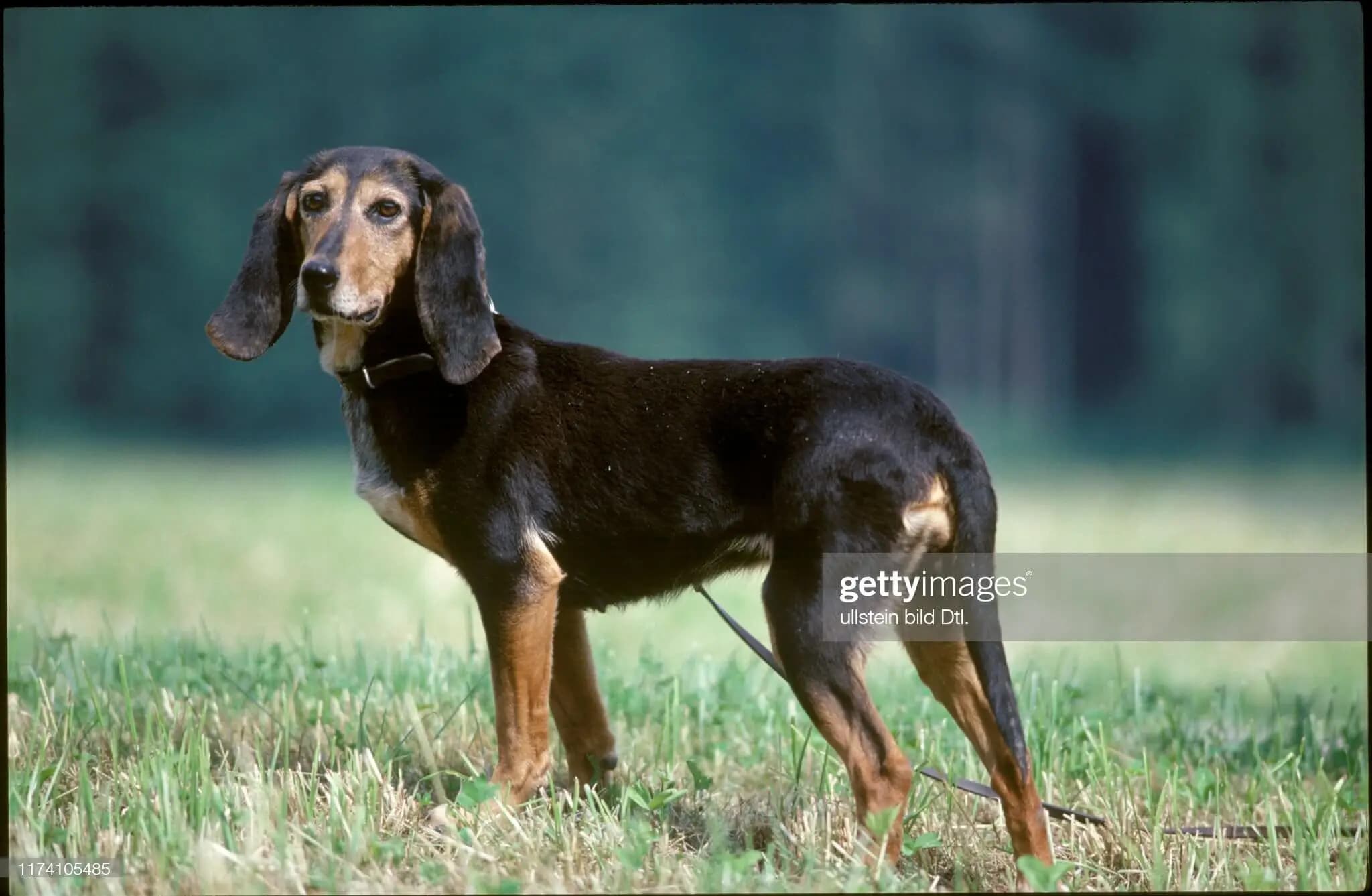
Small Jura HoundClose relative
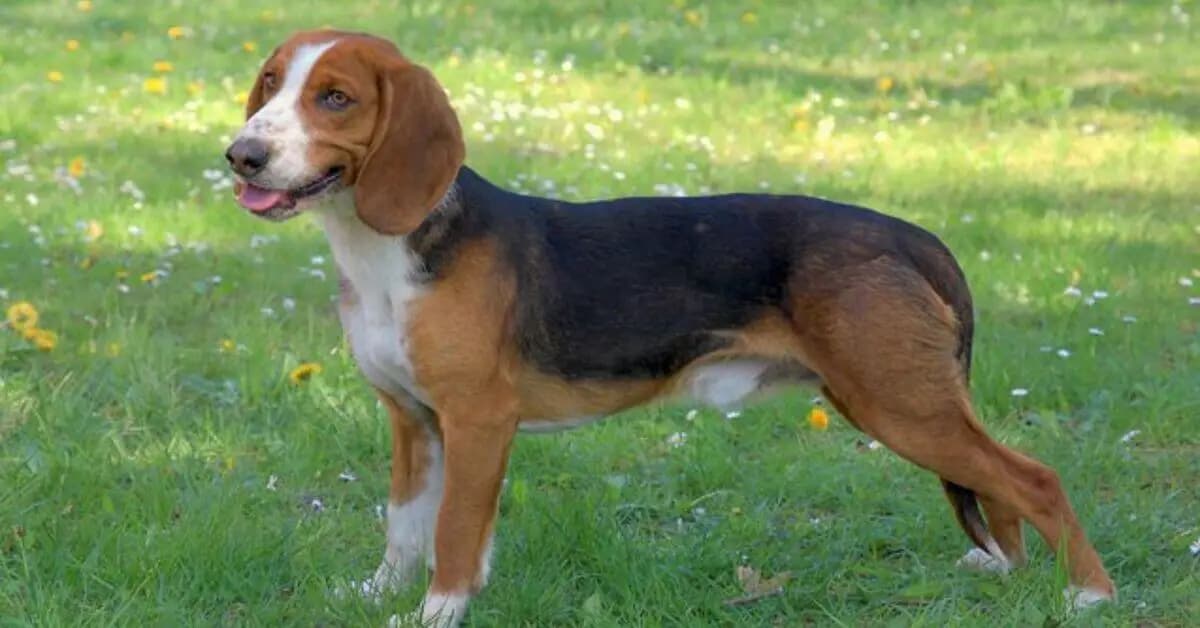
German HoundSame FCI section
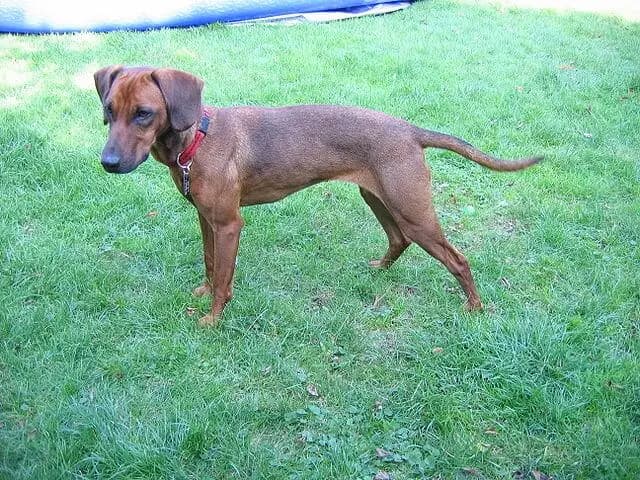
Tyrolean HoundSame FCI section
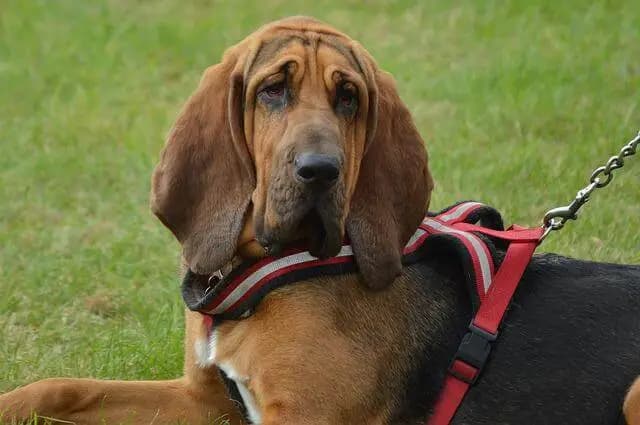
BloodhoundSame FCI section
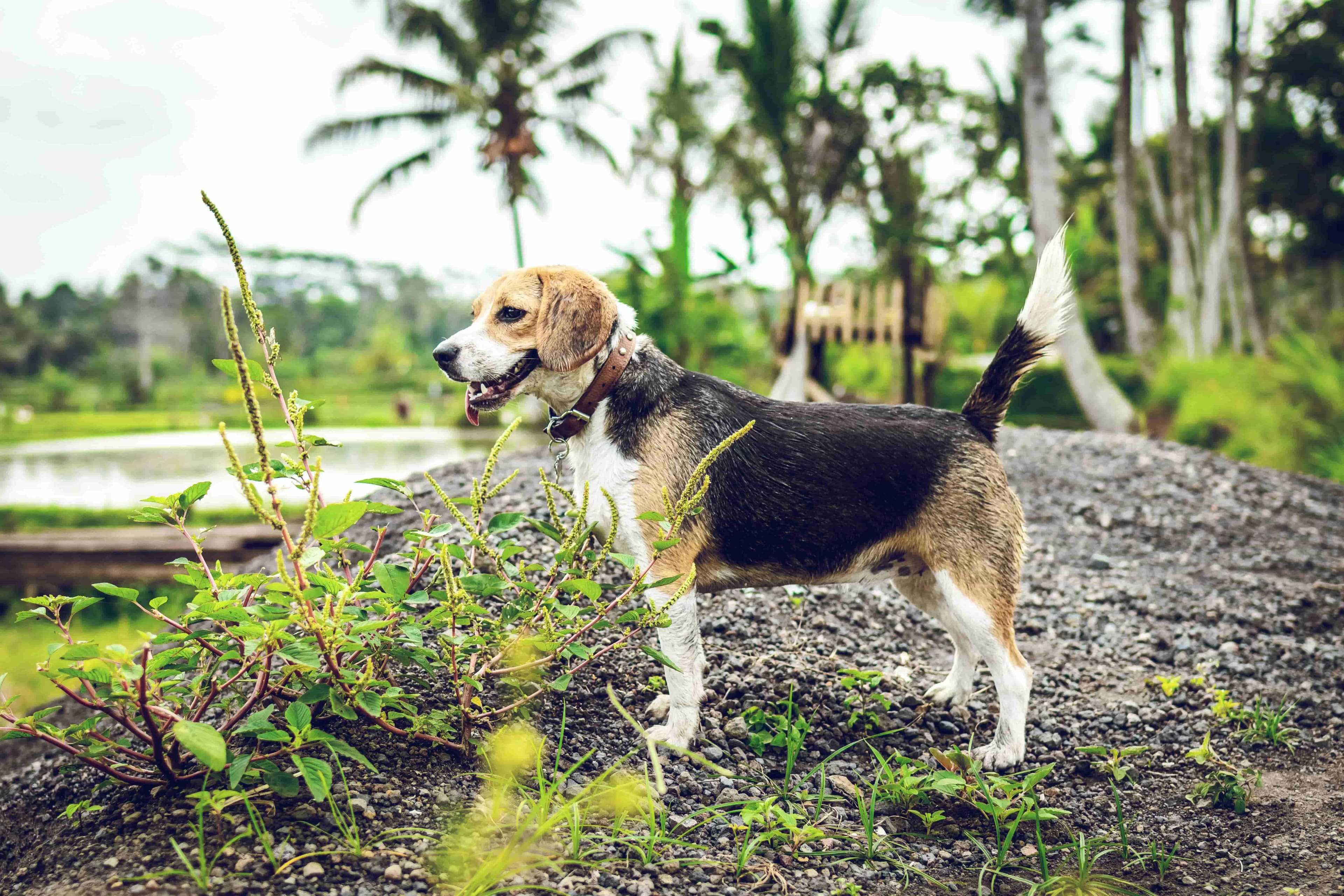
BeagleSame FCI section
Is the Jura Hound right for you?
At a glance
Jura Hound overview
The essentials — key facts, traits, and health priorities — before you dive deeper.
Lifespan
12–14 yrs
Shoulder height
47–59 cm
Weight
15–20 kg
Practical
- Puppy price: 1,500 – 2,500 €
- Coat: Short, smooth, without undercoat
- Origin: Switzerland
Temperament
Energy
Trainability
Family fit
With kids
Daily life
Care effort
Shedding
Barking
City-friendly
Guard instinct
What matters most
Especially with a Jura Hound, choosing the right breeder is the single most important decision you'll make. Serious breeders consistently test the parents for inherited conditions, prioritize healthy early socialization, and stay accountable long after handover. A cheap puppy without health screening tends to become the most expensive dog later on.
See HonestDog breeder standards →Colors & coat
What colors does the Jura Hound come in?
The coat colors that occur in the Jura Hound — including which ones fall outside the breed standard and which carry genetic risk.
Eye colors
 Brown
Coat type
 Short
 Smooth
Perfect for you if:
- You lead with patience and humor, as classic obedience is often secondary for a dog bred to hunt independently far away from humans.
- You are looking for an extremely calm, affectionate companion at home who loves the company of other dogs.
Less ideal if:
- You live in a thin-walled city apartment where his loud, piercing voice will inevitably become a problem.
- You have to leave your dog alone for long periods on weekdays, which is deeply distressing for this highly social pack animal.
The real vibes check
At home on the sofa, the Jura Hound acts like a gentle, almost melancholic aristocrat who prefers to cuddle for hours. But as soon as he catches a scent in the woods, a switch flips and he turns into an unstoppable, loud search engine. You aren't getting a dog that follows commands, but a highly specialized tracker whose world consists primarily of smells.
Breed Profile
The Jura Hound is a medium-sized dog that comes from Switzerland. He is part of FCI Group 6, which includes scent hounds and blood-tracking hounds. His physique is strong and well proportioned, giving him the stamina and agility needed for his work. Its head is narrow with a pronounced stop and a long, straight nose. The ears are set high, hanging and rather short. The eyes are dark brown and give him an attentive and intelligent expression. Its coat is short and smooth, with no undercoat, giving it an elegant and slender appearance. The coat color varies depending on the type of Jura Hound, which comes in three variants: the Bruno Jura Hound has a black and white coat, the Saint Hubert Jura Hound has a black coat with tan markings and the Swiss Jura Hound has a white coat with a black mantle or patches. Since the Jura Hound is purely a working dog, no distinction is made between show and working lines. However, there may be individual differences in hunting instinct and willingness to work, depending on how strongly these characteristics are emphasized in each line.
All measurements in detail
- Height
- 47 - 57 cm (Female), 49 - 59 cm (Male)
- Weight
- 15 - 18 kg (Female), 17 - 20 kg (Male)
- Life Expectancy
- 12 - 14 yrs
- Character
- Persistent, independent, loyal
- Coat
- Short, smooth, without undercoat
- Coat Color
- Black with tan markings, white with black coat or plates
- Price
- 1500 - 2500 €
Character & Temperament
The Jura Hound is a real working dog with a strong hunting instinct and high endurance. He was bred to work independently and is therefore able to make decisions and solve problems independently. However, this independence should not be confused with stubbornness or disobedience, because if he is managed correctly, he will be very cooperative and willing to learn. Despite his work, the Jura Hound is a very people-oriented dog that bonds closely with his caregivers. He is loyal and reliable and can build a very close relationship with his family. However, he needs clear guidance and a purpose in order to be happy and balanced. His temperament is rather calm and balanced, but he needs a lot of exercise and mental activity. Without suitable employment, he may become restless and dissatisfied. It is therefore particularly suitable for active people who enjoy being out in nature and enjoy challenging and encouraging their dog. Due to its strong hunting instinct, it is important that the Jura Hound gets used to being alone when it is a puppy. He learns quickly and is able to accept this behavior if it is practiced consistently from the start. Otherwise, he may tend to become restless or even bark when caregivers are away. Although the Jura Hound is not a classic guard dog, it is very attentive and vigilant. He will defend his territory and his family if he feels they are threatened. However, he does not show any overly aggressive behavior, but rather barks to draw attention to the supposed danger. With regard to its prey-catching behavior, it should be said that the Jura Hound has a strong tendency to pursue and catch game due to its strong hunting instinct. It is therefore particularly important that he lives in an environment in which he can exercise his hunting instinct in a controlled manner and that he learns to react to recall signals right from the start. Early socialization and getting to know different animals and environments are also very helpful in getting his hunting instincts under control. In summary, the Jura Hound is a loyal, reliable and hard-working dog that can show off its strengths both as a working hunting dog and as a family dog. With his perseverance, insight and loyalty, he will surely bring you joy for many years if you are willing to meet his needs and see him as an equal member of the family.
| Watchfulness A natural watchdog with real protective instinct. | High |
| Openness to Strangers Neither pushily friendly nor suspicious. | Neutral |
| Hunting or Herding Drive This drive runs deep — no amount of training eliminates it. | Very strong |
Fun Fact!
Did you know that the Jura Hound comes from Switzerland and is one of the four official Swiss Hounds? These loyal and persistent dogs are still used for hunting in their homeland and are known for their remarkable ability to follow a trail over long distances!
What Awaits You
The Jura Hound is a lively and enduring hunting dog, especially valued for its excellent sense of smell. These dogs are intelligent and eager to work, but require consistent training and sufficient activity. They are well suited for active families and hunters looking for a reliable companion in the field. The Jura Hound is characterized by its friendly nature and high willingness to learn.
Housing & Care
Despite its hunting instincts and endurance, the Jura Hound can be kept in the city as long as it receives enough exercise and mental stimulation. He gets along well with children and can adapt well to an active family life. However, a supervisor should always be present when the dog is playing with smaller children. In terms of other pets, the Jura Hound can also live with cats or other pets, especially if socialized as a puppy.
- Family Friendly
Loves family life and thrives in a group.
Family-oriented - Child Friendly
Gets on well with children — with adult supervision.
With supervision - Dog Friendly
Actively enjoys the company of other dogs.
Dog-friendly - City Friendly
Can manage in the city, but only with very active owners.
Difficult in cities
Owning a dog is a privilege, but it's also a real responsibility. Before you bring one into your life, be honest with yourself about the commitment it takes.
Training & Education
The Jura Hound is intelligent and capable of learning, which makes training easier. He responds well to positive reinforcement and is willing to work with his human. Because the Jura Hound was originally bred for hunting, it needs a lot of exercise and mental stimulation to be happy. He enjoys long walks, running and hiking. It's also important to make sure he gets enough mental stimulation to avoid boredom and destructive behavior. The breed can benefit from training sessions that target impulse control and frustration tolerance to manage the strong prey drive. Games that challenge his nose and mind, such as tracking or search games, can also be a good way to keep him busy and use his natural instincts in a positive way.
Nutrition & Care
When it comes to nutrition, the Jura Hound is uncomplicated. He needs a balanced diet tailored to his age, weight and activities. A good quality dry or wet food that is high in protein and with a good balance of fats and carbohydrates is a good choice. The exact amount depends on the dog's size, weight and activity level, and your veterinarian can help you determine the best diet for your dog. In terms of care, the Jura Hound is relatively easy to care for thanks to its short, smooth coat without an undercoat. He sheds moderately, and regular brushing will help remove loose hair and keep the coat clean and shiny. The Jura Hound also copes well with the climate in Germany as long as it gets enough exercise and mental stimulation.
| Care Level Minimal effort — occasional brushing and bathing. | Low-maintenance |
| Exercise Needs Needs several hours of serious exercise every day. | Very active |
| Shedding Regular shedding — dog hair on clothes is now normal. | Moderate |
| Trainability Has its own ideas and will test limits. | Strong-willed |
Our experts are still reviewing this information. Spotted something wrong? Email us at info@honestdog.de.
Health & hereditary diseases
Health
A
Robust
Health grade
In the Jura Hound, the main focus is on orthopedic conditions such as hip dysplasia (HD) and elbow dysplasia (ED), as well as hereditary eye diseases such as progressive retinal atrophy, cataracts, and eyelid abnormalities like ectropion / entropion. A health-conscious breeder X-rays the parent animals before breeding and has their eyes examined by a specialist. You should therefore ask to see official X-ray results showing at most HD A–B for hip dysplasia (HD) and at most ED 0–1 for elbow dysplasia (ED). In addition, look for veterinary eye certificates confirming that the breeding animals are free from progressive retinal atrophy, cataracts, and ectropion / entropion.
Grade is relative to other breeds — AI-assisted and editorially reviewed.
Methodology and data: HonestDog Dog Breed Health Report 2026
What matters most for this breed
Tap any item to see details.
In daily life this can mean
You should regularly check and clean his long, hanging ears and ensure he is raised in a way that is gentle on his joints to prevent future problems.
The breeder's role
Reputable breeders have the parents' hips, elbows, and eyes tested and pay attention to healthy ear canals to reduce avoidable risks in the bloodline.
Note: This health overview is AI-assisted and editorially reviewed. It is for orientation only and does not replace veterinary advice.
Health risks for this breed
What matters most for this breed — what's common, how much it affects the dog's life, and how to protect yourself as a buyer.
5
Risks tracked
1
Recommended standard
4
High severity
Eyes
Most affected area
Where this breed is vulnerable
Tap a body region to see the inherited conditions linked to it.
The three most important risks
Pick a region on the map to explore other areas.
severemoderatemild
How thoroughly does the breeder test?
Tier 1 is the recommended health standard for this breed. Tiers 2 and 3 show how responsible breeders go beyond.
Recommended standard. These tests make up the recommended health standard for this breed — the baseline of any careful breeding program. Ask any reputable breeder for the results.
No entries in this tier.
Note: This health overview is AI-assisted and editorially reviewed. It is for orientation only and does not replace veterinary advice.
Costs & where to find one
How much does a Jura Hound cost?
A Jura Hound costs around ~€170 per month (€90 – €320, depending on your setup). The first year adds up to roughly ~€4,860 including purchase, equipment and puppy school; across the dog's life (13 years) it comes to about ~€29,260.
With surgery cover, running costs come to about ~€160 per month — in return, your share of a major operation drops from several thousand euros to around 20 percent.
Per month
~€170
In the first year
~€4,860
Across the dog's life
~€29,260
Estimated purchase price from a breeder: €1,500 – €2,500
Estimate at a mid-range setup (suburban, dry food, 1–2 hours of daily exercise), average German prices, as of July 2026.
Calculate your personal costs1-minute self-check with your own answers
Looking for a Jura Hound?
HonestDog Concierge
No verified Jura Hound breeders on HonestDog yet
We currently have no breeders for this breed who have passed our verification. Create your short buyer profile: we'll set up your search alert, review a possible source and email you within 28 days.
Appearance, variants & origin

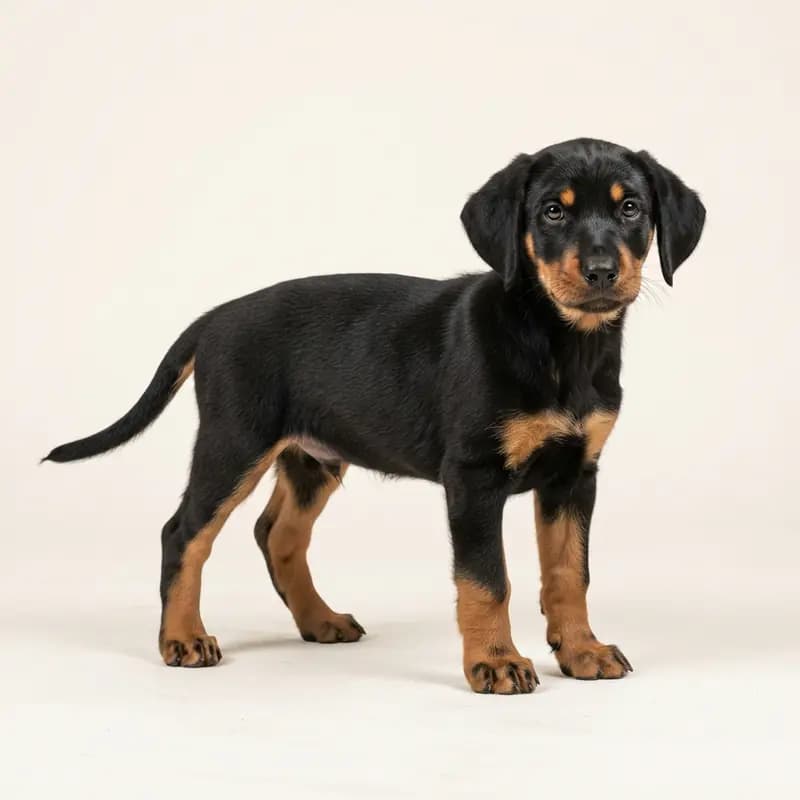 Illustrative image
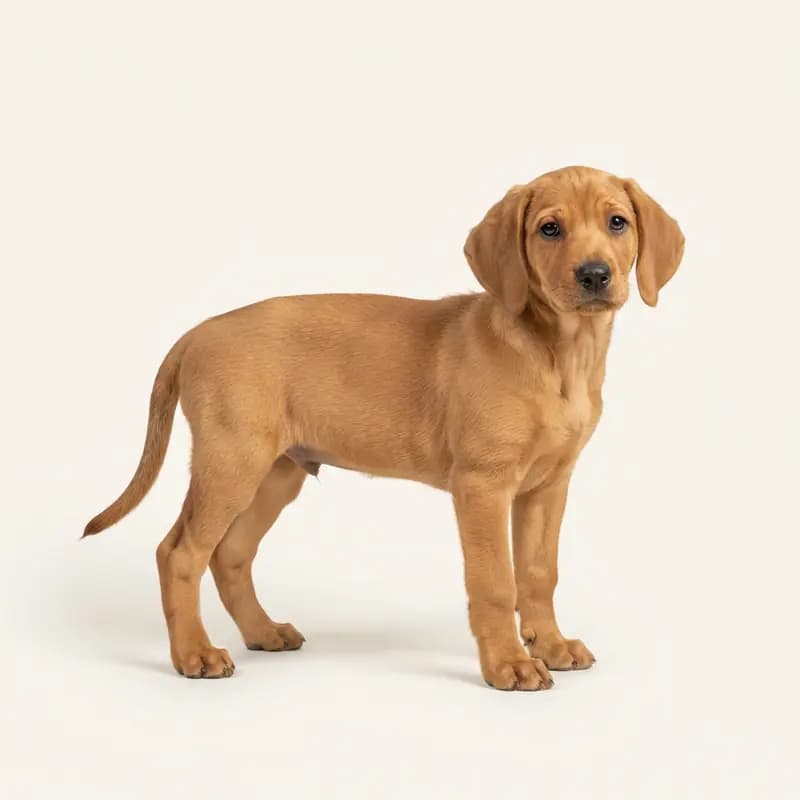 Illustrative image
History
The full history
The Jura Hound has its origins in the Jura region of Switzerland and has been used as a working dog for hunting for centuries. Its exact origin is not documented, but it is believed to have descended from ancient Swiss hounds, which in turn may have descended from the hounds of the Celts. The breed was first mentioned in the 15th century and has since been used in Switzerland and parts of France to hunt wild boar, fox and hare. His endurance and keen sense of smell make him particularly suitable for blood tracking. The FCI officially recognized it as an independent breed in 1938. Today the Jura Hound is a recognized and valued hunting and companion dog both in Switzerland and internationally.
Original Use
The Jura Hound was bred to hunt game in mountainous terrain.
Origin
Switzerland
Date
Mittelalter
Owner experiences
At home, many owners describe the Jura Hound (Bruno) as remarkably pleasant, gentle and affectionate.Summarized from publicly shared owner experiences
At home, many owners describe the Jura Hound (Bruno) as remarkably pleasant, gentle and affectionate. Indoors the breed is typically very calm, almost unobtrusive, and seeks close contact with its people. It is friendly and patient with family members and children, while it tends to stay neutral or watchfully aloof with strangers.
Owners agree, however, that this calm at home only works if the dog is challenged physically and mentally. A simple family walk on a short leash isn't enough; without the chance to run for long stretches or sniff, it can become restless indoors or start getting vocal. Owners also point out that the breed has a typically deep voice that carries a long way, which can cause problems with the neighbors in densely built-up areas when it gives voice in the yard.
On training and handling, hunters and owners mainly highlight its great passion for hunting and the independence that comes with it.Summarized from publicly shared owner experiences
On training and handling, hunters and owners mainly highlight its great passion for hunting and the independence that comes with it. As soon as the dog has a fresh trail in its nose, it works it with its nose deep to the ground, giving voice on the track, often tunes out everything it sees and hears around it, and barely responds to a standard recall. Many owners therefore describe reliable off-leash time in game-rich woodland as unrealistic, or only possible with GPS backup.
At the same time, experienced owners stress that the Jura Hound is anything but dull or uncooperative; it needs a gentle, sensitive approach. With this breed, harshness or pressure quickly makes the dog shut down or refuse to work. Successful training takes a lot of patience, bond-building and consistent long-line training from an early age, paired with a suitable outlet such as challenging mantrailing or tracking work.
As for health and grooming, owners report an overall very sturdy, weatherproof working dog with a lot of physical stamina.Summarized from publicly shared owner experiences
As for health and grooming, owners report an overall very sturdy, weatherproof working dog with a lot of physical stamina. Breed-typical hereditary diseases rarely come up in owner accounts; when kept appropriately, these dogs are considered long-lived and tough into old age. The short, dense coat is also very easy to care for and needs little effort beyond normal brushing.
According to owners and expert reports, however, the long, hanging "hound ears" need special attention. Because the ear canals are less well ventilated and the dog constantly searches with its nose close to the ground, it easily picks up dirt and foreign bodies such as grass awns, followed by infections. Regular checks of the ears and paws after long outings over rough terrain are therefore part of owners' daily routine.
Paraphrased from real owner reports · translated from German
FAQ & more
Is a Jura Hound the right dog for me?
The Jura Hound is an active dog that needs plenty of exercise and mental stimulation. Research the temperament, grooming needs, and space requirements before deciding.
How long does a Jura Hound live?
The average life expectancy of a Jura Hound is 12-14 years. With proper care and regular vet visits, your dog can live a long, healthy life.
How much grooming does a Jura Hound need?
Jura Hound grooming requirements include regular brushing, nail trimming, and dental care. HonestDog provides detailed grooming tips for every breed.
Is a Jura Hound good for families with children?
The Jura Hound can be a great family dog. Proper training and socialization are key. HonestDog provides family suitability information for every breed.
What colors does the Jura Hound come in?
The Jura Hound comes in these colors: Black and tan, Tan.
Are you a Jura Hound breeder?
Showcase your kennel on HonestDog and reach families searching for a responsibly bred Jura Hound.