Loading breed
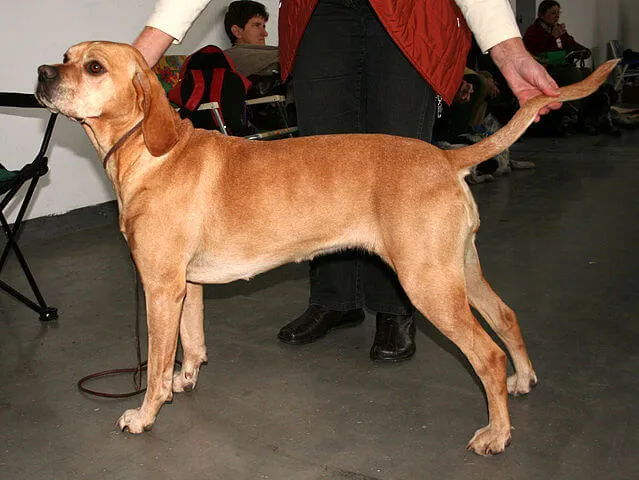
Portuguese Pointer
Health grade B- Shoulder height50–58 cm
- Weight16–27 kg
- Life expectancy12–14 yrs
- Puppy price1,500–2,500 €
- Energy4/5
The essentials at a glance
The Perdigueiro Português is an extremely affectionate, sensitive pointing dog — bred for persistent hunting of upland game, where he works closely, tirelessly, and almost symbiotically with his human.
- Health grade B: With the Perdigueiro Português (Portuguese Pointer), you should pay special attention to joint disorders such as hip dysplasia (HD) and elbow dysplasia (ED), as well as eye diseases such as progressive retinal atrophy and ectropion / entropion; additionally, epilepsy can occur in the breed.
- You enjoy real scent work, dummy training, or tracking — a simple walk won't tire out this pointing dog's brain; he needs active cooperation with you.
- You are looking for a sensitive dog and can lead him with a quiet voice, patience, and plenty of positive reinforcement.
- You expect him to trot calmly by your side when a partridge takes flight or birds flutter by — he has been selected for centuries to locate game at lightning speed and point motionless.
Self-check
Would the Portuguese Pointer really fit your life?
Answer 6 quick questions about your everyday life and see how well the Portuguese Pointer fits you — including an honest cost estimate per month, per year, and across the dog's lifetime.
Fit checkCost estimateRisk dice
Takes about 1 minute · free & anonymous
Similar Breeds


German Shorthaired PointerSame FCI section
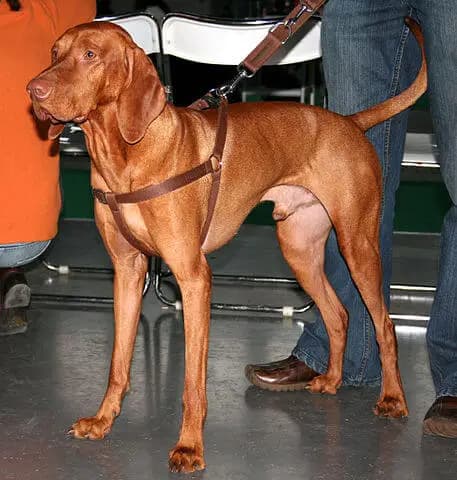
Hungarian VizslaSame FCI section
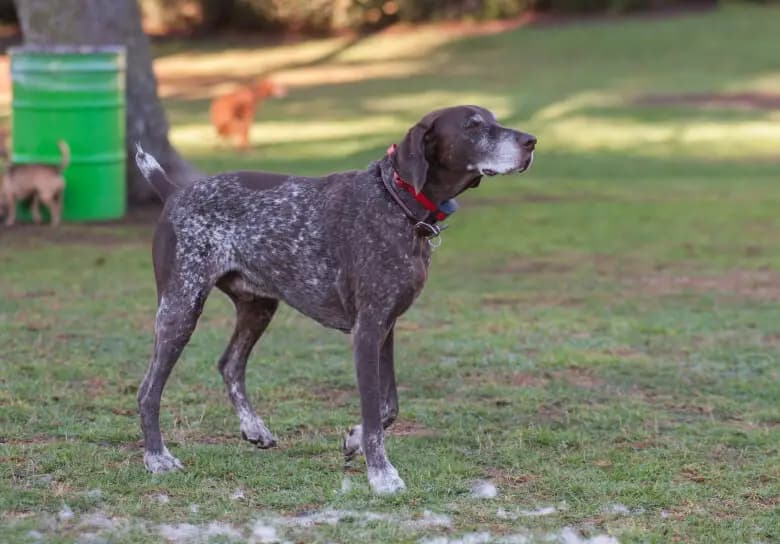
Braque FrancaisSame FCI section

English PointerSame FCI group

WeimaranerSame FCI section
Is the Portuguese Pointer right for you?
At a glance
Portuguese Pointer overview
The essentials — key facts, traits, and health priorities — before you dive deeper.
Lifespan
12–14 yrs
Shoulder height
50–58 cm
Weight
16–27 kg
Practical
- Puppy price: 1,500 – 2,500 €
- Coat: Short, smooth, dense
- Origin: Portugal
Temperament
Energy
Trainability
Family fit
With kids
Daily life
Care effort
Shedding
Barking
City-friendly
Guard instinct
What matters most
Especially with a Portuguese Pointer, choosing the right breeder is the single most important decision you'll make. Serious breeders consistently test the parents for inherited conditions, prioritize healthy early socialization, and stay accountable long after handover. A cheap puppy without health screening tends to become the most expensive dog later on.
See HonestDog breeder standards →Colors & coat
What colors does the Portuguese Pointer come in?
The coat colors that occur in the Portuguese Pointer — including which ones fall outside the breed standard and which carry genetic risk.
Eye colors
 Brown
Coat type
 Short
 Smooth
Perfect for you if:
- You want a constant companion in everyday life who prefers to stick to you like a burr at home and follows you into every room.
- You live in a rural or nature-oriented area and can offer him regular, safe off-leash time to let him stretch his legs in his characteristic sweeping gallop.
Less ideal if:
- You have to leave him alone for several hours on weekdays, as his extreme human-centeredness makes him highly prone to genuine separation anxiety.
- You are looking for a dog that easily brushes off training mistakes — harsh words or unfair pressure will cause this sensitive character to emotionally shut down immediately.
The real vibes check
A Perdigueiro Português is a focused athlete outdoors, scanning the terrain — and a soft pillow indoors, who would prefer to physically crawl inside you. You aren't getting an independent hunter, but a highly sensitive shadow whose greatest joy and simultaneous challenge is his absolute, unwavering dependence on your proximity.
Breed Profile
The Perdigueiro Português, also known as the Portuguese Pointer, is a medium-sized dog breed known for its work ethic and versatility as a hunting dog. Its body is harmonious and well proportioned, giving it remarkable agility and endurance. Its tail is medium long, very thick at the base and is carried hanging when at rest. The eyes are medium sized, oval and honey to brown in color, giving it a particularly warm and friendly expression. His ears are a distinctive feature: they are medium-length, thin, and hang flat on the sides of his head. The Perdigueiro Português belongs to FCI Group 7, which includes the pointing dogs. This group includes dogs that are traditionally used in hunting to track game by determining the position of the game through their sense of smell and then "pointing forward" in a specific pose to indicate the position of the game to the hunter.
All measurements in detail
- Height
- 50 - 54 cm (Female), 54 - 58 cm (Male)
- Weight
- 16 - 22 kg (Female), 20 - 27 kg (Male)
- Life Expectancy
- 12 - 14 yrs
- Character
- Friendly, energetic, obedient
- Coat
- Short, smooth, dense
- Coat Color
- White with yellowish or orange spots
- Price
- 1500 - 2500 €
Character & Temperament
The Perdigueiro Português is known for his friendly and outgoing nature. He is very people-oriented and loves spending time with his family. He is gentle and patient ig, making him a great companion dog for families with children. Although he is very friendly and social, he is also independent and can enjoy having his own time. As a hunting dog, the Perdigueiro Português has high energy levels and needs adequate exercise and mental stimulation on a daily basis. He loves being outside and will take any opportunity to run and play. His temperament is rather calm and even-tempered, meaning that he is usually not overly active indoors as long as he gets enough exercise. Despite his calm nature, the Perdigueiro Português is also an alert dog, very aware of his surroundings. He will definitely notice when something is wrong and can be a good watchdog. However, he is not prone to being aggressive and is usually friendly and outgoing towards strangers. The Perdigueiro Português has a strong hunting instinct and can enjoy chasing after birds and other small animals. It is important that this instinct is controlled through training and socialization from an early age to ensure that he can remain in safe environments and does not run after every animal he sees. However, despite his hunting instinct, he can get along well with other pets if socialized properly. Like many hunting dogs, the Perdigueiro Português can sometimes be a bit stubborn when it comes to training. However, he is also intelligent and willing to learn and can quickly learn new commands and tricks. It is important that training is positive and reward-oriented to maintain his motivation and encourage his enthusiasm. Because the Perdigueiro Português enjoys being around people, he can find it difficult to be left alone for long periods of time. If you plan to leave your dog alone for several hours on a regular basis, you will probably need to teach him how to keep himself occupied and feel comfortable being alone. This usually requires some training and patience. Overall, the Perdigueiro Português is a versatile and lovable dog that can adapt well to different lifestyles. With proper socialization and training, he can be a wonderful companion dog and a loyal friend. He is a great choice for active people looking for a dog that can excel both in the field and at home.
| Watchfulness Reports unusual activity but stays controlled. | Moderate |
| Openness to Strangers Warms up quickly and is generally welcoming. | Friendly |
| Hunting or Herding Drive This drive runs deep — no amount of training eliminates it. | Very strong |
Fun Fact!
Did you know that the Perdigueiro Português is a very old breed and probably goes back to dogs that were already used by the Romans for hunting? By the way, its name "Perdigueiro" means "chicken hunter" in Portuguese!
What Awaits You
The Perdigueiro Português is an intelligent and hardworking pointing dog from Portugal. It is characterized by its endurance and strong hunting instinct. These dogs are very eager to learn and are well suited for active families or hunting tasks. With the right training, they are loyal and reliable companions.
Housing & Care
The Perdigueiro Português is an active and energetic dog that can do well in both urban and rural environments, provided it receives adequate exercise and mental stimulation. It is well suited to families with children and, if properly socialized, can also get along well with other pets. However, it has a strong prey instinct, so it is important that it is kept in safe environments and is not allowed to roam freely where it might prey on birds and small animals.
- Family Friendly
Lives for its family — the born family companion.
Ideal family dog - Child Friendly
Extraordinarily patient and loving — a true family dog.
Excellent with children - Dog Friendly
Actively enjoys the company of other dogs.
Dog-friendly - City Friendly
City-appropriate with enough exercise and stimulation.
Manageable in cities
Owning a dog is a privilege, but it's also a real responsibility. Before you bring one into your life, be honest with yourself about the commitment it takes.
Training & Education
As a hunting dog, the Perdigueiro Português is intelligent, eager to learn and eager to work. He benefits from consistent and positive training and requires appropriate mental and physical exercise. It is important that he is socialized early and regularly in order to raise a balanced and well-adjusted dog. As a working dog, he can do well in various dog sports such as agility, obedience, mantrailing or dummy training. His hunting instinct should be channeled through appropriate activities and games to reduce frustration and avoid unwanted behavior. Impulse control and frustration tolerance training is important in this breed to promote a well-adjusted and balanced dog.
Nutrition & Care
The Perdigueiro Português needs a balanced diet tailored to his age, weight, activity level and health status. A diet that contains high quality proteins, healthy fats, vitamins, minerals and an appropriate amount of carbohydrates is ideal for this active breed. It is important to monitor the amount of food and schedule regular veterinary visits for weight control to avoid becoming overweight, which can lead to health problems. In terms of coat care, the Perdigueiro Português is relatively easy to care for. Its coat is short and smooth and ha kind of moderate. A weekly brushing is usually enough to keep his coat clean and healthy. He has no undercoat and can cope well with the German climate, both in the warm summer months and winter, although he may require a coat in the colder months if he spends long periods outside.
| Care Level Minimal effort — occasional brushing and bathing. | Low-maintenance |
| Exercise Needs Needs several hours of serious exercise every day. | Very active |
| Shedding Regular shedding — dog hair on clothes is now normal. | Moderate |
| Trainability Picks up commands quickly and wants to please. | Eager to learn |
Our experts are still reviewing this information. Spotted something wrong? Email us at info@honestdog.de.
Health & hereditary diseases
Health
B
Solid
Health grade
With the Perdigueiro Português (Portuguese Pointer), you should pay special attention to joint disorders such as hip dysplasia (HD) and elbow dysplasia (ED), as well as eye diseases such as progressive retinal atrophy and ectropion / entropion; additionally, epilepsy can occur in the breed. A responsible breeder has their parent animals thoroughly examined prior to mating to minimize these risks. Before buying a puppy, ask to see official radiographic findings with results of HD A–B and ED 0, as well as ophthalmological certificates confirming freedom from progressive retinal atrophy and ectropion / entropion.
Grade is relative to other breeds — AI-assisted and editorially reviewed.
Methodology and data: HonestDog Dog Breed Health Report 2026
In daily life this can mean
Pay attention to a healthy weight and joint-friendly rearing to protect your active dog's musculoskeletal system in the long term.
The breeder's role
Responsible breeders test parent animals for hip dysplasia (HD), elbow dysplasia (ED), progressive retinal atrophy, and ectropion / entropion to reduce hereditary diseases.
Note: This health overview is AI-assisted and editorially reviewed. It is for orientation only and does not replace veterinary advice.
Health risks for this breed
What matters most for this breed — what's common, how much it affects the dog's life, and how to protect yourself as a buyer.
7
Risks tracked
0
Recommended standard
5
High severity
Eyes
Most affected area
Where this breed is vulnerable
Tap a body region to see the inherited conditions linked to it.
The three most important risks
Pick a region on the map to explore other areas.
severemoderatemild
How thoroughly does the breeder test?
We sort tests into three tiers — from the core standard to a fully exemplary program.
Recommended standard. These tests make up the recommended health standard for this breed — the baseline of any careful breeding program. Ask any reputable breeder for the results.
No entries in this tier.
Note: This health overview is AI-assisted and editorially reviewed. It is for orientation only and does not replace veterinary advice.
Costs & where to find one
How much does a Portuguese Pointer cost?
A Portuguese Pointer costs around ~€180 per month (€90 – €330, depending on your setup). The first year adds up to roughly ~€4,950 including purchase, equipment and puppy school; across the dog's life (13 years) it comes to about ~€30,330.
With surgery cover, running costs come to about ~€170 per month — in return, your share of a major operation drops from several thousand euros to around 20 percent.
Per month
~€180
In the first year
~€4,950
Across the dog's life
~€30,330
Estimated purchase price from a breeder: €1,500 – €2,500
Estimate at a mid-range setup (suburban, dry food, 1–2 hours of daily exercise), average German prices, as of July 2026.
Calculate your personal costs1-minute self-check with your own answers
Looking for a Portuguese Pointer?
HonestDog Concierge
No verified Portuguese Pointer breeders on HonestDog yet
We currently have no breeders for this breed who have passed our verification. Create your short buyer profile: we'll set up your search alert, review a possible source and email you within 28 days.
Appearance, variants & origin

 Illustrative image
 Illustrative image
History
The full history
The Perdigueiro Português breed has a long history and is probably one of the oldest pointers in Europe. However, the exact origin of the breed is not entirely clear. It is believed to have evolved from ancient Spanish dogs that were introduced and developed in Portugal. The Perdigueiro Português is a very old breed and there are depictions that suggest that similar dogs existed in Portugal as early as the 12th century. The breed was subsequently used mainly by the rural population for hunting. The breed was officially recognized by the FCI in 1938. Since then, the Perdigueiro Português has been bred in its homeland and also in some other European countries and used as a hunting dog. In recent decades, however, more and more attention has been drawn to its qualities as a family dog and companion dog.
Original Use
The Perdigueiro Português was used as a pointing dog for hunting birds.
Origin
Portugal
Date
1400
Owner experiences
At home and in family life, owners describe the Perdigueiro Português as a very affectionate, almost velcro-like companion.Summarized from publicly shared owner experiences
At home and in family life, owners describe the Perdigueiro Português as a very affectionate, almost velcro-like companion. It is extremely people-oriented, constantly seeks out its people and clearly suffers when it's left out of family life. Many owners highlight how gentle, good-natured and patient it is with children. Indoors, given enough to do, the breed is pleasantly calm, cuddly and unobtrusive.
The flip side of this close bond, owners stress, is that being left alone can be a real challenge. If time alone isn't built up in small steps from puppyhood, many of these dogs tend toward separation stress or ongoing restlessness. Its alertness is also sometimes underestimated. The breed isn't considered aggressive, but some owners report that it looks strangers over carefully at first and may position itself protectively in front of its family until it decides the situation is harmless.
Sources:rundum.dogsabinemiddelhaufeshundundnatur.netreddit.com
When it comes to training and day-to-day handling, owners agree that the Portuguese Pointer needs a sensitive hand.Summarized from publicly shared owner experiences
When it comes to training and day-to-day handling, owners agree that the Portuguese Pointer needs a sensitive hand. Its strong willingness to cooperate and love of work give it every advantage, but it is very sensitive to pressure or harshness. Owners repeatedly stress that punishment or a rough tone makes the dog shut down inside or become insecure. Clear, consistent but always friendly, reward-based leadership is the key.
Walks are where the breed's biggest challenge shows: its strong hunting instinct, especially for birds, hares and game scent trails. Owners point out that relaxed off-leash time doesn't just happen on its own. Outdoors, the Perdigueiro is always in work mode, scanning its surroundings and freezing into a point the instant it catches the scent of prey. That's why many owners rely on targeted long-line training and strict anti-hunting training to keep the dog under control, even in areas with a lot of wildlife.
Sources:rundum.dogsabinemiddelhaufeshundundnatur.netmarhelhunting.com
On exercise and energy, owners describe the Perdigueiro Português as a true working dog that won't be satisfied with a quick walk around…Summarized from publicly shared owner experiences
On exercise and energy, owners describe the Perdigueiro Português as a true working dog that won't be satisfied with a quick walk around the block. Owners report that physical exercise alone isn't enough; the dog needs challenging tasks for its mind. People who don't hunt with it usually turn to alternatives like tracking, dummy searches or mantrailing to channel this pointer's excellent nose and drive to find things in the right way. Without that mental work, these dogs tend to head off tracking on their own outdoors or seem nervous indoors.
Among owners and breeders, the breed is considered relatively robust and not very prone to disease. Because it was selected for centuries for working ability and weather resistance, inherited defects show up less often than in overbred fashionable breeds. Owners do point out, though, that as with all medium-sized hunting dogs, hip health needs attention (parent dogs screened for hip dysplasia). The short coat is very easy to care for day to day but offers only moderate protection in cold, wet, dreary weather, so some owners dry their dogs off quickly after wet outings or keep them moving in freezing temperatures.
Sources:rundum.dogsabinemiddelhaufeshundundnatur.netunitedpetclub.com
Paraphrased from real owner reports · translated from German
FAQ & more
Is a Portuguese Pointer the right dog for me?
The Portuguese Pointer is an active dog that needs plenty of exercise and mental stimulation. Research the temperament, grooming needs, and space requirements before deciding.
How long does a Portuguese Pointer live?
The average life expectancy of a Portuguese Pointer is 12-14 years. With proper care and regular vet visits, your dog can live a long, healthy life.
How much grooming does a Portuguese Pointer need?
Portuguese Pointer grooming requirements include regular brushing, nail trimming, and dental care. HonestDog provides detailed grooming tips for every breed.
Is a Portuguese Pointer good for families with children?
The Portuguese Pointer can be a great family dog. Proper training and socialization are key. HonestDog provides family suitability information for every breed.
What colors does the Portuguese Pointer come in?
The Portuguese Pointer comes in these colors: Yellow, Bicolor.
Are you a Portuguese Pointer breeder?
Showcase your kennel on HonestDog and reach families searching for a responsibly bred Portuguese Pointer.