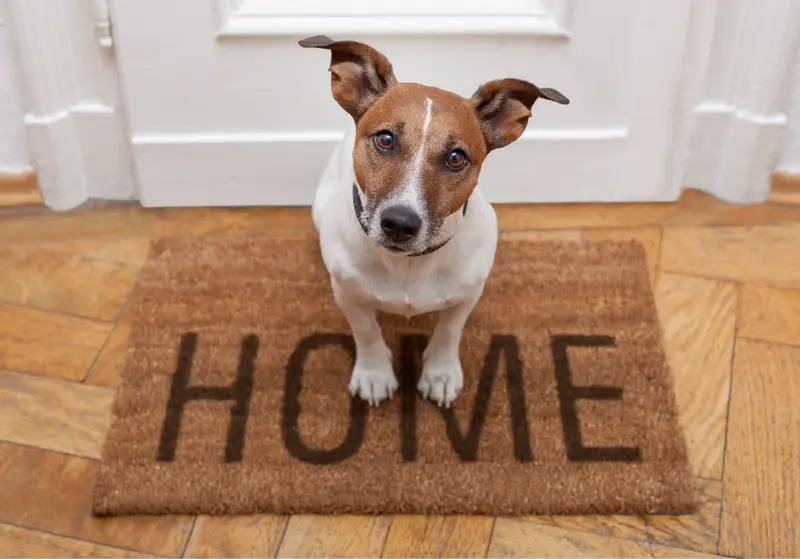
How Much Space Does a Dog Need? A Complete Guide for Dog Owners
In recent years, awareness around humane dog ownership has grown significantly across Germany. More and more people understand that dogs are social pack animals who shouldn't be kept isolated in kennels, doghouses, or on chains. But how much space does a dog really need to lead a happy, healthy life? Is having your own yard strictly necessary? And which dog breeds are best suited to apartment life in a busy city? This article offers scientifically backed answers to help you create the ideal living environment for your four-legged companion.
Indoor Living Space: A Place of Rest, Not an Arena
Many prospective owners worry whether their apartment—especially in urban settings—offers enough room for a dog. The good news: dogs primarily view the home as a sanctuary for rest and relaxation, not an exercise arena. According to experts at the Deutscher Tierschutzbund (German Animal Welfare Federation), dogs mainly need one thing at home: a safe, comfortable retreat.

- Resting spots: Ideally, your dog has a dedicated, quiet resting area in different living zones (e.g., living room, bedroom).
- Feeding station: A separate, quiet feeding spot promotes well-being and reduces stress during meals.
- Bed size: Choose a dog bed spacious enough for your dog to stretch out fully. For large breeds, this is vital to prevent back and joint issues [1].
Your flat or house serves primarily as a "home base." Genuine physical exercise and mental stimulation belong outdoors—regardless of whether you have a yard or not.
Does a Dog Really Need a Yard?
A private yard is undoubtedly a wonderful perk. It provides extra room for playtime, quick training sessions, and convenient bathroom breaks. Yet recent research shows that a yard is by no means mandatory for a dog's well-being [2]. What truly matters is providing sufficient daily physical exercise and mental stimulation.
- Yard advantages: Quick play sessions, short training drills, and instant access to fresh air.
- Important note: Never leave your dog alone in the yard for hours on end! This fosters undesirable territorial behavior and can cause boredom, stress, or excessive barking [3].
You can give your dog a completely fulfilling life without a yard by ensuring regular walks, play and training sessions, and healthy social interactions with other dogs.
Apartment Size vs. Dog Size: Does It Match?
Your living space should naturally accommodate your dog's physical frame—yet floor space isn't the most decisive factor in their happiness. Even large breeds like the Great Dane can live happily in a smaller apartment, provided their physical and mental needs are met outdoors [4].
- Large breeds: Keep in mind that bigger dogs don't just need larger beds—they also require roomier quiet areas and clearance to move around comfortably without feeling cramped.
- Small breeds: While well suited to compact flats, they still demand daily physical exertion and social engagement.
A properly sized dog bed that lets your dog stretch out completely is essential for spinal health, preventing conditions like spondylosis or herniated discs [1].
Living with a Dog in the City
High-Energy Breeds and Their Demands
Working and herding breeds in particular (such as the Border Collie, Australian Shepherd, or Labrador Retriever) possess immense energy and working drive that can be tough to satisfy within typical urban apartments [5].
- Access to open spaces: If you live in the city, make sure you have nearby parks, green corridors, or off-leash dog runs where your dog can run freely.
- Mental enrichment: Highly intelligent working breeds require mental tasks alongside physical walks—such as scent games, agility training, or trick work.
Livestock guardian breeds or intensely territorial dogs often find city bustle, noise, and constant stimuli chronically stressful. Similarly, rescue dogs accustomed only to calm rural environments can quickly become overwhelmed in urban settings.
Breeds Well-Suited to Urban Living
Dogs with lower reactivity and balanced temperaments, largely found in FCI Group 9 ("Companion and Toy Dogs"), tend to adjust much better to city life. Examples include the Havanese, Maltese, Bolognese, or Poodle [6]. While the Pug and French Bulldog frequently top popular city-dog lists, we deliberately exclude them: their shortened skulls make stairs, summer heat, and long walks through urban asphalt a grueling physical strain. Learn more about what brachycephaly means for a dog's health.
- Higher stimulus threshold: These breeds are typically less territorial and have manageable prey drives.
- Early socialization: Introducing puppies to urban sounds and impressions early on makes a lasting difference. Research shows that well-socialized pups handle environmental stress far better as adults [7].
- Practical benefits: Smaller dogs can easily be carried—a major advantage if joint issues or illness make stairs difficult.
Square Footage Isn't Everything: Daily Needs Matter Most
Apartment dimensions alone don't determine your dog's quality of life. The following factors carry far more weight:
- Regular walks: At least 2 to 3 substantial walks per day, tailored to age, breed, and health.
- Mental stimulation: Consistent training, brain games, and play strengthen your bond and prevent behavioral problems.
- Social interactions: Controlled contact with other dogs and people fosters a balanced, confident temperament.
- Breed-specific needs: Research thoroughly beforehand what level of grooming, activity, and work your chosen breed requires.
Scientific studies confirm that a dog's quality of life depends primarily on satisfying their social, cognitive, and physical needs—not the square footage of your flat [2].
Conclusion: How Much Space Does a Dog Really Need?
In short: the size of your home is far less critical to your dog's happiness than many assume. Outdoor activity, consistent routines, and mental enrichment matter far more. Still, you should weigh your dog's adult size and breed-specific traits when evaluating your living arrangements. Provide a quiet retreat, a generously sized bed, and ensure daily outdoor exercise, mental challenges, and social interaction—and your dog will thrive in any home!
References & Scientific Studies
- Dog beds and canine health: Döring, D., et al. (2017). "Liegeflächen für Hunde – Bedeutung für die Gesundheit und das Wohlbefinden." Tierärztliche Praxis, 45(2), 87-95.
- Canine space requirements: McNicholas, J., & Collis, G. M. (2000). "Dogs as catalysts for social interactions: Robustness of the effect." British Journal of Psychology, 91(1), 61-70.
- Territorial behavior and spatial isolation: Beerda, B., et al. (1999). "Chronic stress in dogs subjected to social and spatial restriction." Physiology & Behavior, 66(2), 233-242.
- Large breeds in small spaces: Wells, D. L., & Hepper, P. G. (2000). "The influence of environmental change on the behaviour of housed dogs." Applied Animal Behaviour Science, 68(2), 151-162.
- Exercise needs of active breeds: Rooney, N. J., & Bradshaw, J. W. S. (2002). "Breed and sex differences in the behavioural attributes of companion dogs." Applied Animal Behaviour Science, 79(3), 273-297.
- City-suitable breeds: Fédération Cynologique Internationale (FCI): FCI Breeds Nomenclature
- Socialization and stress resilience: Appleby, D. L., et al. (2002). "Relationship between aggressive and avoidance behaviour by dogs and their experience in the first six months of life." The Veterinary Record, 150(14), 434-438.
Note: This article reflects current veterinary and behavioral research on responsible canine husbandry. It does not replace tailored advice from licensed veterinarians, certified trainers, or animal behaviorists.