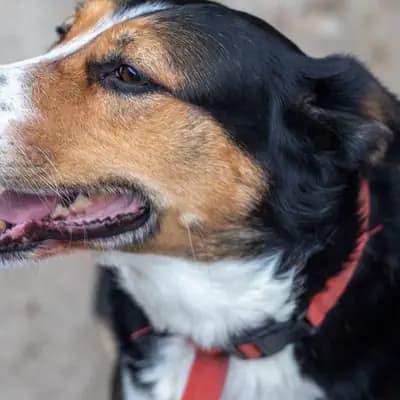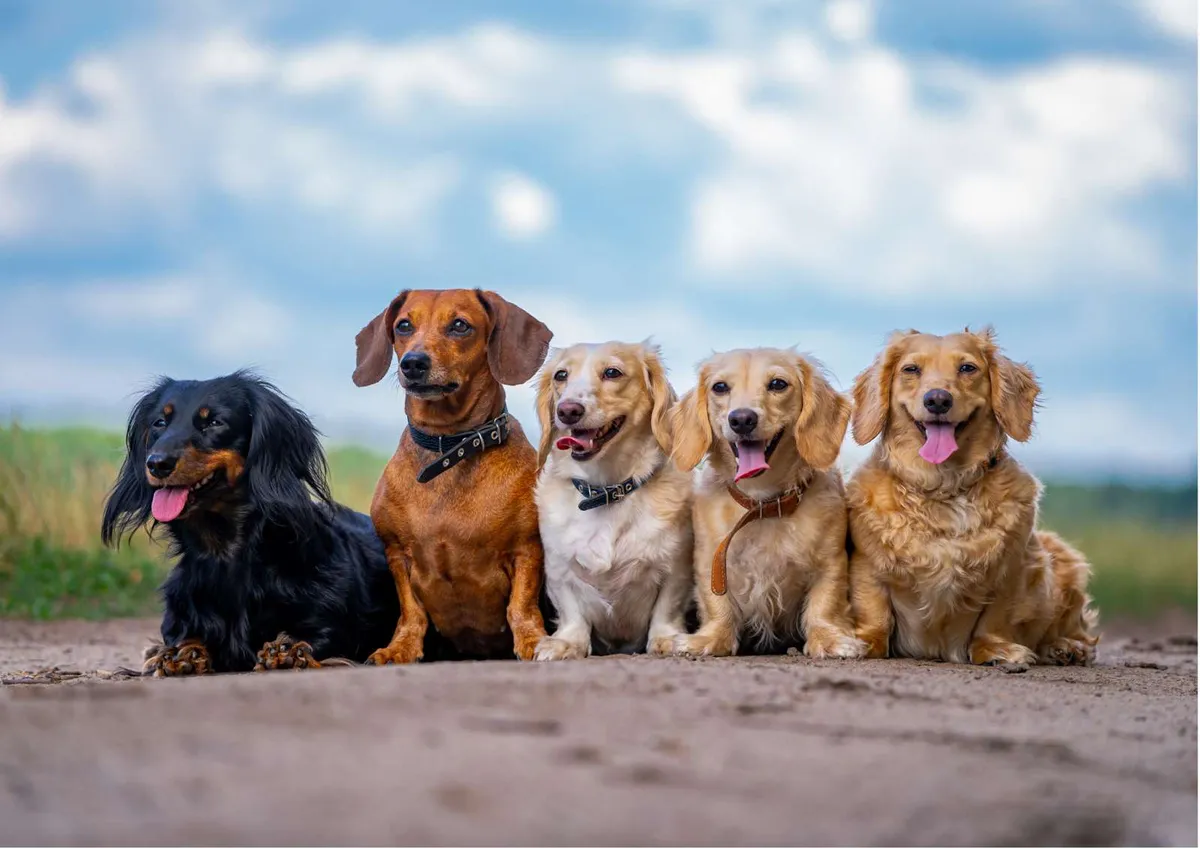
Purebred, mixed-breed, or crossbreed—anyone looking to bring a dog into their life will encounter these three terms sooner or later. Put simply: a purebred dog descends from generations within the same breed, documented in an official studbook. A mixed-breed dog has parents of unknown or diverse origins, while a crossbreed (or designer hybrid) results from the intentional pairing of two known breeds. Below, we break down these three dog types in detail.
What Is a Mixed-Breed Dog?
Put simply, a mixed-breed dog (often called a mongrel or mutt) is a dog whose parents do not belong to the same breed or have no defined breed at all. This might be a freely mated dog, the descendant of roaming dogs, or a stray that inherited a diverse mix of genes from various breeds.
Without a DNA test, it is usually impossible to tell which breeds it inherited. Mixed-breed dogs are frequently found in shelters, rescue organizations, or living as free-roaming dogs worldwide. Genetic diversity can certainly be greater in mixed-breed dogs—depending on how often their ancestors mixed across different gene pools. However, this does not prevent them from inheriting disease-causing mutations, which refutes the widespread myth that mixed-breed dogs are automatically healthier than purebred dogs simply due to genetic variety.
What Is a Purebred Dog?
Purebred dog breeds are a relatively modern concept. Population genetics studies (such as Thalmann et al., 2013) suggest that dogs and wolves diverged into distinct breeding populations between roughly 18,800 and 32,100 years ago. However, the intensive, selective breeding aimed at developing a specific and uniform phenotype or breed only began in the mid-19th century. Today, the Fédération Cynologique Internationale (FCI) recognizes over 350 distinct breeds worldwide, each defined by a closed or semi-closed breeding population and clearly documented traits.
Animals of any species are considered purebred if they have been bred without outside blood over multiple generations. Modern purebred dogs carry a pedigree recorded in an official studbook and registered with a national kennel club. Each breed club establishes a written description detailing the ideal structure and temperament for the dog to carry out its original purpose—known as the breed standard. HonestDog aligns with breeds recognized by the Verband für das Deutsche Hundewesen (VDH) or the Fédération Cynologique Internationale (FCI).
National breed registries generally operate with two types of studbooks: open and closed. Closed studbooks allow no outside blood; every dog descends exclusively from known, pedigreed ancestors. A major result of a closed studbook is predictable, recognizable breed traits, such as the Weimaraner's silvery-grey coat or the Dachshund's short legs. However, this practice also leads to a restricted gene pool, inbreeding depression from reduced genetic diversity, and an elevated risk of hereditary conditions. Open studbooks permit a certain degree of outside blood or outcrossing—a method commonly used in some working / performance bloodlines where functional health and ability take priority over cosmetic uniformity.
Purebred dog breeders share the goal of producing dogs with consistent, predictable breed traits. This includes physical attributes like appearance and size, as well as energy levels, overall health, and working drives such as retrieving or herding instincts. Responsible breeders maintain and preserve this consistency across generations by striving to raise puppies that closely match the breed standard. Natural genetic variation and environmental factors still play a role, however, meaning not every purebred puppy matures into a flawless representation of its breed standard, regardless of the breeder's dedication.
Not all purebred dogs are responsibly bred. Registration papers do not automatically prove that a dog is healthy or capable of the work it was originally bred to do. A pedigree simply records lineage and tracks ancestry. A dog's true quality depends on the health and temperament of its parents and ancestors, sound husbandry and breeding practices—including proper veterinary care and nutrition—and meticulous early socialization. Unfortunately, irresponsible backyard breeders and puppy mills multiply purebred dogs strictly for profit. They often engage in unethical practices, including forging health clearances and registration documents, dodging import and transport regulations designed to prevent infectious disease, and refusing to take accountability if health issues arise.
What Is a Crossbreed or Hybrid Dog?
Crossbred dogs have been intentionally produced since at least the 1950s, but surged in popularity between the 1990s and 2000s. In recent years, interest in designer crosses has skyrocketed, particularly among "doodle" mixes that feature a Poodle parent or ancestor.
Crossbreeds are often labeled as F1, F2, F3, or even F1b and F2b. This is standard genetic nomenclature used across animal and plant breeding to distinguish filial generations:
The parental generation (P) represents the 100% purebred foundation dogs. In this example, that means a purebred Labrador Retriever (Dog A) and a purebred Poodle (Dog B).
Crossing purebred Dog A with purebred Dog B produces the first filial generation (F1). For instance, this would be a Labradoodle whose mother is a purebred Labrador and whose father is a purebred Poodle.
An F1b generation is a backcross with roughly 75% genetic input from Dog B and 25% from Dog A. It is produced by pairing an F1 dog back to a purebred parent (P). Breeders do this to strengthen specific traits found in that backcrossed breed. In a Labradoodle F1b pairing, one parent is an F1 Labradoodle and the other is a purebred Poodle (P).
Other variations include multigenerational (multigen) crosses, such as breeding two F1 Labradoodles together (producing an F2 generation) or pairing F1b dogs.
The following chart illustrates the common crossbreeding generations using the Labradoodle as an example:

Historically, predicting the physical and behavioral outcomes of crossing two breeds without rigorous screening was difficult. Today, affordable commercial DNA testing for size, coat type, shedding, and color genetics has significantly improved predictability. Furthermore, crossing distinct purebred lines can bring together beneficial traits absent within a closed gene pool, increasing genetic heterozygosity and reducing inbreeding depression.
Responsible designer and hybrid breeding programs focus on combining the best qualities of two breeds. Achieving this requires the same level of care as preservation purebred breeding: an in-depth understanding of genetics, comprehensive veterinary evaluations, and documented DNA health screenings for both parents to rule out breed-specific hereditary defects.
Unfortunately, the designer dog market also attracts unethical producers who skip health testing and take zero responsibility for long-term health outcomes. Unscrupulous sellers frequently make false promises regarding physical traits, often advertising puppies as universally "hypoallergenic." However, coat texture, dander, saliva protein levels, and shedding vary widely—even among Poodle mixes. Without transparent education, unrealistic expectations often clash with reality, increasing the risk of dogs being surrendered to shelters down the road.
What Kinds of Dogs Can You Find on HonestDog?
HonestDog is a dedicated platform for dogs from responsible, vetted sources—whether you are looking for a purebred dog, a crossbreed, or a mixed breed; a young puppy or an adult dog; a rescue or a dog from a conscientious breeder.
Our mission is to provide objective, science-backed guidance so you can determine which dog type best fits your lifestyle—for example, by using our Breed Finder. Through transparent education, we connect prospective owners with verified sources while actively combatting irresponsible commercial breeding and illegal puppy trafficking.
Sidelining unethical breeders while supporting responsible breeding programs and rescue shelters is at the very core of our work.
HonestDog's Commitment
We connect prospective dog owners with verified, responsible caretakers and breeders across all dog types. HonestDog carefully evaluates every breeding setup against rigorous, transparent standards—whether purebred or hybrid. Animal welfare, ethical puppy rearing, and verifiable health screenings always take priority.
Finding the right companion starts with making informed choices. If you have any questions, our team is always here to help: info@honestdog.de.
Frequently Asked Questions (FAQ)
What is the biological difference between a mixed-breed and a crossbreed dog?
Biologically, all domestic dogs belong to the same species (Canis lupus familiaris). A mixed-breed dog typically results from unmanaged or multi-generational pairings of indeterminate breeds. A crossbreed (or designer hybrid), by contrast, is the result of a deliberate, documented mating between two distinct, usually purebred lines (such as a Poodle and a Labrador Retriever).
Are mixed-breed and crossbreed dogs automatically healthier than purebreds?
Not necessarily. While crossing two distinct lines can decrease the expression of specific recessive genetic conditions (known as hybrid vigor or heterosis), parents that share the same underlying hereditary predispositions—such as hip dysplasia (HD)—can still pass them on to their puppies. Overall health depends on comprehensive genetic screening, veterinary testing, and responsible husbandry, not breed status alone.
Are doodle breeds guaranteed to be hypoallergenic?
No, there is no guarantee. Canine allergies are primarily triggered by proteins found in a dog's saliva, urine, and dander, not simply their coat. While many Poodle crosses shed less fur, individual allergen production varies significantly from dog to dog. Direct, in-person contact prior to adoption or purchase is always recommended for allergy sufferers.
Sources and Further Reading
- Thalmann, O. et al. (2013): Complete Mitochondrial Genomes of Ancient Canids Suggest a European Origin of Domestic Dogs. Science 342(6160), pp. 871–874.
- Fédération Cynologique Internationale (FCI): Breeds Nomenclature and Standards.
- Verband für das Deutsche Hundewesen (VDH): Breeding and Registration Regulations for Pedigree Dogs.