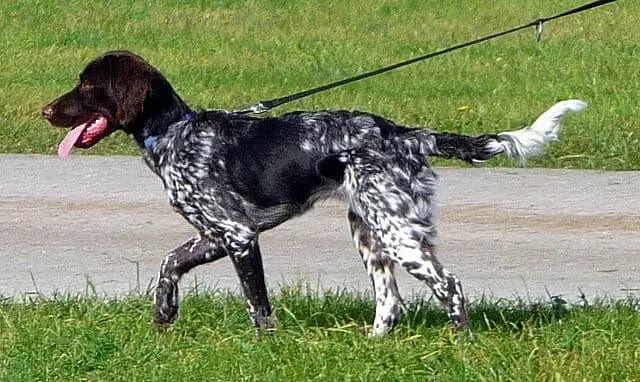
The German Shorthaired Pointer is one of the more robust breeds, with a life expectancy of 10 to 12 years. Most dogs stay active and resilient well into old age, provided you keep your dog lean and sensibly manage its exercise while it is growing. Even so, there are breed-typical risks, which health-conscious breeders (for example following the requirements of the DK-Verband or international standards such as AKC GSPCA / CHIC) deliberately work to counteract.
Because this dog performs at an enormous physical level, the musculoskeletal system and the sensory organs are the focus. X-ray examinations of the parents for hip dysplasia (HD) and osteochondritis dissecans (OCD, a joint cartilage disorder) significantly reduce the risk of painful joint disease in the offspring. For specific hereditary defects such as CNGB3-associated achromatopsia (day blindness) and SLC13A1-associated chondrodysplasia (a form of dwarfism), validated DNA tests exist. They show whether a parent dog is clear or a carrier, so that breeders can deliberately manage the risk of affected puppies through careful mating choices. Clinical eye examinations also detect problems such as entropion, ectropion or distichiasis, while breed wardens check for a correct bite without dental malformations, the absence of polydactyly (extra toes) and, in males, for cryptorchidism (undescended testicles). Epilepsy is also an issue, monitored through strict selection of breeding lines.
Beyond this, the breed has further health issues such as von Willebrand disease (a blood clotting disorder), aortic stenosis, cataracts, generalised progressive retinal atrophy (PRA), prolapse of the gland of the third eyelid (cherry eye), acral mutilation syndrome, lupoid dermatosis and disorders of sex development (sex reversal). Since comprehensive mandatory programmes do not always apply to these, an open conversation about the breeding line is crucial.
Your checklist for the first conversation with the breeder
Never rely on mere promises; check the facts for yourself on the spot. Use these points for your visit to the breeder:
- Review the joint results: Ask to see the official X-ray evaluations of both parent dogs for hip dysplasia (HD) and osteochondritis dissecans (OCD), as originals or copies.
- Check the eye and genetic tests: Ask for the clinical eye examination certificates (for entropion/ectropion, distichiasis, cataracts, PRA) as well as the laboratory results for CNGB3 achromatopsia and SLC13A1 chondrodysplasia.
- Breeding approval and anatomy: Ask to see the breeding suitability certificate and also look for a documented correct dental status and, in males, confirmation that cryptorchidism has been ruled out.
- Ask about the line’s history: Ask specifically whether any cases of epilepsy, aortic stenosis, von Willebrand disease, lupoid dermatosis or acral mutilation syndrome have come to light in the parent dogs’ lines.
- Observe the mother and the environment: See the mother with her puppies. She should seem steady, friendly and by no means nervous or aggressive. Make sure the puppies are growing up clean, curious and in close contact with the family.
On HonestDog, a breeder profile only goes online once the breeder has completed registration: identity verification by ID and selfie, proof of club membership or a §11 licence where applicable, a knowledge test on breeding and animal welfare, and agreement to the HonestDog breeding standards, which among other things rule out breeding from dogs with inherited traits that cause suffering (Qualzucht). Health test results for the parent dogs that breeders upload are shown directly in the profile; ask to see the original results when you visit. Your next step: compare the profiles of the German Shorthaired Pointer breeders on HonestDog, look at the health evidence they have uploaded and ask directly about the next litter.