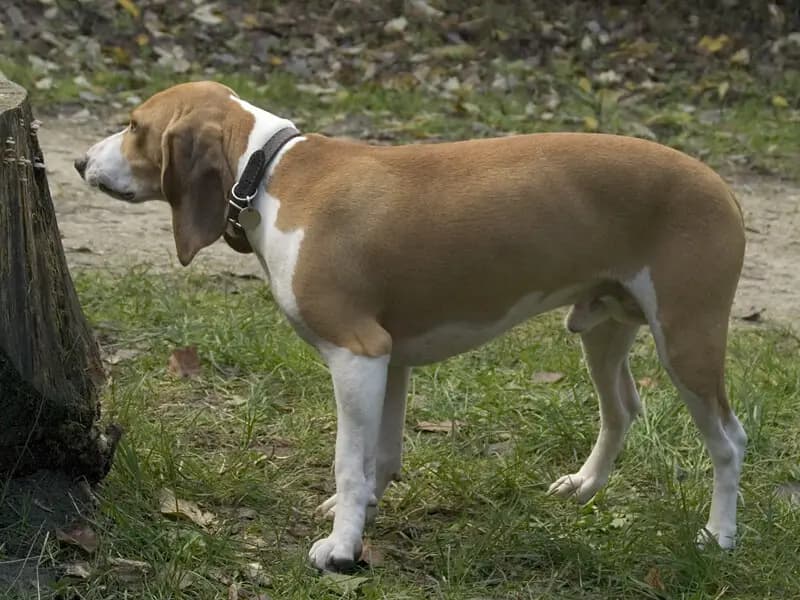
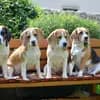
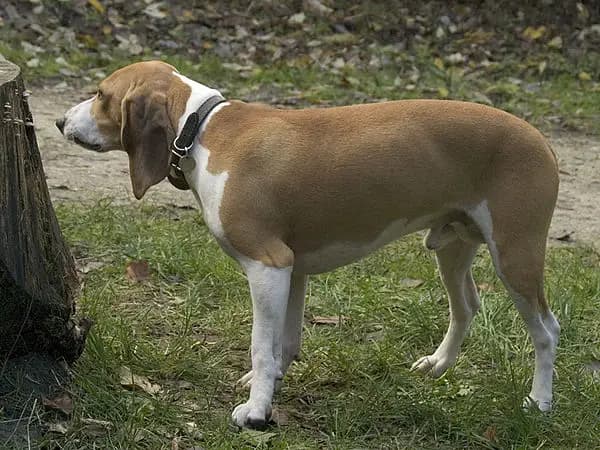
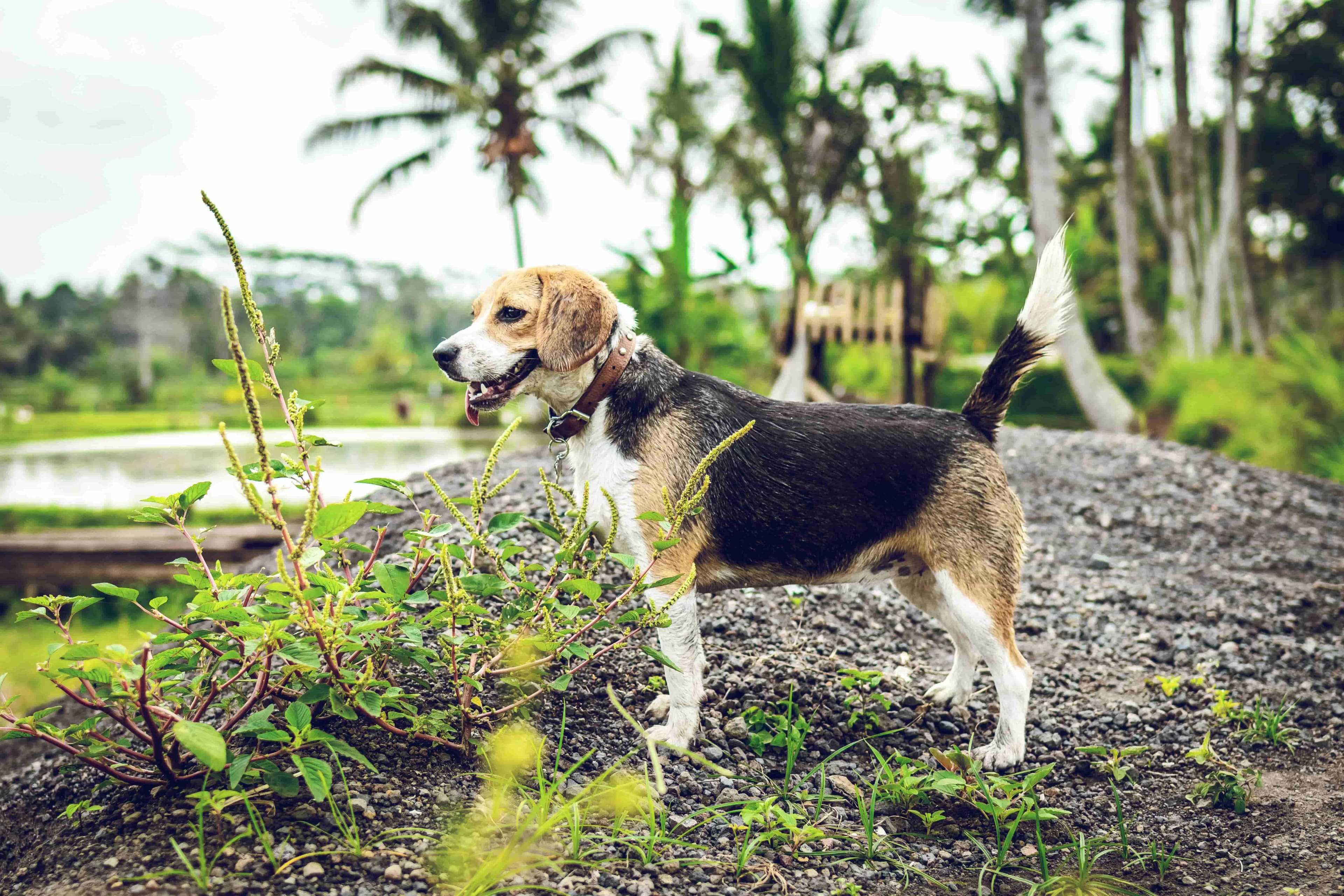
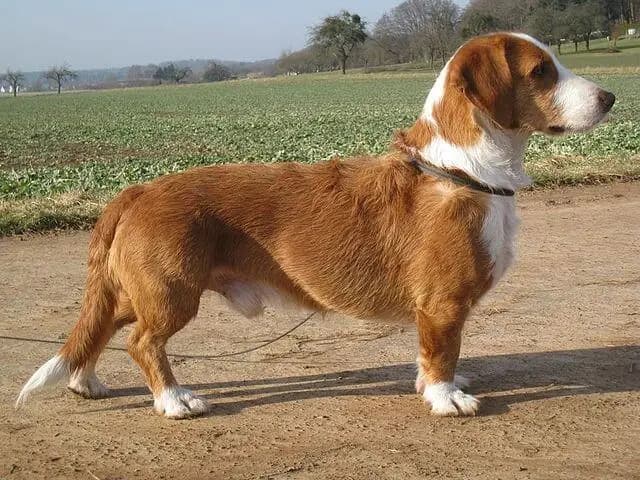
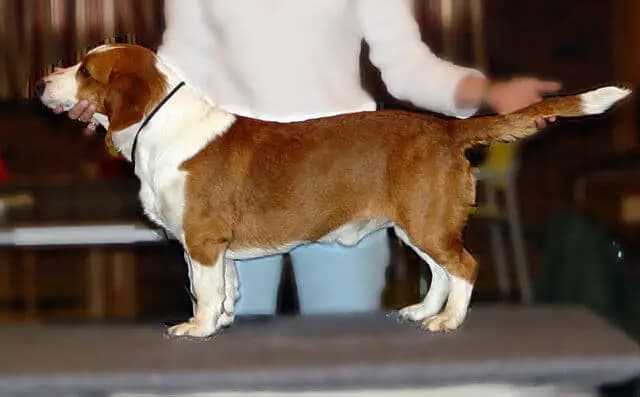
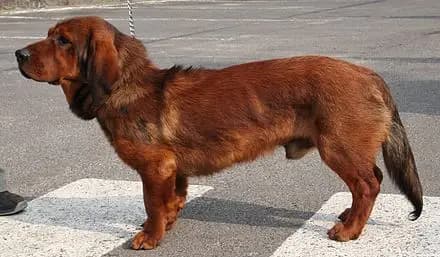
Despite its moderate size, this hound has a high energy level (4/5). A short walk around the block is not enough for it. At the same time, its trainability is only 2/5. That does not mean it cannot learn – quite the opposite – but as an independent hunting dog it questions commands and, when in doubt, would rather follow an exciting game trail than your recall. In training you will need patience, humour and consistency. With family and children it is extremely friendly (4/5), and thanks to its pack-hound history it is usually very sociable with other dogs too (4/5).
Its suitability for city life is middling (3/5): a fourth-floor flat with no lift is out of the question because of its long back, and its pronounced voice on the trail – the typical, melodic baying when following a scent – can cause problems in flats with thin walls. Grooming, on the other hand, is very straightforward (2/5). The short, dense, smooth coat sheds little (2/5) and only needs brushing occasionally. Only the long drop ears need regular checking and cleaning, as infections can easily develop in the warm, moist environment beneath the heavy flaps.
Your checklist for the first conversation with the breeder
Take the time to visit the breeding premises in person and ask specific questions so that you can make an informed decision:
- Ask to see the DNA tests: “Can you show me the written laboratory results for the parent dogs for NCL7 and chondrodystrophy (CDDY)?”
- Check joints and eyes: “Are there official X-ray evaluations for hip dysplasia (HD) for the parent dogs, as well as current eye examination results (including for cataracts and PRA)?”
- Clarify other risks in the lines: “Have there been cases of primary open-angle glaucoma in your breeding lines, and do you test your dogs for it?”
- Ask about socialisation to everyday life: “How do you accustom the puppies to environmental stimuli, and how are you already encouraging their bond with people so that the strong hunting drive can be better directed later?”
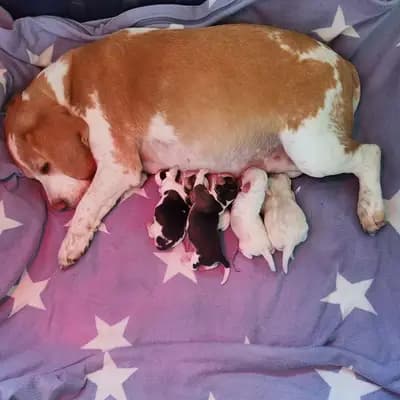
- Observation on site: Check whether the mother looks relaxed, is at a healthy, lean weight and whether her drop ears are kept clean and free of odour.
On HonestDog, a breeder profile only goes online once the breeder has completed registration: identity verification by ID and selfie, proof of club membership or a §11 permit where applicable, a knowledge test on breeding and animal welfare, and agreement to the HonestDog breeding standards, which among other things rule out breeding for traits that cause suffering. Health tests of the parent dogs that breeders upload are shown directly in the profile; ask to see the original results when you visit. Your next step: compare the profiles of Small Schwyz Hound breeders on HonestDog, look at the uploaded health records and ask directly about the next litter.