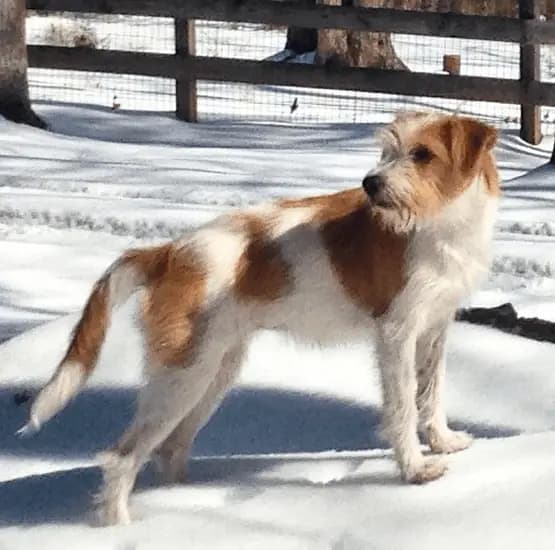
With good breeding selection, the Kooikerhondje is regarded as a fit companion, but its narrow gene pool brings specific risks of nerve disorders, muscle inflammation, blood clotting disorders, and kidney, eye and joint problems. In the Deutscher Club für Kooikerhondje e.V. (DCK), tests for hereditary necrotising myelopathy (ENM), the inflammatory muscle disease polymyositis, patellar luxation (PL) of the kneecaps and an ophthalmological eye test (including screening for cataracts) are mandatory before a dog is used for breeding.
DNA tests exist for ENM, von Willebrand disease (a blood clotting disorder) and polymyositis, showing the genetic status of the parent dogs. ENM is inherited as a simple recessive trait, and the gene test shows whether a dog is clear, a carrier or affected. If a breeder mates a carrier only with a clear partner, no puppy inherits the tested mutation from both parents, which markedly lowers the risk of this disease. Polymyositis follows a more complex pattern of inheritance involving risk factors, while clinical knee examinations (PL), hip dysplasia (HD) X-rays and the eye examination reduce the risk for the offspring by identifying affected animals. In addition, responsible breeders keep a close watch on Kooiker kidney disease (KND) in their breeding lines.
Important for your everyday life with the puppy: in the first year, make sure it is raised in a way that protects its joints, without early stair climbing or abrupt stops when playing ball. Before any planned operation, also make sure you always tell your vet about the breed’s risk of von Willebrand disease as a precaution.