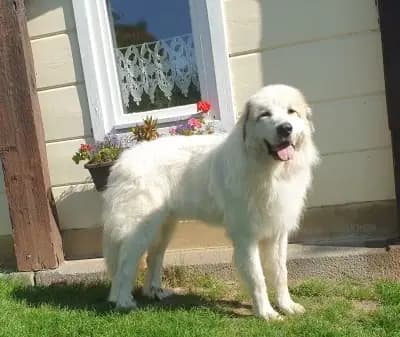
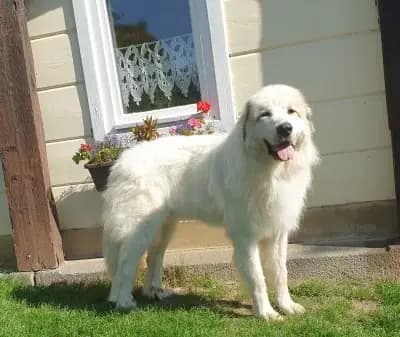
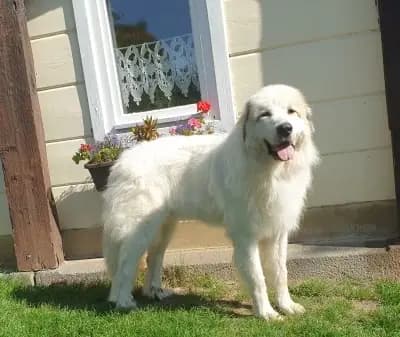
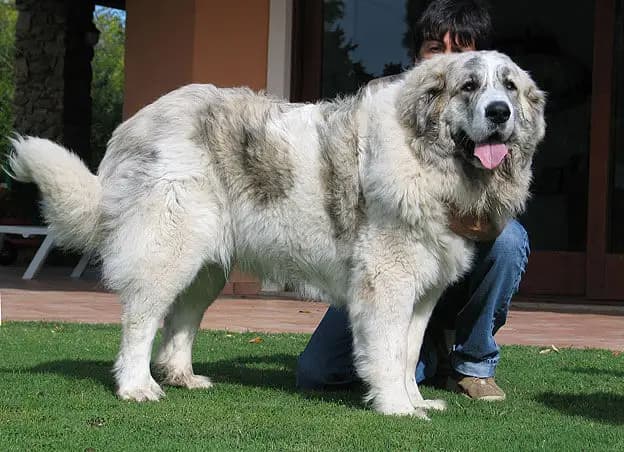
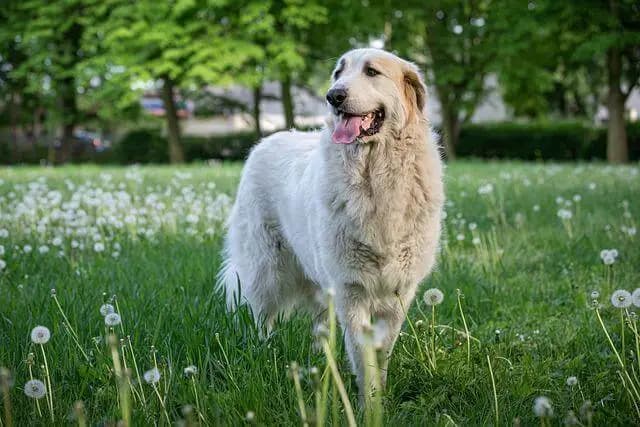
As affectionate and tolerant as the Spanish Mastiff is with its own people and children (family-friendliness: 4/5), it is just as demanding to handle. As a true livestock guardian dog, it was selected to make decisions without human commands. Its trainability in the sense of classic blind obedience is extremely low (1/5). It questions the point of commands and responds to harshness with stoic refusal. You need a great deal of dog sense, confidence and patience to guide this strong-minded dog through mutual respect.
This breed is hardly suited to a flat in the city centre (suitability for city life: 2/5). The Spanish Mastiff needs a securely fenced property that it can guard, and step-free access in case it develops joint problems in old age. Its short to medium-length coat with a dense undercoat is surprisingly easy to care for (grooming needs: 2/5), but needs regular brushing during the moult.
Your checklist for the first conversation with the breeder
When buying a puppy, don’t rely on mere promises; check the facts on the spot. During your visit, look out for the following points:
- Inspect the joint results: Ask to see the original official X-ray evaluations for hip dysplasia (HD) and elbow dysplasia (ED) for both parent dogs.
- Check the heart examination: Request the parent dogs’ current results for the dilated cardiomyopathy (DCM) examination.
- Ask about the eyes and eyelids: In the mother, look for clear eyes without constant discharge, and ask specifically about cases of ectropion or entropion in the breeding line.
- Observe the mother’s temperament: A typical Spanish Mastiff meets strangers with watchfulness and reserve, but must never show uncontrolled aggression or panic in the presence of the breeder.
- Discuss rearing and feeding: A knowledgeable breeder will give you a detailed feeding plan designed for slow growth that is gentle on the joints.
Legal situation: In some German federal states, special rules for listed dogs or dangerous dogs apply to the Spanish Mastiff. Depending on where you live, temperament tests, permit requirements or other official conditions, lead and muzzle requirements, and higher insurance or tax costs may be relevant. Please always check with the responsible local authority.
On HonestDog, a breeder profile only goes online once the breeder has completed registration: identity verification by ID and selfie, where applicable proof of club membership or a §11 permit, a knowledge test on breeding and animal welfare, and agreement to the HonestDog breeding standards, which among other things rule out breeding with traits associated with extreme breeding (Qualzucht). You can see the health test results for the parent dogs that breeders upload directly in the profile; ask to see the original results when you visit. Your next step: compare the profiles of Spanish Mastiff breeders on HonestDog, look at the health evidence they have uploaded, and ask directly about the next litter.