Finding reputable Westphalian Terrier breeders: what matters when buying a puppy
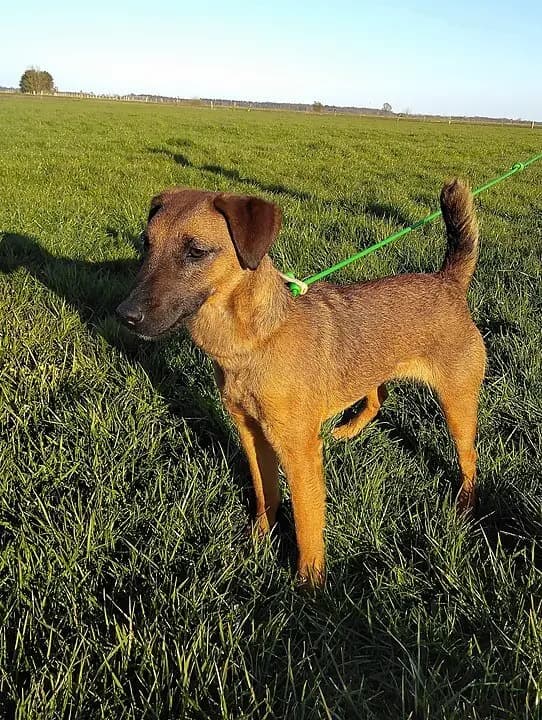
The Westphalian Terrier is a lively, active and people-oriented companion from Germany, originally bred as a versatile utility hunting dog for work above and below ground – in particular for going to ground after fox and badger. With a height at the withers of 32 to 40 cm, a weight of 8 to 10 kg in males and a dense, wiry coat, it is a compact working dog with plenty of energy and a close bond with its family. So that you can enjoy a healthy, temperamentally sound dog throughout its average life expectancy of 13 to 15 years, carefully choosing a reputable Westphalian Terrier breeder is the crucial first step.
Why your choice of breeder matters so much with the Westphalian Terrier
Westphalian Terriers are generally considered very robust dogs, but, as is typical of the breed, they do come with a few genetic and anatomical issues affecting the eyes and knees, as well as neurological and metabolic ones. The breed also combines a pronounced friendliness towards families and children with the independence and alertness typical of terriers. When choosing pairings, a responsible breeder not only prioritises physical health but also deliberately selects for a balanced temperament, so that the dog's high energy level stays manageable in everyday life. Early, well-thought-out socialisation with the breeder also plays a decisive part in how confidently the puppy later reacts to environmental stimuli and other dogs.
Health care: which tests and issues matter in the Westphalian Terrier
A health-focused breeder does not leave the vitality of their litters to chance, but has the knees and eyes of the parent dogs thoroughly examined by a vet, so as to minimise hereditary risks in the line from the outset. In the Verein für Westfalenterrier e.V. (VWT), testing for lens luxation is mandatory. This is an eye disease in which the lens can come loose from its anchoring. A corresponding test and clinical eye examinations show the status of the parent dogs, so that a reputable breeder will deliberately pair carriers only with clear partners, in order to reduce the risk for the offspring.
Beyond this, there are other health issues typical of the Westphalian Terrier that you should make a point of raising with the breeder:
- Patellar luxation: An instability of the kneecap, which is assessed by clinical palpation of the parent dogs. Choosing breeding dogs with clear findings and rearing the puppies in a way that is gentle on the joints significantly reduce the risk of knee problems.
- Spinocerebellar ataxia and cerebellar ataxia: These are neurological diseases that affect the cerebellum and the spinal cord and lead to disorders of coordination and movement.
- Hyperuricosuria: A metabolic peculiarity that promotes the formation of urinary stones.
Before buying, ask to see the original written test results for the parent dogs' eyes and knees, and ask specifically whether any cases of ataxia or urinary stone problems are known in the breeding lines.
6 specific questions to ask the Westphalian Terrier breeder
Use the initial conversation and the visit in person to ask the breeder detailed questions. An expert who is passionate about their breeding will answer these openly:
- Can you show me the parent dogs’ current lens luxation test results and their patella (kneecap) findings?
- Have there ever been any known cases of spinocerebellar ataxia, cerebellar ataxia or hyperuricosuria in the lines of either parent?
- Are your dogs worked for hunting or kept as active family companions, and how do you rate the prey drive of this pairing?
- How do you rear the puppies in a way that is gentle on the joints, so that the knees of the growing puppies are not overloaded?
- How do you accustom the puppies to everyday noises, children and other dogs, to promote their confidence in different environments and their sociability?
- What kind of mental and physical exercise do you recommend specifically for a puppy from this litter?
Warning signs: how to spot irresponsible backyard breeders straight away
A healthy, well-socialised puppy from a reputable breeder comes at a price: budget a realistic price range of 1,200 to 2,500 EUR for a Westphalian Terrier. You can often spot irresponsible backyard breeders by supposed bargain prices, which usually reflect money saved on vet and testing costs. Walk away from the purchase immediately if the seller cannot show written proof of testing for lens luxation or dismisses knee health as unimportant.
Other clear warning signs are the absence of the mother on site, rearing purely in a kennel or outbuilding without family contact, and sellers who are willing to hand the dog over to you without asking any critical questions about your living situation and experience with dogs. A good breeder always checks carefully whether your lifestyle suits the high energy level of this special terrier.
On HonestDog, every breeder goes through a registration process before being listed: identity verification by ID and selfie, where applicable proof of club membership or a §11 permit, a knowledge test on breeding and animal welfare, and agreement to the HonestDog breeding standards – including no breeding with traits associated with extreme breeding, and no breeding dogs under 18 months. Without a verified §11 permit, a breeder can list a maximum of two breeding bitches there, and you can report anything unusual on a breeder profile directly via ‘Report content’. When you visit, ask to see the original test results for the parent dogs. You can find current litters under Westphalian Terrier puppies on HonestDog.